
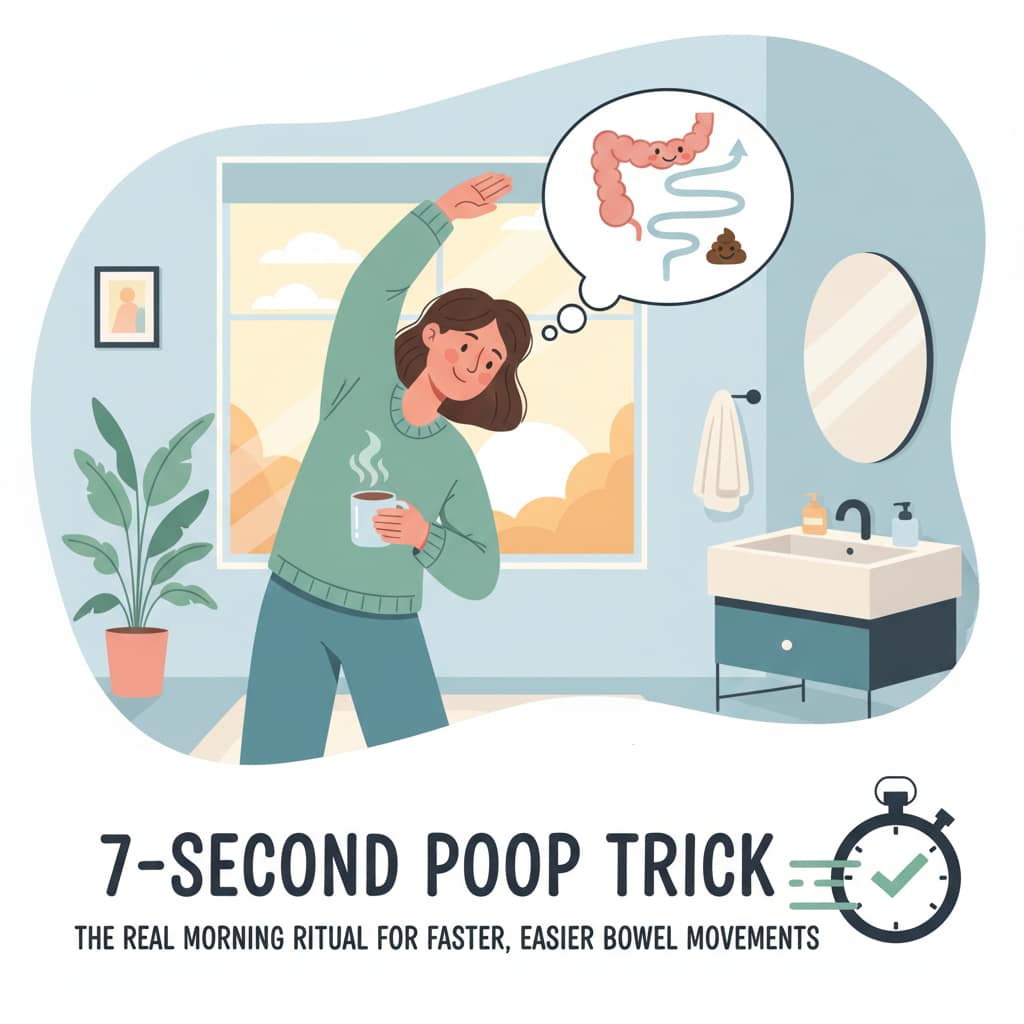
You’ve seen it everywhere. TikTok. Instagram. That one coworker who suddenly became a gut health evangelist. The “7 second poop trick” has exploded across the internet, promising to transform your bathroom experience from a frustrating waiting game into something… actually predictable. But what is it really, and does it actually work?
This article will walk you through exactly how to do the 7 second poop trick step by step, explain the science (and lack thereof) behind each component, and help you figure out when this morning routine might actually help versus when you need to talk to a doctor instead. Following the outlined steps can help you achieve the best results for your digestive health and bowel movements.
What Is The 7 Second Poop Trick?
The 7 second poop trick is a morning ritual designed to stimulate your digestive system and help you achieve easier, faster bowel movements without straining or spending half your morning on the toilet. It’s based on a method popularized by Dr. Gina Sam, a gastroenterologist who developed what she calls a “7-second morning ritual” to address common constipation triggers.
Here’s the thing nobody tells you upfront: the “7 seconds” part is more of a catchy name than an actual timer. You’re not going to sit down, count to seven, and magically produce results like some kind of bathroom wizard. The full routine typically takes a few minutes, with the “7 second” element referring to a specific relaxation technique during the actual toilet sitting phase.
The method combines four key components that work together to get things moving: drinking warm water first thing in the morning, gentle movement or stretching, deep breathing to relax your body, and proper toilet posture. Each element targets a different aspect of why your gut might be sluggish, from dehydration to stress to poor positioning.
Think of it as a system reset for your digestive health rather than a single magic trick. The approach addresses underlying factors like low vagal tone, inadequate hydration, and tension in your pelvic floor muscles—all of which can slow down your colon and make constipation a regular unwanted visitor.
This article will walk you through exactly how to do the 7 second poop trick step by step, explain the science (and lack thereof) behind each component, and help you figure out when this morning routine might actually help versus when you need to talk to a doctor instead.

Where Did The 7 Second Poop Trick Come From?
The 7 second poop method traces back to Dr. Gina Sam, a New York-based gastroenterologist who gained attention around 2022-2023 for her approach to digestive disorders. Dr. Sam developed what she called a morning ritual focused on emptying the gut for optimal body function, linking regular bowel movements to everything from mental clarity to sustained energy throughout the day. Her original method emphasized addressing the root causes of constipation rather than just treating symptoms.
Then TikTok got hold of it. Around 2023-2024, the trick went absolutely viral, with videos racking up millions of views as creators demonstrated their own versions of the morning routine. Some stayed faithful to Dr. Sam’s approach. Others… got creative. The hashtag spread to Instagram Reels and Facebook, spawning countless variations and interpretations that ranged from helpful to completely made up.
Functional medicine practitioners and gut-health influencers soon adapted the concept into their own protocols. Some added extras like adding apple cider vinegar to the warm water, incorporating specific yoga poses, or including fiber supplements as part of the ritual. These variations aren’t necessarily wrong—they’re just add-ons to the core concept that may or may not work for your particular situation.
The downside of viral fame? Confusion. Some versions floating around suggest things like making two fists and rubbing them together for acupressure (no real evidence for this), or worse, holding your breath and straining hard for seven seconds (actively dangerous and definitely not what Dr. Sam recommended). The original method was much more about relaxation and stimulation than force.
How The 7 Second Poop Trick Works (The Core Idea)
The 7 second poop trick rests on three main pillars that work together to encourage your colon to do its job: hydration, mechanical stimulation, and nervous system regulation. Each component targets a different piece of the constipation puzzle.
Hydration comes first. Drinking warm water immediately after you wake triggers something called the gastrocolic reflex—basically, when your stomach senses incoming fluids or food, it sends signals to your colon to make room by moving things along. Warm water also helps soften stool through osmosis, making it easier to pass without straining. This is why many people naturally need to use the bathroom shortly after their morning coffee or breakfast.
Mechanical stimulation is the second piece. Gentle stretches and yoga poses create physical pressure and movement that help push stool toward the rectum. Think of it like gently squeezing a tube of toothpaste—the motion encourages forward movement. Poses that compress the abdomen or rotate the torso increase blood flow to your digestive organs and stimulate peristalsis, the wave-like muscle contractions that move waste through your system.
Nervous system regulation ties it all together. Stress literally freezes your digestive system. When you’re tense or anxious, your body prioritizes “fight or flight” over “rest and digest.” Deep breathing activates your parasympathetic nervous system and improves vagal tone, which tells your gut it’s safe to relax and get things moving. A tense pelvic floor is the enemy of easy bowel movements.
The method works as daily support to establish regular bowel movements—not as an emergency fix when you’re already stuck and desperate. Consistency is key here.
Preparation With Warm Water: The Simple Step Most People Miss
Let’s be honest: the easiest part of the 7 second poop trick is also the one most people skip or rush. But drinking a full glass of warm water first thing in the morning is the unsung hero of this entire method—and it’s the step that can make or break your results.
Here’s why it matters: when you drink warm water right after you wake up, you’re giving your digestive system a gentle nudge to get moving. That warmth helps increase blood flow to your gut, relaxes the muscles lining your digestive tract, and sets the stage for smoother, more regular bowel movements. It’s a simple way to support your digestive health and reduce the risk of chronic constipation, acid reflux, and other digestive disorders.
Warm water acts like a wake-up call for your colon. It helps soften stool, encourages the release of trapped gasses, and makes it easier for your body to do what it’s supposed to do—without straining or discomfort. If you’re someone who struggles with sluggish mornings or irregularity, this one step can be a game-changer for your morning routine.
Want to give your gut an extra boost? Try adding a splash of apple cider vinegar to your warm water. The acetic acid in apple cider vinegar may help stimulate digestion and support a healthy gut environment. Just remember: if you have acid reflux, sensitive teeth, or any concerns, check with your healthcare professional before making it a daily habit.
Of course, warm water is just the beginning. Pair it with gentle stretches or yoga poses—like the wind relieving pose—to further stimulate your digestive system and reduce stress. This functional medicine approach looks at the whole picture: hydration, movement, relaxation, and diet all play a role in keeping things moving.
If you’re dealing with persistent constipation, IBS symptoms, or other digestive issues, don’t just rely on internet tricks. Consult a healthcare provider for personalized advice and to rule out any underlying factors that might need medical attention.
Step-By-Step: How To Do The 7 Second Poop Trick
The whole routine from glass of water to toilet should take about 5-10 minutes. That’s it. Nothing extreme, nothing weird.
For best results, make this routine a consistent part of your morning ritual. Regular practice helps train your body for improved digestion and more predictable bowel movements.
Is There Any Science Behind The 7 Second Poop Trick?
Let’s be honest: no clinical trial has ever studied the specific “7 second poop trick” by name. You won’t find a peer-reviewed paper titled “Efficacy of the 7-Second Poop Method: A Randomized Controlled Trial.” But that doesn’t mean the individual components are made up—they’re actually grounded in established digestive science.
The gastrocolic reflex is real and well-documented. When you eat or drink—especially first thing in the morning—your stomach sends signals that trigger contractions in your colon. This is why many people feel the urge to go shortly after breakfast. Drinking warm water takes advantage of this natural reflex while also providing hydration that softens stool and makes it easier to pass.
Research on physical activity and constipation is encouraging. Small trials from the past decade show that gentle yoga poses and stretching can improve constipation symptoms in adults, likely by increasing intra-abdominal pressure and stimulating peristaltic waves. Specific poses like knees-to-chest compress the intestines and can help get things moving.
The breathing and stress reduction component has solid backing too. Studies on functional constipation show that calming the nervous system and relaxing pelvic floor muscles can significantly ease the passage of stool. Many people with chronic constipation have overactive pelvic floors—they’re essentially clenching when they should be releasing. Deep breathing helps override that pattern.
Squatting position is perhaps the most well-supported element. Research consistently shows that elevating your feet and leaning forward straightens the anorectal angle, allowing for easier and more complete evacuation compared to sitting upright on a standard toilet.
That said, evidence is still emerging for the combined method. This should complement mainstream medical care, not replace it—especially if you have ongoing digestive issues that aren’t responding to lifestyle changes.
Apple Cider Vinegar And The 7 Second Poop Trick
Many viral versions of the 7 second poop trick include apple cider vinegar as a key ingredient in the warm water drink. But here’s what you need to know: ACV is optional, not essential. The core method works without it.
Apple cider vinegar is made from fermented apple juice. During fermentation, the sugars convert to acetic acid, which gives ACV its sharp, sour taste. It also contains trace amounts of polyphenols and other compounds. Proponents claim it boosts digestive enzyme production and helps stimulate stomach acid, which theoretically could improve digestion overall.
The reality is more modest. Research shows ACV may slow gastric emptying slightly and affect blood sugar response after meals. But direct evidence for constipation relief specifically? Pretty limited. Most claims about ACV for gut health come from anecdotal reports and small studies rather than large clinical trials.
If you want to try it, here’s a safe approach: Add 1-2 teaspoons of raw, unfiltered apple cider vinegar to a large glass of warm water. You can work up to 1-2 tablespoons daily, but always dilute it heavily. Never drink it straight—the acidity can damage tooth enamel and irritate your throat.
Who should skip ACV entirely: Anyone with GERD, acid reflux, stomach ulcers, sensitive teeth, or kidney issues. If you’re taking medication—especially diuretics or diabetes drugs—check with a healthcare professional before adding ACV to your routine. This isn’t fear-mongering; it’s just smart caution with an acidic substance.

Who Might Benefit Most (And Who Should Be Careful)
The 7 second poop trick tends to work best for specific groups of people. If you recognize yourself here, this method might be worth trying.
Good candidates include:
- People with mild, occasional constipation rather than chronic severe cases
- Desk workers who sit most of the day and don’t get much physical movement
- Stressed adults whose bodies tend to hold tension (and hold onto stool)
- Those who typically skip breakfast or rush through mornings without hydration
- People who notice they usually need to go shortly after eating—the trick helps harness that natural reflex more intentionally
If coffee already “works” for you but you want something gentler on your stomach, the warm water approach can provide similar stimulation without the jitters or acidity.
Who should be careful or skip this approach:
- People with chronic GI diseases like inflammatory bowel disease or severe IBS should consult a doctor before changing routines
- Anyone experiencing rectal bleeding, blood in stool, or sudden changes in bowel habits needs medical evaluation first
- Those with severe abdominal pain or symptoms that have appeared suddenly
- Pregnant individuals should check with their healthcare provider before adding ACV or making significant diet changes
- Children and older adults on multiple medications deserve personalized medical advice
Clear recommendation: See a doctor if your constipation lasts more than 2 weeks, if your stools are persistently very thin, if you have unexplained weight loss, or if you need to strain hard consistently despite lifestyle changes. These could indicate conditions that need proper diagnosis, not just a morning ritual.
Tips To Make The 7 Second Poop Trick Actually Work
The difference between “tried it once and nothing happened” and “this actually changed my mornings” usually comes down to consistency and complementary habits. Following these tips can help you achieve the best results from the 7 second poop trick.
Do the routine at the same time daily. Your gut loves predictability. Aim for the same 30-minute window each morning—ideally between 6:00-8:00 a.m. for most people. After a week or two, your body starts to anticipate the routine and your colon gets with the program. Irregular timing means irregular results.
Combine with the basics. The trick isn’t meant to work in isolation. Aim for at least 25-30 grams of fiber per day from food sources like berries, leafy greens, oatmeal, and legumes. Drink plenty of fluids—at least 1.5-2 liters throughout the day, not just the morning glass. Add light daily exercise like a 10-20 minute walk. These factors work together with your morning ritual to support overall gut health.
Keep a simple poop log for 7-14 days. It sounds weird, but tracking actually helps. Note the time, stool consistency (look up the Bristol Stool Chart for reference), and any straining or discomfort. This helps you spot patterns and know whether the method is working for your body specifically.
Set realistic expectations. Some people notice improvement within a few days. Others need 2-4 weeks of consistent practice before seeing reliable results. Your gut microbiome and individual physiology affect how quickly you respond. Don’t give up after three attempts.
Coffee can boost the effect. If you’re a coffee drinker, having your coffee after completing the warm water routine can add an extra layer of gastrocolic stimulation for many people. It’s optional, but the combination works well for a lot of folks.

Common Myths And Questions About The 7 Second Poop Trick
Myth: “You must finish pooping in 7 seconds.” Absolutely not. The “7 seconds” refers to a brief, relaxed bearing-down phase during the toilet portion—not the entire bathroom visit. A healthy bowel movement might take 1-5 minutes total. The goal is easier initiation, not superhuman speed.
Myth: “If this doesn’t work, something is seriously wrong.” Not necessarily. Everyone’s gut is different. The method is one tool among many, and it won’t work perfectly for everyone. Some people need more fiber, different timing, or medical evaluation for underlying issues. It’s not a diagnostic test for your health.
Question: “Is it safe to do every day?” Yes, for most people. The basic components—drinking warm water, gentle stretches like yoga poses, relaxed breathing, and better toilet posture—are safe daily practices. The only caution applies to the apple cider vinegar add-in, which some people shouldn’t use regularly.
Question: “Can I use this instead of fiber supplements or medication?” No. If your doctor has prescribed something for your digestive health, don’t stop taking it because of a TikTok trick. This method is complementary—it works alongside proper medical care, not as a replacement. Always consult your healthcare professional before changing medication routines.
Question: “Will it work if I only do it sometimes?” Occasional use may help on any given morning, but regular practice usually gives much better results. Your body responds to consistent signals. Think of it like exercise—doing it once helps a little, doing it daily transforms your baseline.
When To See A Doctor Instead Of Trying Another Trick
No morning routine can fix everything. Some symptoms require medical evaluation, not another internet hack. Here’s when to stop experimenting and make an appointment.
Go to a doctor if you notice:
- Blood in your stool (bright red or dark/black tarry appearance)
- Severe abdominal pain, especially if sudden or waking you at night
- Fever, vomiting, or unexplained symptoms alongside constipation
- Pain that prevents you from eating or going about your day
Red flags that need professional attention:
- New constipation appearing after age 50 with no obvious cause
- Needing to strain hard for weeks despite trying lifestyle changes
- Feeling like you can never fully empty your bowels
- Persistent bloating that doesn’t respond to dietary adjustments
If you find yourself relying heavily on laxatives, “detox teas,” or other quick fixes just to have a bowel movement, that’s a sign to seek medical advice rather than adding yet another hack to the rotation. These products can mask underlying conditions and create dependency.
Persistent constipation can be caused by conditions like hypothyroidism, diabetes, pelvic floor dysfunction, IBS, or even structural issues in the colon that require diagnosis. Your doctor can run appropriate tests, check your medication list for constipating side effects, and recommend treatments that actually address your specific situation.
Online tips and morning rituals have their place—but they’re not a substitute for personalized medical care when something isn’t right.
Key Takeaways: Making The 7 Second Poop Trick Part Of A Healthy Routine
The core idea is simple: warm water to hydrate and trigger your gastrocolic reflex, gentle movement to stimulate your colon, relaxed deep breathing to calm your nervous system, and proper toilet posture to make elimination physically easier. Together, these elements support faster, more comfortable bowel movements.
The “7 second” focus means a brief, relaxed bearing-down phase on the toilet—not aggressive straining that risks hemorrhoids or other problems. Push gently while keeping your belly and pelvic floor relaxed. That’s the trick.
This method works best when combined with foundational habits: eating enough fiber, staying hydrated throughout the day with plenty of fluids, getting regular exercise, and managing stress through practices like meditation or simply taking breaks during your day.
Results vary significantly from person to person. Some notice improvement within days. Others need consistent practice over several weeks, and some may need medical evaluation for underlying issues that no morning ritual can fix.
Here’s the encouraging truth: small, sustainable morning habits almost always help more than extreme cleanses, harsh laxatives, or desperate straining sessions. Your gut responds to routine, hydration, and relaxation—not force.
Give the 7 second poop trick a real try for a couple of weeks. Track what happens. And if it doesn’t work, that’s useful information too—it might mean your body needs something more specific than a generalized approach.
Your new morning routine can be this simple: wake up, drink your warm water, move a little, breathe deeply, sit correctly, and relax. Get in, get out, feel great for the rest of your day.