
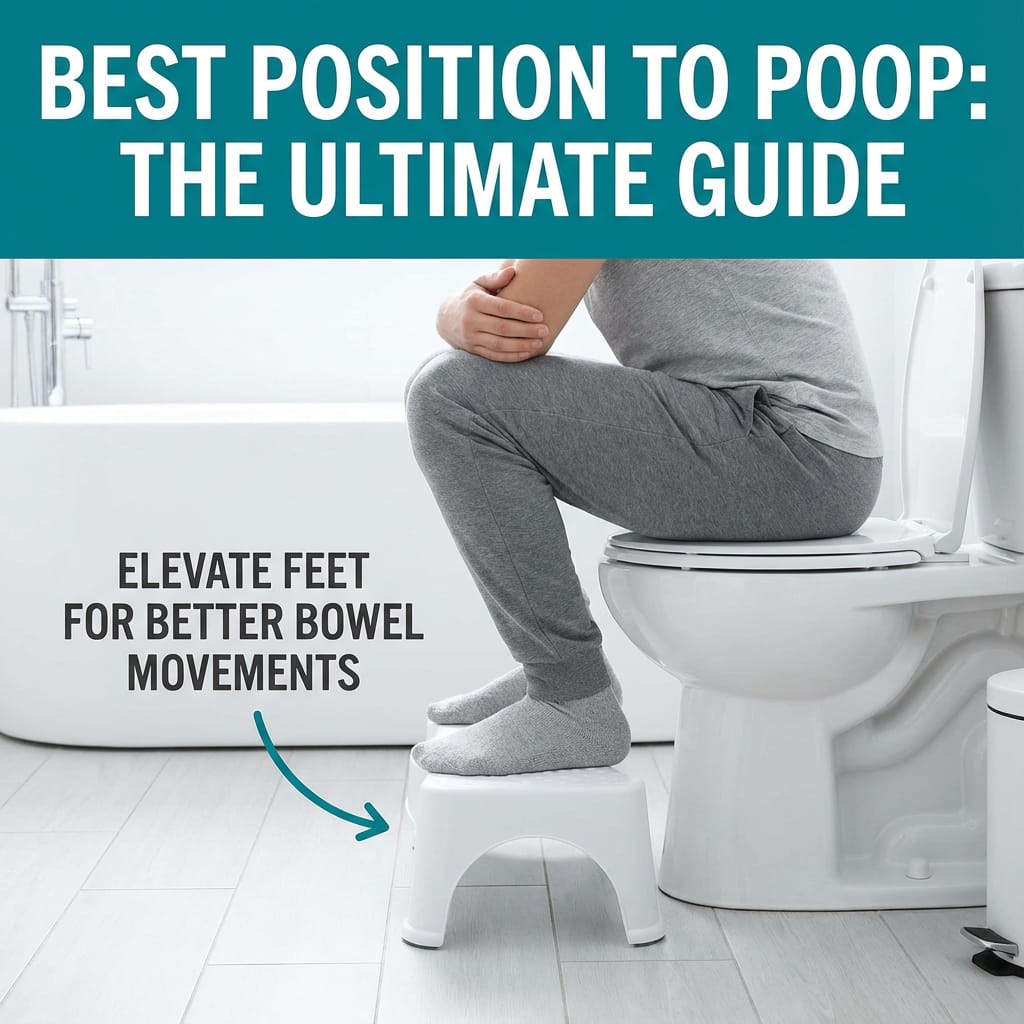
Let’s be honest – if you’re reading this, you’ve probably spent more time than you’d like sitting on the toilet, wondering why something so basic feels so difficult. Maybe your legs go numb, or you find yourself in what feels like negotiations with your digestive system that shouldn’t require this much effort.
Here’s the thing: there’s actual science behind why your current bathroom routine might be working against you. The best position to poop isn’t the way most of us learned to sit on modern toilets. Instead, it’s a position that works with your body’s natural design to make bowel movements easier, faster, and more complete.
This guide will walk you through the optimal defecation posture, explain why your anatomy works better in certain positions, and give you practical ways to transform your bathroom experience without renovating your entire restroom.
Introduction to Better Bowel Movements
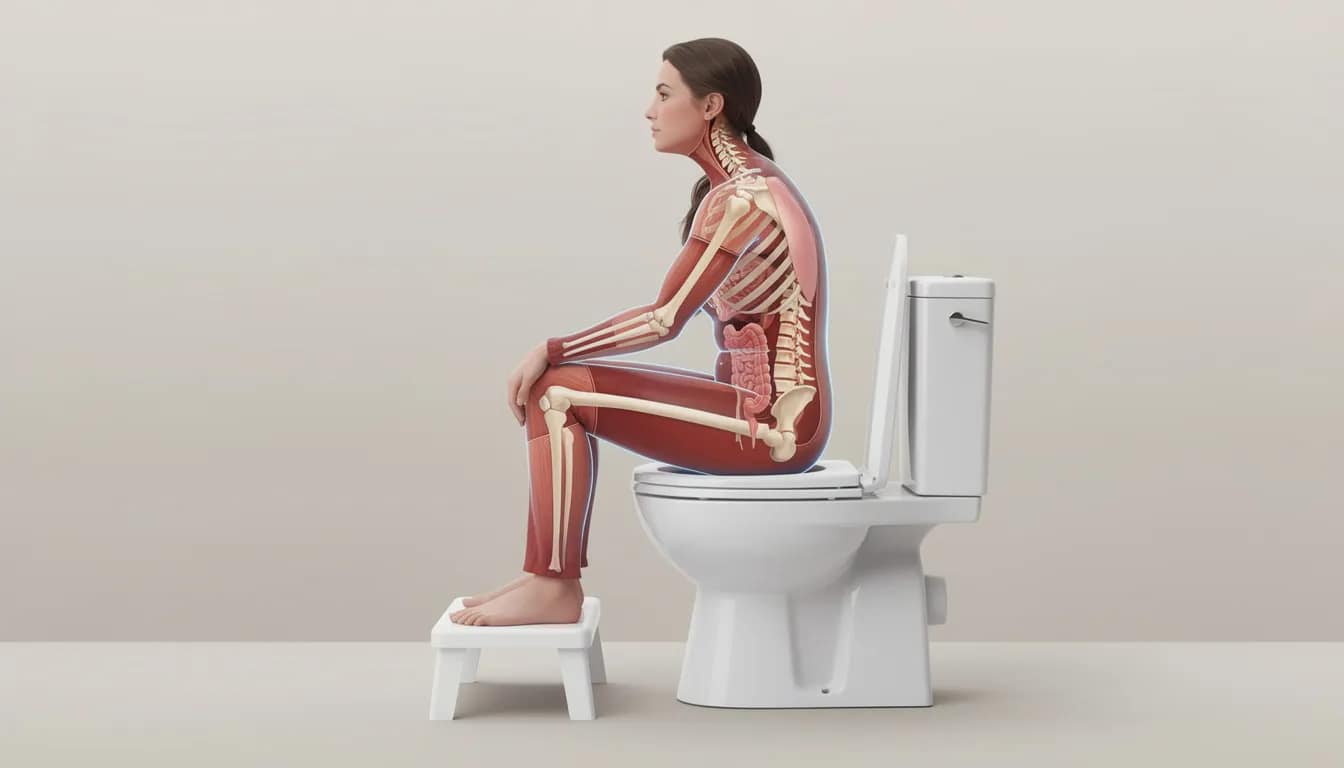
Look, achieving better bowel movements isn’t just about comfort—it’s basically the foundation of not feeling like garbage every day. The way you position your body when you’re doing your business (yeah, your defecation posture) can literally be the difference between a quick victory lap and sitting there for twenty minutes wondering if your legs are permanently attached to your body anymore. Here’s the plot twist that’ll blow your mind: the best poop position isn’t what your fancy modern toilet is encouraging you to do. Nope! The squatting position—where your knees are up higher than your hips—has been scientifically proven to make everything flow more completely, cut down on the grunting and straining, and actually speed up the whole production.
But here’s the beautiful part: you don’t need to demolish your bathroom and install some medieval contraption to unlock these life-changing benefits. Simple tools like a toilet stool or potty stool (fancy name: defecation posture modification device) can help you fake the squatting position right there on your regular throne. By making this one tiny change, you can kiss goodbye to chronic constipation symptoms, give your digestive system the support it’s been begging for, and transform each bathroom visit from a marathon into a sprint that actually feels good.
Now, before you get too excited, posture is just one piece of this magnificent puzzle. For the full transformation into someone who actually enjoys their bathroom time, you’ve got to pair the best poop position with the other good stuff your body craves. Loading up on fiber rich foods like whole grains and leafy greens, chugging enough water to actually stay hydrated, and moving your body regularly—all of this works together like a beautiful symphony to keep everything flowing smoothly. Combine the right defecation posture with these lifestyle moves, and you’ll be well on your way to easier, more complete bowel movements and the kind of digestive health that makes you feel like a champion every single day.
The Optimal Pooping Position
The squatting position is the scientifically proven best position for defecation. When you squat, your body naturally straightens the anorectal angle – essentially creating a clearer pathway for elimination. Research shows this position can reduce straining by up to 40% and dramatically decrease bowel movement duration from an average of 130 seconds to just 51 seconds.
But here’s the reality: most of us aren’t about to rip out our toilets and install squat-style fixtures. The good news is that you can recreate many of these benefits on your existing toilet by using a toilet stool or foot stool to elevate your knees 6-8 inches above hip level.
The ideal position involves placing both feet on a footstool while sitting, which brings your knees higher than your hips. Then lean forward slightly with your elbows resting on your knees. This posture mimics the natural squatting position and allows your pelvic floor muscles to relax more completely.
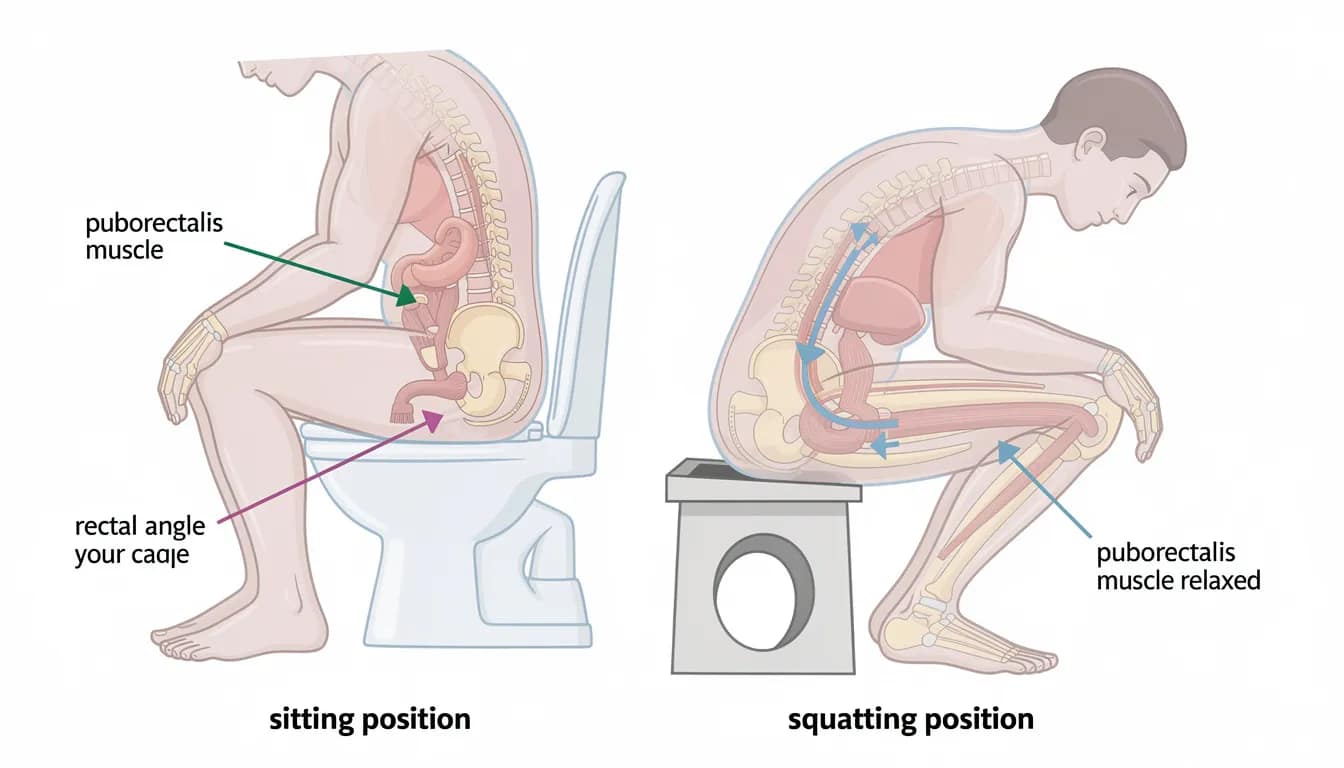
Studies measuring the anorectal angle during different positions found that squatting creates an angle of approximately 126 degrees, compared to just 100 degrees when sitting normally. This straighter pathway makes elimination significantly more efficient and reduces the pressure needed from your abdominal muscles.
Why Traditional Sitting Creates Problems
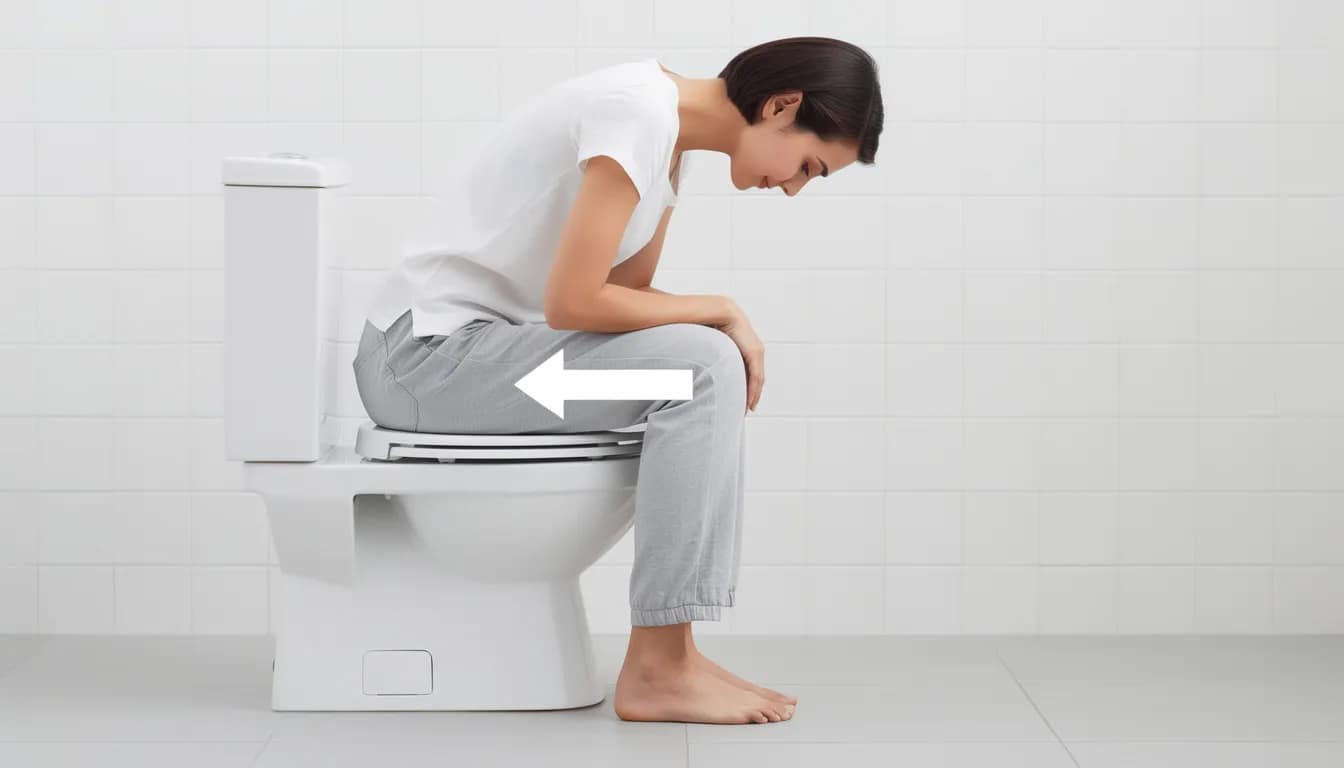
Modern toilets force us into a 90-degree sitting angle that actually works against our digestive system. When you sit upright on a standard toilet, you create a kink in your rectum that makes elimination more difficult than it needs to be. People who are constipated often experience even greater difficulty and straining in this position, as the angle further impedes the passage of stool.
The culprit is your puborectalis muscle – part of your pelvic floor that acts like a sling around your rectum. When you’re sitting upright, this muscle remains partially contracted, maintaining continence but also creating resistance during bowel movements. This is why many people find themselves straining, which can lead to hemorrhoids, anal fissures, and other pelvic floor dysfunction over time.
The design of modern toilets is actually relatively recent in human history. For thousands of years, humans naturally used squatting positions for elimination. Cultures that still use squatting toilets today show significantly lower rates of constipation, diverticulosis, and colorectal problems. While diet and lifestyle factors play a role, the mechanical advantages of proper positioning can’t be ignored.
When you sit upright, you’re essentially fighting against your body’s natural mechanics. Your rectal muscles can’t fully relax, and you end up relying more heavily on abdominal pressure to move things along – which is exactly the opposite of what should happen during healthy elimination.
Understanding Your Anatomy
To understand why position matters so much, let’s talk about what’s actually happening inside your body during a bowel movement. Your rectum isn’t positioned straight down like you might imagine. Instead, it sits at an angle, controlled by your pelvic floor muscles, particularly the puborectalis muscle that wraps around your rectum like a supportive sling.
During defecation, this muscle needs to fully relax to straighten the rectal canal and allow stool to pass easily through your anus. The problem with conventional sitting is that it doesn’t allow this muscle to relax completely, maintaining what’s essentially a kinked pathway.
When your hips are flexed beyond 90 degrees – which happens when you squat or elevate your knees while sitting – you create the mechanical conditions for your puborectalis muscle to slack off completely. This straightens the anorectal angle and creates optimal alignment between your rectum and anus for efficient elimination.
Think of your digestive system like a garden hose. When you step on the hose (similar to sitting upright), water can still flow but requires much more pressure. Remove that kink (like elevating your knees), and everything flows naturally with minimal effort.
The colon, or large intestine, plays a crucial role in this process by absorbing nutrients and water from digested food and forming stool before it moves into the rectum. Proper colon function is essential for overall bowel health and helps prevent digestive disorders.
Your large intestine and rectum are designed to work with gravity and natural muscle relaxation, not against the resistance created by suboptimal positioning. Understanding this anatomy helps explain why simple positioning changes can make such a dramatic difference in your bathroom experience.
How to Use a Toilet Stool Effectively
A toilet stool is essentially a defecation posture modification device that transforms your regular toilet into something closer to the squatting position. The key is finding the right height and positioning to create optimal hip flexion without compromising stability.
Place a 7-9 inch high footstool in front of your toilet to elevate both feet while sitting. Popular options include the Squatty Potty, but any sturdy footstool that brings your knees higher than your hips will work. The stool should be wide enough – at least 17 inches – to comfortably support both feet without wobbling or sliding.
Once your feet are elevated, lean forward slightly with your elbows resting on your knees or thighs. This forward lean helps relax your pelvic floor and opens your anorectal angle more completely. You’re essentially creating a supported squatting position that maintains the comfort and safety of sitting while gaining the mechanical advantages of squatting.
Make sure both feet are placed flat on the potty stool, keeping them parallel rather than angled. This stable base supports proper alignment throughout your torso and pelvis. The elevated position should feel comfortable – if you experience knee or hip discomfort, try a slightly lower stool or adjust your forward lean.
DIY Alternatives to Commercial Toilet Stools
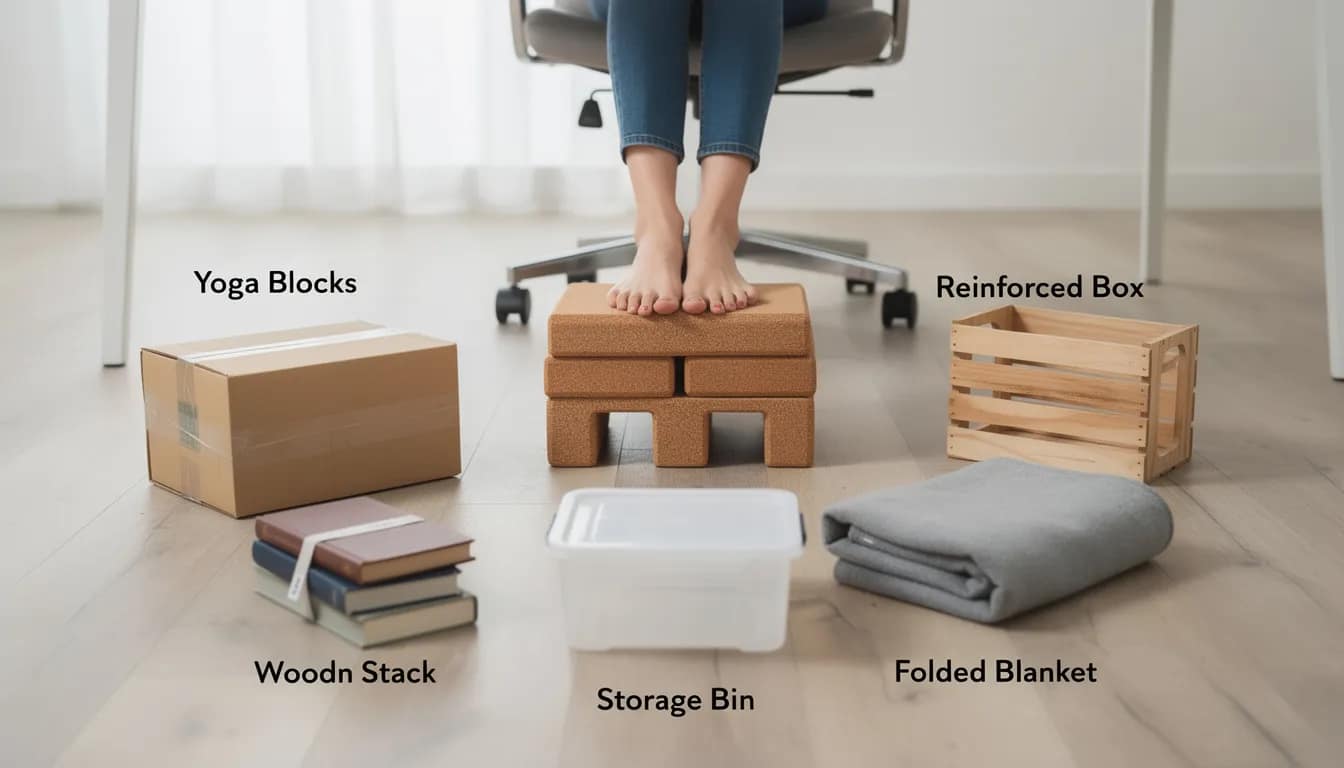
You don’t need to buy anything expensive to test whether position changes help your bowel movements. A sturdy cardboard box can serve as an effective temporary footrest, as can a stack of thick books or phone books if you still have them lying around.
Yoga blocks work excellently as toilet stools and are designed to support body weight safely. An upside-down trash can or storage container can also provide the right height, though make sure it’s stable and won’t slide during use.
For a softer option, try stacking thick towels or pillows to create elevation for your feet. While these won’t be as stable as rigid options, they can help you determine the right height before investing in a permanent solution.
Whatever DIY option you choose, safety should be your first concern. Make sure your makeshift footstool can support your weight without sliding, tipping, or collapsing. Test stability before relying on it during actual bathroom visits.
Leaning Forward vs. Backward Techniques
The direction you lean while sitting makes a significant difference in how effectively you can eliminate. Leaning forward 35-45 degrees while your feet are elevated creates the most effective elimination posture by helping your puborectalis muscle relax and opening your anorectal angle more completely.
Forward leaning also engages gravity to assist with elimination rather than working against it. When you lean back or sit perfectly upright, you’re essentially compressing the very pathways that need to open for comfortable bowel movements.
Some people with chronic constipation or occasional constipation may benefit from a gentle rocking motion while leaning forward. This isn’t aggressive movement – just slight shifts that can help relax tense muscles and encourage natural peristalsis in your digestive system.
Leaning backward should be avoided entirely, as it increases rectal bending and can actually cause more straining. If you find yourself naturally wanting to lean back, it might indicate that your footstool is too high or that you need to adjust your overall positioning.
Additional Positioning Tips for Better Bowel Movements
Beyond the basic elevated-feet, forward-lean posture, several additional positioning details can make bowel movements easier and more complete. Keep your feet parallel and flat on your foot stool, avoiding the temptation to cross your legs or place your feet at angles, which can create tension in your pelvic floor muscles.
Breathing plays a crucial role in successful elimination. Breathe deeply and avoid holding your breath, which creates tension throughout your pelvic muscles and abdominal muscles. Instead, practice relaxed breathing that allows your belly to expand naturally.
Give yourself time in the optimal position before attempting to strain. Allow 2-3 minutes for your muscles to relax naturally and for your digestive system to respond to the improved mechanics. Many people find that simply getting into the right position triggers their body’s natural elimination reflexes.
If you’re unsuccessful after 3 attempts, stand up and walk around, or try again later. Avoiding excessive straining prevents damage to your pelvic floor and reduces your risk of developing hemorrhoids or other complications. Your digestive system works better when you work with it, not against it.
Remember to relax your pelvic floor consciously. Many people unconsciously tense these muscles when they’re trying to have a bowel movement, which is counterproductive. Think “relax and release” rather than “push and strain.”
Avoiding Common Mistakes
Look, even when you’re trying your absolute best, it’s ridiculously easy to mess up what should be a simple 2-minute bathroom visit. One of the biggest blunders? Sitting there with your feet planted flat on the floor like you’re about to give a corporate presentation. This position keeps your pelvic floor muscles wound tighter than a stressed-out parent on Christmas morning, making it way harder for your body to just chill out and let things happen naturally. Stick with this approach for months, and you’ll be dealing with discomfort, straining, and that fun chronic constipation that makes every bathroom trip feel like a negotiation.
Here’s another classic mistake that’ll make you want to smack your forehead: ignoring your body’s “hey, it’s time!” signals. When nature calls and you’re like “nah, I’m busy,” your stool decides to become as hard and dry as yesterday’s bagel. That means when you finally do show up to the bathroom, you’re in for some serious effort and straining that puts your rectum and abdominal muscles through the wringer—plus sets you up for all kinds of digestive drama nobody wants to deal with.
Using a foot stool to elevate your knees is honestly genius-level bathroom strategy, but here’s the thing—you’ve got to nail the technique. Make sure those knees are sitting higher than your hips and lean forward slightly, like you’re about to share a secret with someone. This magic combo helps your pelvic floor and abdominal muscles finally exhale and relax, turning what used to be a struggle into something that just… flows. If you’re still sitting there wondering why nothing’s happening, double-check that posture and stool height—details matter.
Oh, and can we talk about the laxative trap for a second? Sure, those stimulant laxatives might seem like your digestive system’s best friend when you’re desperate, but relying on them is like using a sledgehammer to hang a picture frame. They’ll mess with your natural rhythm and actually make constipation worse over time—basically the opposite of what you’re going for. Instead, go the route that actually works long-term: load up on leafy greens and whole grains, chug more water than you think you need, and get your body moving regularly. These changes support your bowels like a good friend instead of bulldozing through like a wrecking ball.
Finally, here’s the thing nobody really talks about: understanding how your rectum, anus, and muscles actually work together is like having the instruction manual for your own body. When you know what’s supposed to happen, you can make smarter choices instead of just hoping for the best every time you sit down. Ditch these common mistakes, embrace the habits that actually work, and you’ll transform your bathroom experience from a daily mystery into something smooth, comfortable, and—dare we say it—actually pleasant.
Beyond Position: Supporting Healthy Bowel Movements
While proper positioning can dramatically improve your bathroom experience, it works best as part of a comprehensive approach to digestive health. Staying hydrated by drinking 8-10 glasses of water daily keeps stool soft and easier to pass, reducing the effort needed regardless of your position.
Consuming adequate fiber from sources like whole grains, leafy greens, beans, and other fiber rich foods provides the bulk necessary for healthy bowel movements. Aim for 25-35 grams of fiber daily, but increase gradually to avoid digestive discomfort.
Regular exercise stimulates intestinal contractions and promotes regularity. Even 30 minutes of walking daily can significantly improve your digestive system’s function and help things moving more predictably.
Establishing a consistent toilet routine helps train your digestive system. Try to sit on the toilet at the same times daily, preferably 15-30 minutes after meals when your gastrocolic reflex is strongest. This natural response helps coordinate bowel movements with your body’s existing rhythms.
Avoid rushing bathroom visits or holding bowel movements when the urge strikes. Delaying elimination when your body signals readiness can lead to harder stools and more difficulty later. When you feel the urge, responding promptly supports better long-term digestive health.
For health promotion, consider your overall lifestyle factors. Chronic stress can significantly impact digestive function, sometimes requiring stress management techniques alongside position changes for optimal results.
When to Seek Medical Help
While positioning changes help most people achieve easier, more complete bowel movements, persistent digestive disorders may require medical evaluation. Consult a healthcare provider if constipation persists for more than 3 weeks despite position changes and lifestyle modifications.
Seek immediate medical attention for severe abdominal pain, blood in your stool, or sudden changes in bowel patterns. These symptoms could indicate serious digestive disorders that need professional evaluation and treatment beyond simple posture adjustments.
If you continue experiencing chronic straining even with proper positioning and good bowel habits, you may have underlying pelvic floor dysfunction that requires specialized treatment. Physical therapy specifically targeting pelvic floor muscles can address these issues effectively.
Consider consulting a doctor if constipation occurs alongside other symptoms like severe bloating, unexplained weight loss, or persistent abdominal discomfort. While positioning helps with mechanical aspects of elimination, it doesn’t address underlying medical conditions that may require treatment.
For older adults experiencing new or worsening bowel disorders, medical evaluation becomes especially important since age-related changes in digestive function sometimes require additional medical support beyond positioning modifications.
Don’t rely on stimulant laxatives as a long-term solution without medical guidance. While they can provide temporary relief, frequent use can actually worsen bowel function over time. If you find yourself regularly needing laxatives despite good positioning and lifestyle habits, professional evaluation can help identify underlying causes.
Conclusion
The best poop position isn’t just about comfort – it’s about working with your body’s natural design instead of against it. By elevating your knees above your hips, leaning forward with elbows on your knees, and allowing your pelvic floor to relax, you create the mechanical conditions for easier, faster, and more complete elimination.
Whether you invest in a commercial posture modification device like a Squatty Potty or start with DIY alternatives like yoga blocks, the key is consistency. Give your body time to adjust to this new positioning, and pay attention to how it affects your overall digestive comfort and efficiency.
Remember that positioning is most effective when combined with adequate hydration, sufficient fiber intake, regular exercise, and healthy bathroom habits. Your digestive system responds best to comprehensive care that addresses both mechanical and lifestyle factors.
The next time you sit on the toilet, think about creating that optimal angle, relax your belly and pelvic muscles, and give your body the mechanical advantage it was designed to use. Your future self – and your legs – will thank you for making these simple but effective changes.