
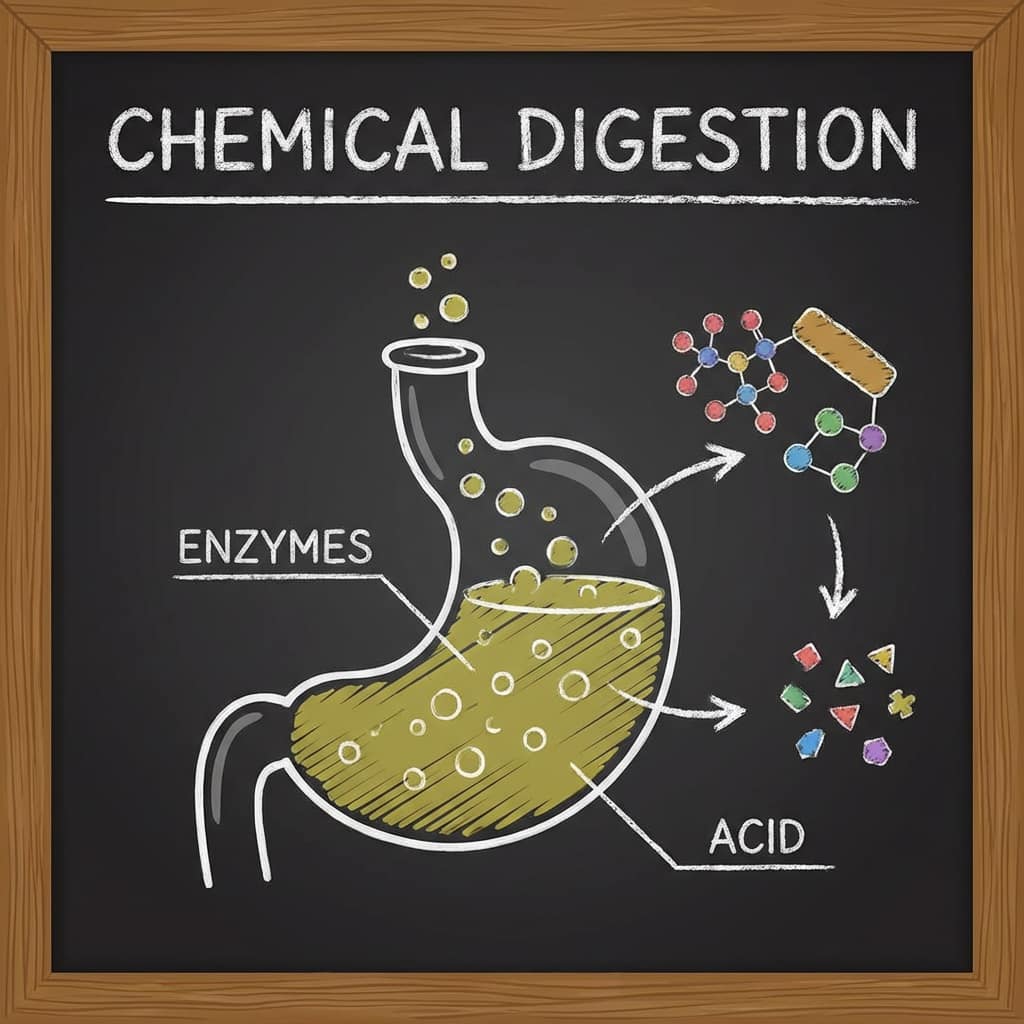
You eat a sandwich. Thirty minutes later, your body is extracting glucose molecules, amino acids, and fatty acids from what was once bread, turkey, and cheese. But here’s the thing—those macronutrients don’t just magically teleport into your bloodstream. They need to be chemically dismantled first.
Chemical digestion is the enzyme-driven breakdown of complex molecules in food into smaller, absorbable units through a process called hydrolysis. Unlike mechanical digestion—the physical breakdown of food particles through chewing and churning—chemical digestion actually severs the chemical bonds holding nutrients together. Without it, you could chew your food into microscopic pieces and still absorb almost nothing.
This complex process unfolds across multiple sites in your gastrointestinal tract: it starts in your mouth with saliva, continues in your stomach’s acidic bath, reaches its peak in the small intestine with pancreatic and brush border enzymes, and wraps up with bacterial fermentation in the large intestine. The result? Starches become simple sugars glucose and fructose. Proteins become individual amino acids. Fats become fatty acids and glycerol. And your body finally gets the building blocks it needs to function.
This article walks you through the entire journey—organ by organ, macromolecule by macromolecule—so you understand exactly how your digestive system transforms last night’s dinner into cellular fuel.
Mechanical vs. Chemical Digestion
Before diving deeper into chemical digestion, let’s clarify how it differs from its partner process: mechanical digestion. Mechanical digestion involves the physical breakdown of ingested food—teeth grinding bread into smaller food particles, your stomach churning that bolus into a creamy paste. Chemical digestion, on the other hand, involves enzymes break-ing molecular bonds to transform large nutrients into absorbable units.
Here’s how they compare:
- What changes: Mechanical digestion reduces food size without altering its chemical structure. Chemical digestion changes the molecular composition entirely—starch becomes maltose, proteins become peptides.
- Where they occur: Mechanical digestion happens primarily in the mouth (chewing) and stomach (churning). Chemical digestion occurs in the mouth, stomach, and most extensively in the small intestine.
- Enzyme involvement: Mechanical digestion uses muscles and teeth—no enzymes required. Chemical digestion absolutely requires digestive enzymes to catalyze hydrolysis reactions.
- Energy required: Mechanical digestion requires muscular effort. Chemical digestion requires specific pH conditions and enzyme activity.
The sequence matters: mechanical digestion in the mouth and stomach increases surface area, making chemical digestion far more efficient. When you chew a piece of bread, you’re performing mechanical digestion. When salivary amylase in that same mouthful starts converting starch into maltose, that’s chemical digestion. When your stomach churns that bread into chyme, that’s mechanical. When pepsin starts cleaving proteins, that’s chemical.
Normal digestion and absorption depend on both processes working together throughout the digestive tract.
Overview of the Digestive System and Sites of Chemical Digestion
The digestive system consists of the gastrointestinal tract—a continuous tube running from mouth to anus—plus several accessory organs that supply the secretions needed for chemical digestion. These accessory organs include the salivary glands (parotid glands, submandibular, and sublingual), liver, gallbladder, and pancreas.
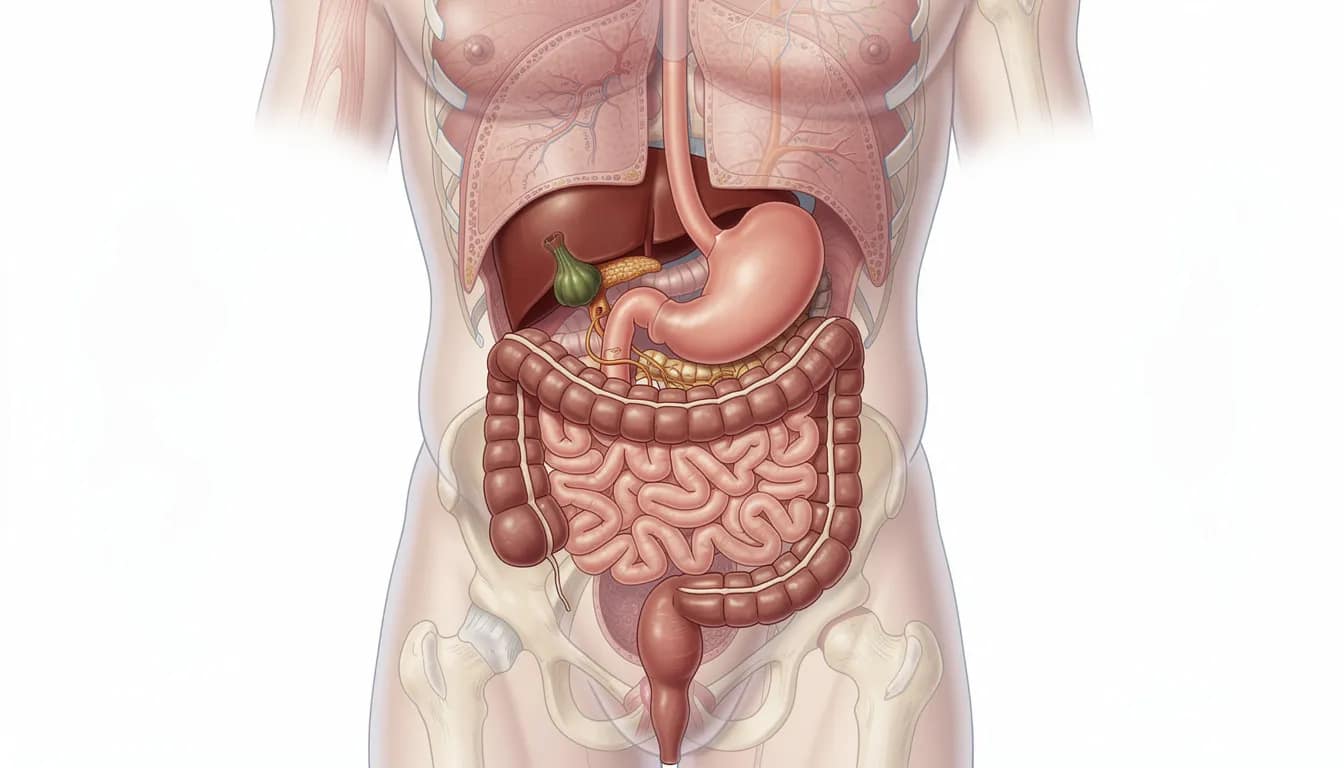
Think of digestion as a five-stage journey: ingestion (eating), propulsion (moving food along), digestion (breaking it down), absorption (taking nutrients into blood and lymph), and elimination (expelling waste). Chemical digestion takes place most actively in three locations: the mouth, stomach, and small intestine. The large intestine contributes minimal chemical digestion but hosts bacterial fermentation that extracts additional nutrients.
At its core, chemical digestion works through hydrolysis—water molecules combine with specific enzymes to break covalent bonds in large food molecules. Different macronutrients follow different digestive paths:
- Carbohydrates require amylases and disaccharidases
- Proteins require proteases working at different pH levels
- Lipids require lipases plus bile salts for emulsification
- Nucleic acids require nucleases and phosphatases
The sections that follow detail what happens in each organ and how each macromolecule gets broken down—organized the way you’d find in a physiology textbook, but written so you can actually understand it.
Chemical Digestion Along the GI Tract
Chemical digestion occurs in distinct stages as food moves through the mouth, stomach, small intestine, and large intestine. Each segment of the digestive tract provides specialized conditions: neutral pH and enzyme-rich saliva in the mouth, an intensely acidic environment in the stomach, an alkaline enzyme-rich environment in the small intestine, and bacterial fermentation chambers in the large intestine.
This section focuses on what happens in each organ. Later sections address specific nutrients and their absorption pathways in more detail. As you’ll see, the composition of partially digested food—called chyme once it leaves the stomach—changes dramatically as it moves from one organ to the next.
Chemical Digestion in the Mouth
Chemical digestion begins almost immediately after you take a bite. As food contacts your tongue and cheeks, saliva floods in from three pairs of salivary glands—the parotid glands (largest, near your ears), submandibular (under your jaw), and sublingual (under your tongue). Together, they produce about 1 to 1.5 liters of saliva daily.
Saliva contains salivary amylase (also called ptyalin), an enzyme that starts carbohydrate digestion by breaking down dietary starches—from foods like bread, pasta, rice, and potatoes—into shorter polysaccharides and maltose. This happens at the near-neutral pH of your mouth (around 6.8-7.0). If you’ve ever noticed bread tasting slightly sweet after chewing it for a while, that’s salivary amylase at work, releasing maltose from starch.
Your mouth also contains an enzyme called lingual lipase, secreted by lingual glands on the tongue’s surface. Lingual lipase begins triglyceride digestion, though it works more effectively later in the acidic stomach environment. It’s particularly good at breaking down short chain lipids and medium-chain fats found in foods like dairy.
Only a small fraction of total digestion occurs in your mouth—contact time is simply too short. Within seconds to minutes, you swallow the bolus (the chewed food mass), and it travels down your esophagus to your stomach. Still, the combination of chewing (mechanical) and salivary enzymes (chemical) has already started preparing food for the serious digestive work ahead.
Chemical Digestion in the Stomach
The bolus enters your stomach through the lower esophageal sphincter and encounters a dramatically different environment. Here, gastric secretions transform that neutral-pH bolus into acidic chyme—a soupy mixture with a pH between 1.5 and 3.5.
Parietal cells in your stomach lining produce hydrochloric acid, which serves multiple critical functions. It helps denature proteins by unraveling their complex three-dimensional structures, making them accessible to enzymes. It activates pepsinogen (secreted by chief cells) into pepsin, the stomach’s primary protein-digesting enzyme. And it kills many pathogens that hitch a ride on your food. Your stomach produces 2 to 3 liters of gastric juices daily to accomplish this acid hydrolysis.
Pepsin gets to work on food proteins from meat, eggs, legumes, and other sources, cleaving large proteins into shorter polypeptides. It preferentially cuts at aromatic amino acids like phenylalanine and tyrosine, achieving about 10-20% of total protein digestion in the stomach.
Gastric lipase, also produced by chief cells, contributes to lipid digestion—hydrolyzing triglycerides into free fatty acids and monoacylglycerols. This enzyme handles about 10-30% of fat digestion and is especially important in infants, whose pancreatic function isn’t fully developed.
What about carbohydrate digestion? It largely pauses here. As stomach pH drops below 4, salivary amylase loses its activity. The focus in this acidic chamber shifts primarily to proteins and some fats.
Chemical Digestion in the Small Intestine
Welcome to the main event. The small intestine—divided into the duodenum, jejunum, and ileum—is where most chemical digestion and absorption occur. We’re talking about over 90% of total chemical digestion.
When acidic chyme enters the duodenum, it triggers the release of two crucial substances. First, the pancreas secretes pancreatic juice, rich in bicarbonate (to neutralize stomach acid) and a cocktail of enzymes secreted by the pancreas. Second, the liver produces bile, which is stored in the gallbladder and released into the duodenum. This neutralizes the acid, creating an optimal pH of 6-7 for intestinal enzymes.
Key pancreatic enzymes include:
- Pancreatic amylase: Continues starch digestion, converting remaining polysaccharides to maltose
- Trypsin, chymotrypsin, and carboxypeptidase: Break proteins and polypeptides into progressively smaller chains of amino acids
- Pancreatic lipase: Hydrolyzes triglycerides into fatty acids and monoglycerides (with help from colipase)
- Nucleases: Break down nucleic acids (DNA and RNA) into nucleotides
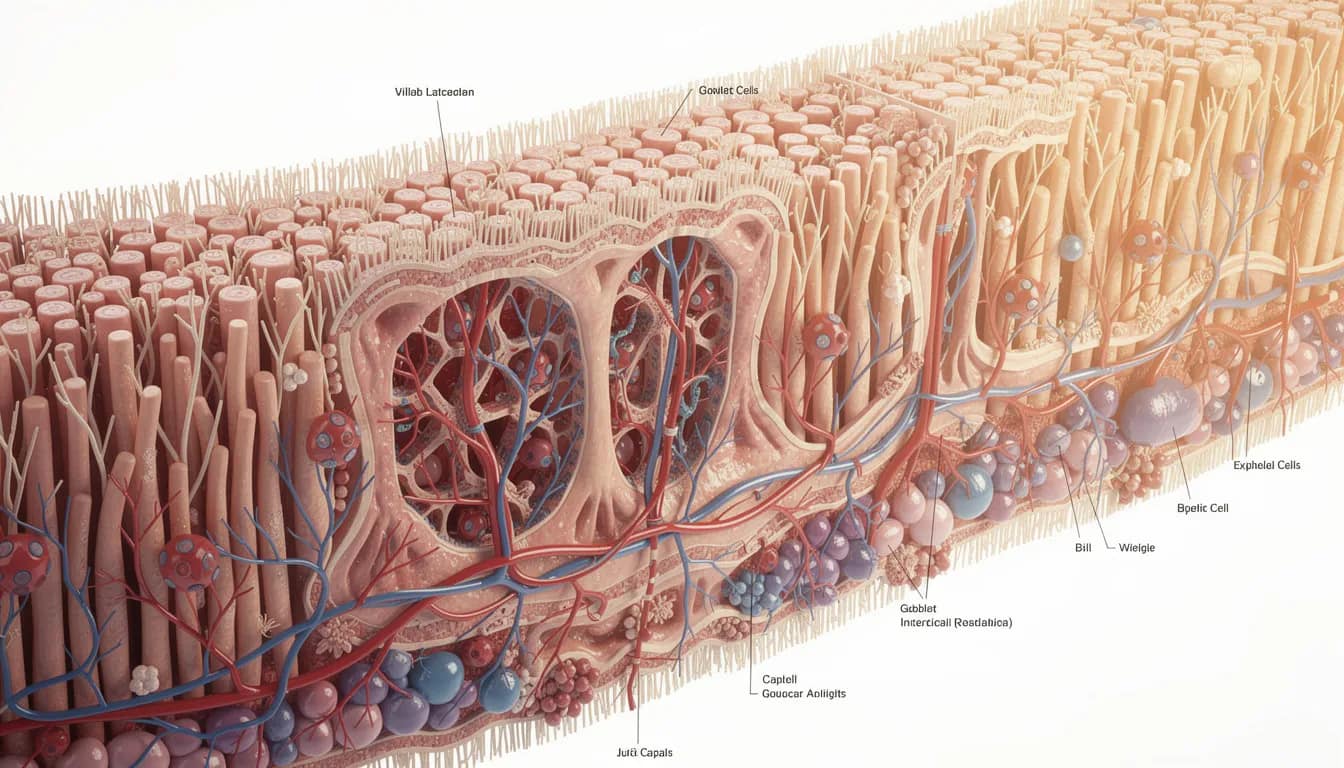
But the pancreas doesn’t finish the job alone. Brush border enzymes on the microvilli of intestinal cells (enterocytes) complete digestion’s final steps. These include lactase, sucrase, and maltase for disaccharides, plus peptidases for small protein fragments and nucleotidases for nucleotides.
Bile salts and lecithin deserve special mention. Fats don’t mix with water, creating a problem for water-based digestive enzymes. Bile salts solve this by emulsifying large fat droplets into tiny micelles, dramatically increasing surface area for pancreatic lipase. Without this emulsification, lipid absorption would be severely compromised.
The small intestine’s surface area—approximately 200 square meters thanks to villi and microvilli—ensures maximum contact between digested food and absorptive cells.
Role of the Large Intestine and Gut Microbiota
The large intestine doesn’t secrete digestive enzymes. By the time digested food arrives here, human-mediated chemical digestion is essentially complete. What remains are mostly water, electrolytes, and undigested material—primarily fiber and resistant starch.
This is where your gut microbiota takes over. Trillions of bacteria ferment these undigested carbohydrates, producing short-chain fatty acids like acetate, propionate, and butyrate (100-400 mmol daily). These fatty acids provide energy for colon cells and contribute to overall health. The fermentation process also produces gases—which explains certain after-effects of high-fiber meals.
Your gut bacteria also synthesize certain vitamins, notably vitamin K and some vitamin B compounds, which can be absorbed and used by your body. The small intestine produces hormones that regulate this entire digestive process, coordinating enzyme release and gut motility.
The large intestine’s primary jobs are absorbing water and electrolytes (up to 90% of the 9 liters of daily fluid that passes through your GI tract) and forming feces. Only limited additional nutrient salvage occurs via microbial action—but that salvage can be significant, especially when you eat milk based foods, fiber-rich vegetables, or resistant starch.
Colonic activity ties back to overall nutritional status. A healthy diet rich in fiber supports a diverse microbiome, which in turn supports better fermentation, vitamin synthesis, and immune function.
Chemical Digestion of Carbohydrates
Dietary carbohydrates come in three main forms: monosaccharides (glucose, fructose, galactose), disaccharides (sucrose, lactose, maltose), and polysaccharides (starch, glycogen, and indigestible fibers like cellulose). Chemical digestion aims to convert digestible carbohydrates into monosaccharides for absorption.
The breakdown happens sequentially. Salivary amylase in the mouth starts converting complex carbohydrates (starch) into smaller polysaccharides and maltose. This digestion pauses in the acidic stomach, where the low pH inactivates salivary amylase. Then pancreatic amylase in the small intestine resumes the work, breaking starches down to disaccharides.
Brush border enzymes complete carbohydrate digestion:
- Lactase: Converts lactose into glucose and galactose (critical for those who eat milk based foods)
- Sucrase: Handles sucrose digestion—the disaccharide sucrose (table sugar, including cane sugar and beet sugar) yields glucose and fructose
- Maltase: Breaks maltose into two glucose molecules
The activity of these certain enzymes determines your tolerance for various foods. Low lactase activity, for instance, means undigested lactose enters the large intestine, where bacterial fermentation causes the bloating, gas, and cramping characteristic of lactose intolerance.
Note that cellulose and many dietary fibers aren’t chemically digested by human enzymes. We lack the enzyme to break cellulose’s beta-glycosidic bonds. Instead, these fibers pass to the large intestine, where bacteria may partially ferment them into short-chain fatty acids—but they’re never absorbed as simple sugars.
Chemical Digestion of Proteins
Proteins are chains of amino acids linked by peptide bonds. Breaking these bonds requires stepwise hydrolysis to yield free amino acids and small peptides suitable for absorption.
Protein digestion starts in the stomach. Hydrochloric acid denatures proteins—unfolding their complex structures—and activates pepsinogen to form trypsin’s precursor enzyme, pepsin. Pepsin then breaks food proteins into shorter polypeptides. This digestive process handles meat, eggs, dairy, legumes, and other protein sources.
In the small intestine, pancreatic proteases take over. Trypsinogen is activated by enterokinase (an enzyme on brush border cells) to form trypsin, which then activates other zymogens. Chymotrypsin, elastase, and carboxypeptidase work together, breaking polypeptides into progressively smaller chains and oligopeptides.
Brush border peptidases and cytosolic peptidases in enterocytes complete the process, cleaving small peptides into individual amino acids and di-/tripeptides. These products are then ready for absorption.
Proper protein digestion is critical for supplying essential amino acids—the ones your body can’t synthesize. These amino acids support tissue repair, enzyme synthesis, hormone production, immune function, and countless other metabolic processes. Insufficient protein digestion leads to deficiencies that affect virtually every body system.
Chemical Digestion of Lipids
Dietary lipids arrive mainly as triglycerides, with smaller amounts of phospholipids and cholesterol esters. Their hydrophobic (water-fearing) nature creates a unique digestive challenge—they don’t dissolve in the watery environment of your digestive tract.
Lipid digestion starts with minor early steps. Lingual lipase in the mouth and gastric lipase in the stomach begin triglyceride hydrolysis. This early action is especially important in infants and during longer gastric retention times, handling perhaps 10-30% of fat breakdown.
But the crucial work happens in the small intestine. Bile salts from the liver (stored in the gallbladder) emulsify large fat droplets into tiny micelles—think of it like dish soap breaking up grease in water. This dramatically increases the surface area available for pancreatic lipase.
Pancreatic lipase, working with its helper protein colipase, then cleaves each triglyceride into two free fatty acids and one glycerol molecule attached to the third fatty acid (a monoglyceride). These products are incorporated into micelles for transport to the intestinal epithelium.
After absorption, long-chain fatty acids and monoglycerides are re-esterified back into triglycerides inside enterocytes. These triglycerides are packaged with cholesterol, phospholipids, and proteins into particles called chylomicrons, which enter lacteals (lymphatic vessels in the villi) and travel through the lymphatic system before reaching the bloodstream and eventually the cardiovascular system.
Short-chain fatty acids, by contrast, are readily absorbed directly into blood capillaries without this elaborate packaging.
Chemical Digestion of Nucleic Acids
DNA and RNA from plant and animal foods are dietary nucleic acids. While we don’t eat them for their genetic information, these molecules must be broken down for their components to be absorbed and reused.
Pancreatic nucleases—deoxyribonuclease (for DNA) and ribonuclease (for RNA)—cleave nucleic acids in the small intestine, producing smaller nucleotides. Brush border enzymes called nucleotidases and phosphatases then further digestion of these nucleotides, breaking them into pentose sugars (ribose or deoxyribose), nitrogenous bases (adenine, guanine, cytosine, thymine, uracil), and phosphate ions.
These small components are absorbed and made available for the body’s own nucleic acid synthesis—supporting cell division, tissue repair, and the basic functions of cellular life. While nucleic acid digestion receives less attention than carbohydrate, protein, or lipid digestion, it remains an essential part of complete digestion of your food.
From Chemical Digestion to Absorption
Chemical digestion means nothing if the resulting molecules can’t get into your body. Absorption through the intestinal epithelium is what actually allows nutrients to enter circulation and support your cells.
The main transport mechanisms include:
- Active transport: Requires cellular energy (ATP) to move molecules against concentration gradients
- Secondary active transport: Uses ion gradients (often sodium) to co-transport nutrients
- Facilitated diffusion: Uses carrier proteins but no energy; moves molecules down concentration gradients
- Simple diffusion: Direct movement of small, lipid-soluble molecules across cell membranes
- Endocytosis: Cellular engulfment of larger molecules or particles
Water-soluble molecules (monosaccharides, amino acids, most vitamins and minerals) typically enter blood capillaries within the villi. Most dietary lipids, however, travel first through lymphatic lacteals as chylomicrons before reaching the blood.
The small intestine—especially the duodenum and jejunum—handles the vast majority of nutrient absorption. The terminal ileum has specialized roles, including vitamin B12 absorption via intrinsic factor. Villi and microvilli provide enormous surface area for efficient uptake.
Complete chemical digestion leads to efficient absorption. Efficient absorption leads to adequate nutrition. And adequate nutrition supports everything from energy production to immune competence.
Absorption of Carbohydrates
Almost all dietary carbohydrates are absorbed as monosaccharides: glucose, galactose, and fructose. This happens primarily in the small intestine—mostly the duodenum and jejunum.
Glucose and galactose typically use secondary active transport coupled with sodium ions (Na+). Fructose enters mucosal cells via facilitated diffusion using a different transporter. Once inside enterocytes, all three monosaccharides exit via facilitated diffusion into capillary blood.
From the intestinal capillaries, monosaccharides travel via the hepatic portal vein to the liver, where they’re processed for immediate use, glycogen storage, or distribution to other tissues.
Under normal conditions, your small intestine can absorb over 100 grams of glucose per hour—demonstrating remarkable absorptive capacity. This is why even large carbohydrate meals are typically digested and absorbed efficiently, extracting maximum nutritional value from your food.
Absorption of Proteins
Protein digestion products—amino acids, dipeptides, and tripeptides—are absorbed mainly in the duodenum and jejunum.
Many amino acids enter enterocytes via secondary active transport with sodium or hydrogen ions. Small peptides (di- and tripeptides) have dedicated transporters and are often absorbed faster than free amino acids. Inside epithelial cells, most di- and tripeptides are hydrolyzed to individual amino acids before being released into capillary blood.
Under normal conditions, 95-98% of dietary protein is digested and absorbed—reflecting the efficiency of this system. Adequate amino acid absorption supports growth in children, muscle maintenance in adults, immune function throughout life, and enzyme production that keeps your nervous system and every other system running properly.
Absorption of Lipids
Short-chain fatty acids—common in fermented foods and produced by colonic bacteria—are absorbed directly into blood capillaries by simple diffusion. They don’t require the elaborate processing that long-chain fats do.
Long-chain fatty acids and monoglycerides, delivered to the brush border in micelles, diffuse into enterocytes. Inside these cells, they’re reassembled into triglycerides in the smooth endoplasmic reticulum. These triglycerides are then packaged with cholesterol, phospholipids, and apoproteins into chylomicrons.
Chylomicrons are too large to enter blood capillaries directly. Instead, they enter lacteals and travel through the lymphatic system, eventually draining into the bloodstream via the thoracic duct. From there, they circulate to tissues that need fatty acids for energy or storage.
Fat soluble vitamins—A, D, E, and K—are absorbed along with dietary lipids within micelles and chylomicrons. This is why lipid absorption is critical not just for energy but for vitamin status. Conditions affecting bile production, pancreatic function, or intestinal integrity can impair absorption of these essential nutrients.
Absorption of Nucleic Acid Components, Minerals, Vitamins, and Water
The pentose sugars, nitrogenous bases, and phosphate ions from nucleic acid digestion are absorbed via active transport. These components are reused in cellular metabolism and new DNA/RNA synthesis.
Mineral absorption follows various patterns:
- Sodium and other electrolytes are absorbed largely by active transport
- Iron uptake is carefully regulated in the duodenum; excess is stored as ferritin
- Calcium absorption is controlled by vitamin D and parathyroid hormone based on body needs
Vitamin absorption varies by type. Fat soluble vitamins (A, D, E, K) are absorbed with lipids. Most water-soluble vitamins are absorbed by diffusion or carrier-mediated transport. Vitamin B12 requires intrinsic factor (produced by stomach parietal cells) and receptor-mediated endocytosis in the terminal ileum—a unique and complex process.
Your small intestine absorbs the majority of daily water intake—several liters. Additional water reabsorption in the large intestine concentrates feces. Without sufficient digestion and absorption, none of these critical processes work efficiently, and nutritional status suffers.
Malabsorption and Enzyme Deficiencies
Malabsorption occurs when nutrient uptake is impaired despite adequate intake. Often, the problem traces back to issues in chemical digestion or intestinal transport.
Lactose intolerance is the classic example. When lactase activity in the brush border is low or absent—as it is in 65-70% of global adults post-weaning—undigested lactose passes into the large intestine. Bacteria ferment it, producing gas. The undigested sugar also draws water into the intestine osmotically. Result: bloating, cramping, gas, and diarrhea after consuming milk or dairy products. Those who are lactose intolerant learn quickly which foods to avoid or limit.
Pancreatic insufficiency presents another common problem. When the pancreas doesn’t produce sufficient digestive enzymes—as occurs in cystic fibrosis, chronic pancreatitis, or after pancreatic surgery—fat malabsorption leads to steatorrhea (fatty, foul-smelling stools with more than 7g of fat per day). Without proper lipid absorption, fat soluble vitamins become deficient too.
Conditions affecting the intestinal lining, such as celiac disease, reduce brush border enzymes and transporter density. This disrupts both further digestion and absorption, potentially causing widespread nutrient deficiencies even when diet is adequate.
Persistent digestive symptoms—chronic diarrhea, unexplained weight loss, nutrient deficiencies, or ongoing GI distress—warrant medical evaluation. Identifying enzyme or absorption problems early allows targeted treatment and prevents long-term nutritional consequences.
Conclusion
Every bite you take sets off a cascade of enzymatic reactions that most people never think about. Chemical digestion transforms complex foods—starch, protein, fat, nucleic acids—into molecules small enough for your intestinal cells to absorb: glucose molecules, amino acids, fatty acids, nucleotides, and more.
This chemical breakdown works in concert with mechanical and chemical digestion throughout your GI tract. Your mouth starts the process with chewing and salivary enzymes. Your stomach provides an acidic environment for protein denaturation and pepsin action. Your small intestine delivers the enzymatic finishing blows with pancreatic and brush border enzymes. And your large intestine extracts whatever remains through bacterial fermentation.
When this system works well, you extract energy, build and repair tissues, support immune function, and maintain overall health. When it doesn’t—due to enzyme deficiencies, malabsorption syndromes, or digestive disease—the consequences range from mild discomfort to serious nutritional deficits.
Understanding the basics of chemical digestion helps you make informed dietary choices, recognize when something’s off, and communicate more effectively with healthcare professionals about digestive symptoms. It also gives you a new appreciation for what happens between “eating dinner” and “feeling energized.”
Three times a day, your body performs this molecular magic. Now you know exactly how it works.