
Ever find yourself staring at a pharmacy aisle that looks like it was designed by someone who really, really wanted to confuse you? Antacids here, probiotics there, something called “bismuth subsalicylate” lurking in a pink bottle, and about forty different boxes promising to “soothe your stomach.”
You’re not alone. Digestive issues are ridiculously common—and so is the confusion about what actually helps.
This guide breaks down everything you need to know about digestive medicines: what they do, when to use them, when to stop using them, and when to call a doctor instead of reaching for another bottle.
Let’s get your gut sorted.
Quick Overview of Digestive Medicines
Digestive medicines are drugs and supplements designed to manage problems throughout your digestive tract—think heartburn, indigestion, nausea, diarrhea, constipation, bloating, and issues with enzyme or bacterial imbalances. They range from simple antacids that neutralize stomach acid in minutes to sophisticated prescription biologics that calm inflammatory bowel disease over months.
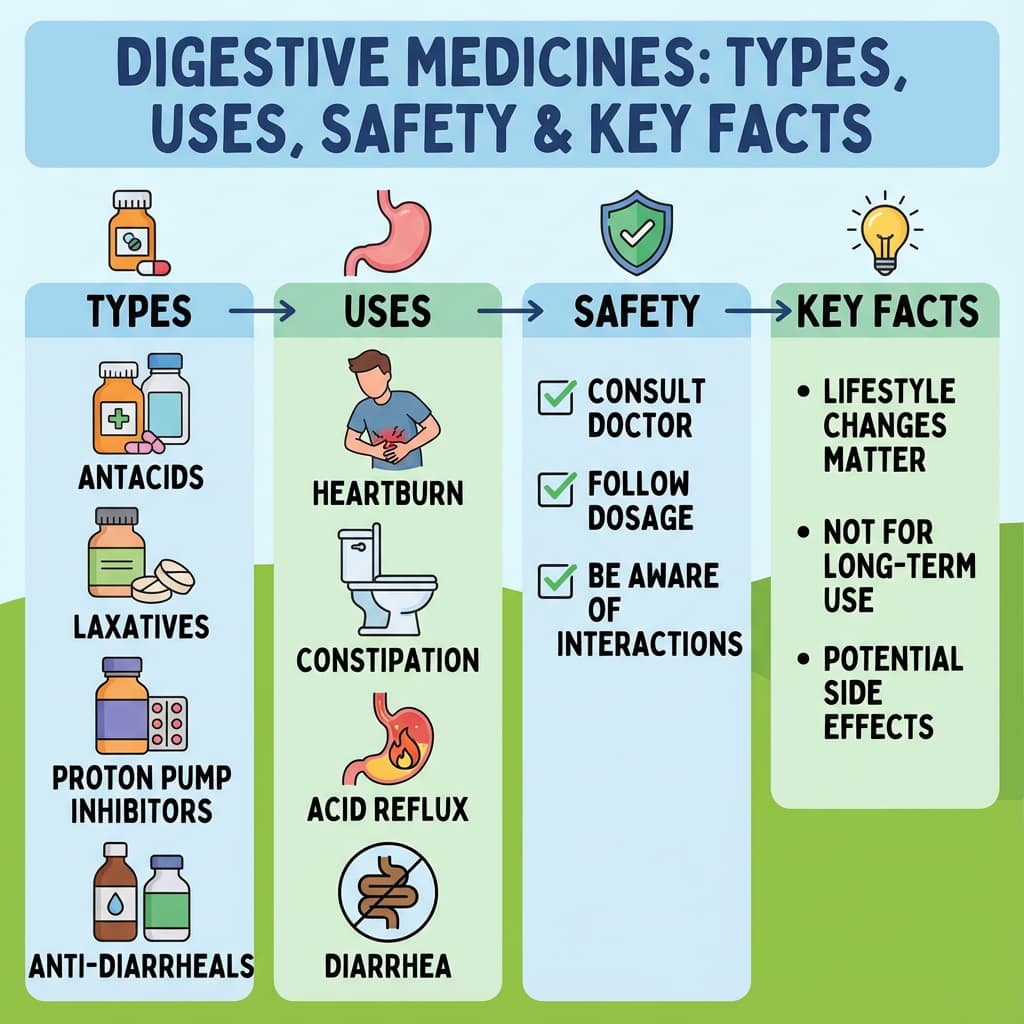
Here are the main groups you’ll encounter:
- Antacids – Neutralize existing stomach acid for quick relief
- Proton pump inhibitors (PPIs) – Block acid production at the source
- H2 blockers – Reduce acid production by blocking histamine receptors
- Promotility agents – Speed up movement through the digestive system
- Anti-diarrheals – Slow down intestinal transit to firm up stools
- Laxatives – Encourage bowel movements through various mechanisms
- Probiotics – Live bacteria that support gut microbiome balance. Probiotics are naturally occurring, live microorganisms in our bodies that help us digest foods, supply certain vitamins, and fend off disease-causing bacteria.
- Digestive enzymes – Help break down carbohydrates, fats, and proteins. Enzymes play a crucial role in digestion by breaking down food into nutrients the body can absorb.
Common products you’ve probably seen include omeprazole (Prilosec), loperamide (Imodium), lactase tablets, and probiotic capsules. Many of these are available over the counter in the US, UK, and EU—but some, like high-dose PPIs and prescription pancreatic enzymes, require a doctor’s involvement. Healthy individuals typically do not need to take digestive enzyme supplements.
Important: If you’re dealing with symptoms more than 2–3 times per week, or issues lasting longer than 4 weeks, get a medical evaluation before continuing to self-treat. Chronic digestive problems can signal something that needs more than a quick fix.
Common Over-the-Counter Digestive Medicines
This section covers the non-prescription remedies you’ll find for everyday complaints like occasional heartburn, gas, upset stomach, diarrhea, and constipation. These are common forms of digestive discomfort or irritation that digestive medicines are designed to address.
Antacids
Antacids like calcium carbonate (Tums, Rolaids), magnesium hydroxide (Milk of Magnesia), and bismuth subsalicylate (Pepto Bismol) work by chemically neutralizing stomach acid already present in your stomach. They’re fast—we’re talking minutes—but the relief doesn’t last long.
Use them for:
- Sour stomach after large or spicy foods
- Acid indigestion following fried foods or fatty foods
- Intermittent heartburn that doesn’t happen constantly
One quirk: magnesium hydroxide can have a laxative effect, while aluminum-based antacids tend toward constipation. Many products combine both to balance things out.
OTC Acid Reducers
H2 blockers like famotidine (Pepcid) reduce the amount of acid your stomach produces by blocking histamine receptors on acid-secreting cells. They kick in within about an hour and last longer than antacids—good for preventing symptoms before eating certain foods that trigger you.
Low-dose PPIs like omeprazole 20mg (Prilosec OTC) are also available without a prescription. These are more powerful, blocking acid production at the proton pump level. Most countries limit self-use to around 14 days per course. If you need them longer, it’s time to talk to a doctor.
Anti-Gas and Anti-Diarrheal Agents
Simethicone helps break up gas bubbles, reducing bloating and discomfort. It won’t prevent gas production, but it makes what’s there easier to pass.
For diarrhea, loperamide (Imodium) slows intestinal movement, giving your body more time to absorb water from stool. Bismuth subsalicylate also helps with diarrhea while coating the stomach lining. These are fine for short term relief from traveler’s diarrhea or viral gastroenteritis—once you’ve ruled out serious causes like food poisoning requiring medical attention.
OTC Laxatives
For constipation, options include:
Type | Examples | How It Works |
|---|---|---|
Bulk-forming | Psyllium (Metamucil) | Absorbs water, increases stool bulk |
Osmotic | Polyethylene glycol (MiraLAX) | Draws water into the colon |
Stool softeners | Docusate (Colace) | Helps water penetrate stool |
Stimulant | Senna, bisacodyl | Directly stimulates intestinal muscles |
Bulk-forming and osmotic laxatives are generally safe for regular bowel movements support. Stimulant laxatives work faster but aren’t meant for daily long-term use. Older adults especially should consult a clinician before making laxatives a habit.
Note: Brand names vary depending by country—Gaviscon, Tums, and Imodium are widely recognized, but always check local availability.
Digestive Enzymes: What They Are and When They’re Used
Digestive enzymes are proteins your body produces to break down food into absorbable nutrients. Your pancreas, stomach, and small intestine all contribute to this digestive process.
Here’s a quick breakdown of the key players:
Enzyme | Breaks Down | Found In/Helps With |
|---|---|---|
Amylase | Starches/carbohydrates | Bread, pasta, potatoes |
Lipase | Fats | Oils, dairy products, fatty foods |
Protease | Proteins | Meat, eggs, legumes |
Lactase | Lactose | Milk and dairy products |
Alpha galactosidase | Complex plant sugars | Beans, cruciferous vegetables |
Prescription vs. OTC Enzymes
There’s a significant difference between medically prescribed pancreatic enzyme replacement therapy (PERT) and the enzyme blends you see marketed for “bloating after heavy meals.”
PERT is a regulated prescription medicine containing lipase, amylase, and protease in carefully measured amounts. It’s prescribed for conditions like:
- Cystic fibrosis
- Chronic pancreatitis
- Post-pancreatic surgery
Dosing is precise—typically 500–2,500 lipase units per kilogram of body weight per meal—and titrated based on symptoms and stool quality. You take it with every meal and snack.
OTC enzyme blends contain much smaller and variable amounts. Labels aren’t tightly regulated in many countries, so what you see on the bottle may not match what’s inside. Evidence that these help otherwise healthy people is limited.
That said, some specific enzymes do have clear uses:
- Lactase supplements help people with lactose intolerance enjoy dairy products with fewer symptoms
- Alpha galactosidase (like Beano) breaks down complex sugars in beans, reducing gas
If you have genuine exocrine pancreatic insufficiency, OTC blends won’t cut it—you need prescription-strength PERT.
Probiotics and Gut Health
Probiotics are live “friendly” microorganisms—mainly Lactobacillus, Bifidobacterium, and Saccharomyces strains—used to support the balance of bacteria in your digestive system.

What They’re Used For
- Prevention of antibiotic-associated diarrhea
- Support in some irritable bowel syndrome (IBS) cases
- Possible relief from mild bloating and gas
- General digestive health maintenance
The catch? Effects are highly strain-specific. Lactobacillus rhamnosus GG works differently than Bifidobacterium infantis 35624, and not all strains help all conditions. Research from 2020–2024 remains mixed, with effects often modest.
Where to Find Them
Food sources:
- Yogurt with live cultures
- Kefir
- Sauerkraut
- Kimchi
- Tempeh
- Miso
Supplements: Commercial capsules and powders with labeled CFU (colony-forming units) counts—typically beneficial in the range of 10–30 billion CFU daily.
Safety Considerations
Most healthy people tolerate probiotics well, with temporary gas and bloating being the main side effects.
However, immunocompromised patients—those on chemotherapy, post-transplant, with advanced HIV, or with central venous lines—should only use probiotics under specialist guidance. There’s a rare but real risk of the “friendly” bacteria entering the bloodstream.
Medicines That Reduce Stomach Acid
Many digestive medicines focus on tackling excess stomach acid to treat conditions like gastroesophageal reflux disease (GERD), peptic ulcers, and gastritis. These medicines work by managing stomach contents, including acid and other substances, to relieve symptoms and prevent complications. The goal is both to relieve symptoms and to allow damaged tissue to heal.
Antacids
How they work: Chemically neutralize acid already in your stomach
Onset: Minutes
Duration: Short (30 minutes to 2 hours)
Best for: Occasional heartburn, not chronic disease
Examples include calcium carbonate, magnesium hydroxide, aluminum hydroxide, and sodium bicarbonate. They’re quick but won’t heal erosive damage.
H2 Blockers
How they work: Block histamine H2 receptors on parietal cells, reducing acid production
Onset: Within 1 hour
Duration: Intermediate (6–12 hours)
Best for: Mild-to-moderate acid reflux, nighttime heartburn symptoms
Famotidine is the most common; cimetidine and nizatidine are alternatives. Cimetidine has more drug interactions than the others due to effects on liver enzymes.
Proton Pump Inhibitors (PPIs)
How they work: Irreversibly inhibit the proton pump—the final step in acid production
Onset: Slower (days for full effect)
Duration: Strong and sustained (24+ hours)
Best for: Erosive esophagitis, peptic ulcers, severe GERD
PPIs like omeprazole, esomeprazole, pantoprazole, and lansoprazole are the most potent acid-suppressing medicines available. They heal ulcers faster and more reliably than H2 blockers.
Safety Considerations
Both PPIs and H2 blockers can cause:
- Diarrhea or constipation
- Headaches
- Nausea
Long-term PPI use has been associated with:
- Reduced absorption of vitamin B12, magnesium, and calcium
- Possible increased risk of bone fractures
- Higher risk of Clostridioides difficile infection
These associations come from observational studies—causality isn’t proven—but they’re worth discussing with your doctor if you’re on PPIs for a longer period.
Red flags that need urgent attention: Unexplained weight loss, anemia, black stools (suggesting bleeding), or difficulty swallowing alongside heartburn. Don’t just throw more antacids at these—see a doctor.
Prescription Digestive Medicines and When to Seek Help
When OTC options aren’t cutting it, or when symptoms point to something more serious, prescription medicines and medical supervision become necessary. These approaches are focused on treating more serious or persistent digestive disorders and symptoms.
Promotility Agents
Drugs like metoclopramide (Reglan) and domperidone (where licensed) increase movement through the digestive tract. They’re used for:
- Gastroparesis (delayed stomach emptying)
- Refractory GERD
These come with serious potential side effects. Metoclopramide can cause movement disorders like tardive dyskinesia with long-term use. Domperidone carries cardiac rhythm concerns. Duration of use is typically limited.
Other Prescription Options
- High-dose PPIs and H2 blockers for severe or complicated disease
- Bile acid binders (cholestyramine) for bile acid diarrhea
- Specialized IBS treatments like linaclotide or lubiprostone for IBS with constipation
- 5-ASA drugs (mesalamine) for inflammatory bowel disease
- Biologics (infliximab, adalimumab) for moderate-to-severe Crohn’s disease and ulcerative colitis
Pancreatic Enzyme Replacement Therapy (PERT)
For true exocrine pancreatic insufficiency, PERT involves:
- Taking enzymes with all meals and snacks
- Dosing based on body weight and fat content of meals
- Titration guided by a gastroenterologist based on symptoms and stool quality
This isn’t something to self-manage with OTC products.
When to Get Help Immediately
Don’t mess around with these symptoms—they need medical evaluation:
- Blood in vomit or stool
- Tarry, black stools
- Severe or sudden abdominal pain
- Persistent vomiting
- Fever with abdominal symptoms
- Jaundice (yellowing of skin or eyes)
- Unintentional weight loss
These could indicate bleeding, obstruction, infection, or malignancy—all situations where digestive medicines are not the answer.
Using Digestive Medicines Safely and Effectively
More medicine isn’t always better medicine. In fact, overusing digestive medicines can mask serious disease and create new health problems.
Follow Duration Guidelines
- Many OTC PPIs are limited to 14 days per course
- Most labels suggest no more than 3 courses per year without medical advice
- Antacids are for intermittent use, not daily long-term management
Watch for Drug Interactions
Medicine | Interaction Concern |
|---|---|
Antacids/PPIs | Reduce absorption of certain medications (antifungals, some HIV medicines, thyroid hormone, iron) |
Bismuth subsalicylate | Can interfere with stool color tests (turns stool black) |
Cimetidine | Alters metabolism of many prescription drugs via CYP450 enzymes |
Magnesium-based antacids | Can cause problems in people with kidney disease |
If you’re taking other medications, check with a pharmacist before adding digestive medicines.
Timing Matters
- PPIs: 30–60 minutes before eating smaller meals, ideally breakfast
- Antacids: Between meals or at bedtime when symptoms strike
- Enzymes: At the start of or during meals
- Probiotics: At consistent daily times as per product instructions
Special Populations
Certain groups need extra caution:
- Pregnant women and breastfeeding mothers: Many OTC products require doctor approval
- Infants and children: Dosing differs significantly; don’t guess
- Older adults: Higher risk of interactions and side effects, especially with magnesium, aluminum, or sodium-containing antacids
- Kidney or liver disease: Impaired clearance can lead to toxicity
Don’t Forget Lifestyle
Before committing to long-term medication, consider these changes that can reduce reliance on medicines:
- Eating smaller meals instead of large ones
- Avoiding alcohol, spicy foods, and fried foods close to bedtime
- Weight management (excess weight increases reflux risk)
- Quitting smoking
- Increasing fiber, whole grains, and fluids
- Managing stress (your gut and brain are deeply connected)

Digestive Medicines vs. Probiotics and Enzymes: Key Differences
Not all products labeled “digestive” work the same way. Understanding the differences helps you pick the right tool for the job.
Acid-suppressing drugs (PPIs, H2 blockers, antacids) primarily affect stomach acid levels and esophageal irritation. They don’t help you digest food better—they just reduce the acid that’s causing pain or damage.
Digestive enzymes directly break down food components. They’re most beneficial when a specific enzyme is lacking (like lactase in lactose intolerance) or when the pancreas isn’t producing enough enzymes overall.
Probiotics don’t digest food at all. Instead, they support a healthy microbial environment in the intestines, which may indirectly improve bowel regularity, reduce gas, and support immune function.
Quick Comparison
Type | Main Action | Examples | Typical Uses | Key Cautions |
|---|---|---|---|---|
Acid reducers | Lower/neutralize stomach acid | Omeprazole, famotidine, Tums | GERD, peptic ulcers, heartburn | Long-term use concerns; interactions |
Digestive enzymes | Break down food components | Lactase, pancrelipase, alpha galactosidase | Enzyme deficiency, lactose intolerance | OTC products vary depending on quality |
Probiotics | Support gut microbiome | Lactobacillus, Bifidobacterium strains | Antibiotic-associated diarrhea, IBS | Strain-specific effects; caution in immunocompromised |
Many people combine approaches—for example, using a PPI plus a probiotic during a course of antibiotics to reduce diarrhea risk. This is generally fine for healthy individuals, but if you have chronic disease, multiple medications, or immune problems, coordinate with your doctor.
Frequently Asked Questions About Digestive Medicines
Quick answers to the questions people actually ask.
How long can I safely use OTC heartburn medicine before seeing a doctor?
If you need heartburn medicine continuously for more than 2 weeks, or if symptoms return immediately after stopping, it’s time for an evaluation. Persistent symptoms could indicate GERD requiring prescription treatment, or rarely, something more serious. Don’t mask symptoms indefinitely.
Can I take probiotics and digestive enzymes together?
Yes—they work through completely different mechanisms and are often combined without issues. Probiotics support your gut flora while enzymes help break down food. That said, if you’re relying on both regularly, get your underlying symptoms assessed to make sure you’re not missing a treatable condition.
Are long-term PPIs dangerous?
PPIs are very effective and often necessary for conditions like Barrett’s esophagus, severe GERD, or recurrent peptic ulcers. The observational data on risks (fractures, infections, nutrient deficiencies) should be taken seriously but kept in perspective—for many people, the benefits clearly outweigh the risks. Review your need annually with your doctor and use the lowest effective dose.
Can “natural” options replace prescription digestive medicines?
Foods like pineapple, papaya, and fermented foods do contain enzymes or live cultures, and some herbs like peppermint oil have real evidence behind them (enteric-coated peppermint oil can ease symptoms in IBS). However, current evidence does not support them as replacements for prescribed medicine in serious disease. They can complement treatment—they can’t replace it when you genuinely need the stronger stuff.
What about high blood pressure and digestive medicines?
Some antacids contain significant sodium, which can be problematic for people with high blood pressure or heart disease. Licorice-containing products (sometimes used for stomach lining protection) can also raise blood pressure. Always check labels and consult a pharmacist if you have cardiovascular concerns.
Any tips for getting better care?
Keep a symptom and medication diary. Note:
- What you ate and drank
- When symptoms occurred
- What medicine you took and at what dose
- Whether it helped (and for how long)
This information is gold for your healthcare provider when it comes to diagnosis and treatment selection. It transforms “my stomach hurts sometimes” into actionable data.
Your gut handles a lot. The least you can do is understand what you’re putting into it—and when it’s time to call in reinforcements.
Read the labels. Respect the duration limits. Track your symptoms. And when things don’t add up, talk to a doctor instead of reaching for another bottle.
Your digestive system will thank you. So will your future self, the one who isn’t still wondering why that pink medicine didn’t fix everything.