
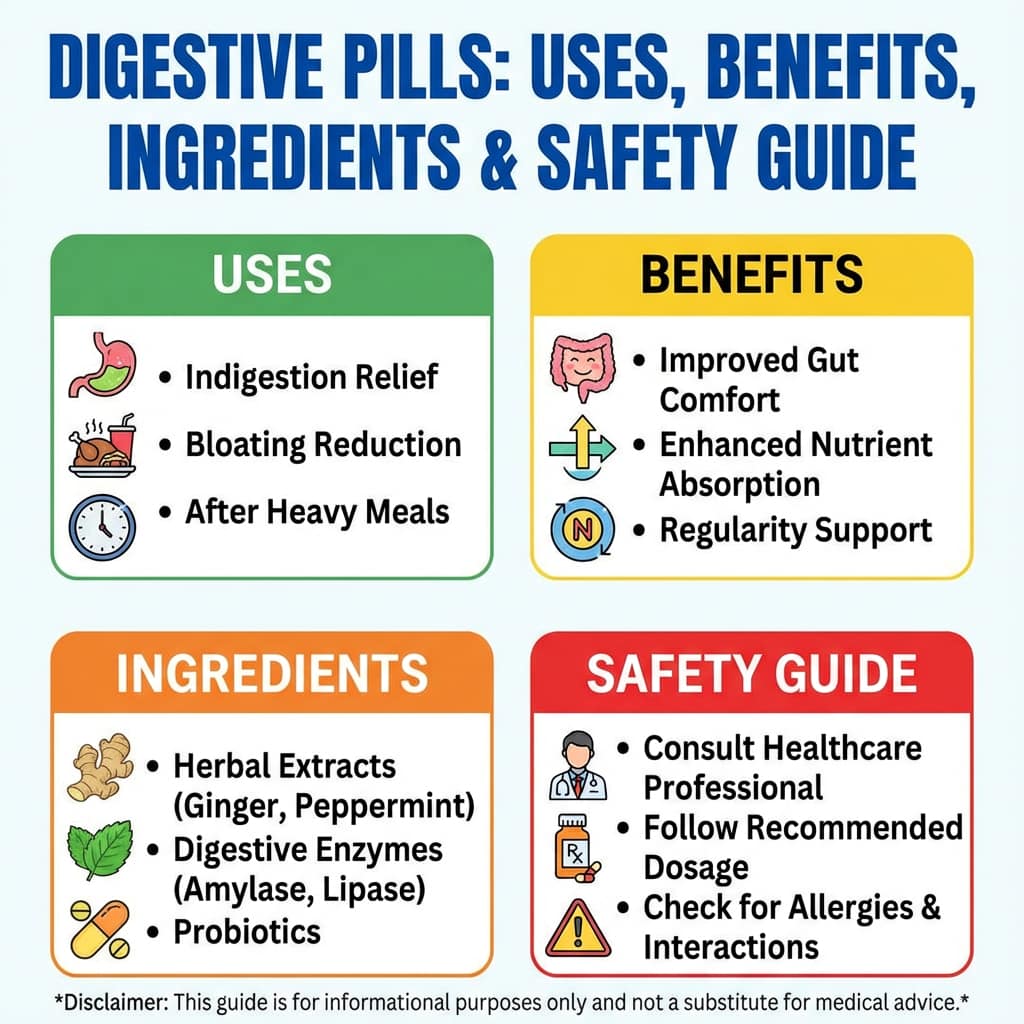
Quick overview: what digestive pills are and who they’re for
You just finished a massive plate of pasta with extra cheese and garlic bread on the side—and now your stomach is staging a full-scale protest. That uncomfortable bloating, the gas that seems to have its own agenda, and that heavy “why did I do this to myself” feeling? This is exactly where digestive pills enter the picture. These over-the-counter digestive enzyme capsules are designed to be taken with meals to help break down food more efficiently, easing that post-meal misery before it even starts.
Some people take over-the-counter digestive enzyme supplements for problems such as acid reflux, gas, bloating, and diarrhea.
Who typically reaches for these supplements:
- People who experience frequent post-meal bloating, gas, or that “food baby” heaviness after eating
- Adults with lactose intolerance who want to enjoy dairy without the consequences
- Older adults (particularly those over 60) whose bodies naturally produce fewer digestive enzymes
- People recovering from gut stress—like after a rough course of antibiotics in 2024 or a nasty stomach bug
- Anyone who occasionally overindulges at restaurants, holiday dinners, or social events
Common supplements for relieving digestive discomfort include simethicone for gas, alpha-galactosidase for vegetable-related gas, and lactase for lactose intolerance.
To be crystal clear: digestive pills are not medicines. They’re dietary supplements designed to support your body’s normal digestion of proteins, fats, carbohydrates, fiber, and lactose (milk sugar). They work alongside your natural digestive system, not as a replacement for it.

How digestive pills work in your body
Your body is already running a sophisticated enzyme factory. Digestive enzymes are specialized proteins that your digestive system produces naturally in the mouth, stomach, small intestine, and pancreas. Their job? To break down the large molecules in food into smaller, absorbable nutrients your body can actually use.
Here’s the step-by-step journey of what happens when you eat—and where enzyme pills fit in:
- Mouth: Chewing breaks food mechanically while salivary amylase (produced by your parotid glands) starts breaking down starches into simpler sugars
- Stomach: Hydrochloric acid creates a highly acidic environment (pH around 1.5-3.5) where pepsin activates and begins breaking proteins into smaller peptides and amino acids
- Small intestine and pancreas: This is where the heavy lifting happens—your pancreas releases a cocktail of enzymes including amylase (for remaining starches), protease (for proteins), and lipase (for fats), while brush border enzymes on your intestinal lining finish the job
- Enzyme capsules: When you take a digestive pill with your first bites of a meal, those supplemental enzymes mix with your food in the stomach and digestive tract, essentially providing reinforcements to your natural enzyme crew
- Absorption: The now-broken-down nutrients (amino acids, fatty acids, simple sugars) pass through your intestinal wall and into your bloodstream
One important reality check: these pills do not replace a damaged pancreas in serious disease conditions. They’re designed to supplement normal digestive capacity in otherwise healthy people who need a little extra support for certain foods or situations.
Types of digestive pills and common ingredients
Not all digestive pills are created equal. The supplement aisle can feel overwhelming, but understanding the main categories helps you choose what actually matches your needs.
Main types of digestive enzyme supplements:
- Full-spectrum digestive enzyme blends: These contain multiple enzymes to handle mixed meals with fats, proteins, carbs, and fiber all on the same plate—your go-to for restaurant dinners or holiday feasts
- Single-ingredient lactase tablets: Specifically for people with lactose intolerance who want to eat dairy without the cramping, bloating, and bathroom emergencies
- Alpha-galactosidase tablets: Target the complex sugars in beans, lentils, broccoli, cabbage, and other high-fiber foods that cause gas in the gut
- Prescription pancreatic enzyme replacement therapy (PERT): Medical-grade formulations for people with diagnosed conditions like chronic pancreatitis or cystic fibrosis—these are not the same as OTC products
Major enzymes you’ll see on U.S. labels in 2024:
- Amylase: Breaks down starches and carbs into simpler sugars
- Protease: Breaks down proteins into amino acids
- Lipase: Breaks down fats into fatty acids and glycerol
- Lactase: Breaks down lactose (milk sugar) for dairy digestion
- Cellulase and hemicellulase: Help break down plant fibers your body can’t digest on its own (humans lack the enzyme to break down cellulose naturally)
- Alpha-galactosidase: Targets complex sugars in legumes and cruciferous vegetables that cause gas
A realistic example formula: A typical veggie capsule may provide around 20,000 DU amylase, 50,000 HUT protease, 2,500 FIP lipase, and 1,500 ALU lactase per two-capsule serving. These potency units matter—they tell you how much enzyme activity you’re actually getting.
Common supporting ingredients:
- Hydroxypropyl methylcellulose (HPMC): Plant-based capsule material for vegetarian formulas
- Ascorbyl palmitate: A vitamin C derivative used as a stabilizer
- Hypoallergenic cellulose: Filler to help with capsule formation
- Rice bran or maltodextrin: Flow agents for manufacturing
Digestive enzyme deficiency: what it is and why it matters
So your body basically decided to stop doing its one job – making enough digestive enzymes to break down your food like a normal human being. What does this mean for you? Well, get ready to feel like a walking balloon animal after every meal, complete with the soundtrack of mysterious stomach gurgles that could wake the neighbors. We’re talking bloating that makes you look six months pregnant, gas that could power a small aircraft, stomach pain that feels like your organs are staging a revolt, and diarrhea that turns every meal into digestive Russian roulette. When your digestive system throws this kind of tantrum, your body basically gives up on absorbing nutrients properly, leaving you feeling like a deflated beach ball with the energy levels of a sleepy sloth.
Now, why did your body decide to betray you like this? Sometimes you can blame your parents – thanks, genetics! But plenty of times it’s your medications playing dirty tricks on your digestive system, some chronic health condition that’s overstayed its welcome, or just the simple fact that you’re getting older and your body is basically saying “remember when we used to digest pizza at 2 AM? Those days are OVER.” If you’re sitting there nodding along thinking “yep, that’s my life now – professional gas producer and bloating champion,” it’s time to have an actual conversation with a healthcare provider instead of just googling your symptoms at 3 AM like the rest of us.
Here’s the thing about digestive enzyme supplements – they’re not some magical fairy dust that instantly transforms you into a digestion superhero. Sure, they can totally save your social life and make eating out less terrifying, but sometimes the fix is way simpler than you think. Maybe you just need to switch up what you’re eating or change a few daily habits that are secretly sabotaging your gut. Working with a healthcare provider is like having a digestive detective on your team – they’ll figure out if you need supplements, lifestyle changes, or if there’s some sneaky underlying issue that’s been throwing your digestive party off track. Because honestly, life’s too short to spend it afraid of your own stomach.
Food sources of digestive enzymes: natural alternatives to pills
Are you tired of reaching for those expensive digestive enzyme bottles like they’re some kind of magical gut salvation? Well, guess what—Mother Nature has been playing the long game and she’s got your back (and your belly). You don’t need to empty your wallet on supplements when the real digestive superstars are probably already hanging out in your fridge!
Let’s talk about the digestive dream team that’s been hiding in plain sight. Fermented foods like kimchi, sauerkraut, and kefir? These bad boys are absolutely PACKED with live microorganisms that don’t just help you digest your food—they’re literally throwing a party in your gut and inviting all the good bacteria to join! These microscopic heroes are working overtime to keep your immune system bulletproof and your digestive game strong. And fruits? Oh man, papaya and pineapple are basically nature’s little enzyme factories. They’re loaded with papain and bromelain—fancy names for “hey, let’s break down those proteins like digestive ninjas”—making them absolutely perfect if you want to give your digestion some natural rocket fuel.
But wait, there’s more! Don’t sleep on whole grains, legumes, and those gorgeous fiber-rich vegetables like carrots and sweet potatoes. Sure, they might not be packing digestive enzymes themselves, but they’re doing something even cooler—they’re feeding your gut’s good bacteria like they’re prize-winning racehorses. By tossing a variety of these nutritional powerhouses into your daily meals, you’re basically turning your body into a food-digesting machine and telling those expensive supplements to take a backseat. Here’s the truth nobody wants to admit: a balanced diet full of whole foods is your digestive system’s best friend—and it’ll keep your gut (and honestly, the rest of your body) absolutely thriving!
Lifestyle factors that impact your digestive health
Look, your daily habits are basically the boss of your gut, and honestly? Most of us have been giving our digestive systems the worst possible management for years. What you’re shoving in your mouth, how you’re handling life’s chaos, and whether you’re moving your body around – it all matters way more than you think. Those processed food marathons, sugar binges, and greasy meal celebrations? Yeah, they’re throwing a full-scale riot party in your gut, kicking out all the good bacteria and replacing them with troublemakers that leave you bloated, gassy, and wondering why your stomach feels like it’s hosting a wrestling match. But here’s the plot twist – load up on whole grains, vegetables, and fruits, and suddenly your gut bacteria are throwing the kind of party that actually makes you feel amazing instead of like you swallowed a balloon.
And can we talk about stress for a hot second? Because stress is basically your digestive system’s worst enemy, like that one friend who shows up uninvited and ruins everything. When you’re stressed out of your mind, your body literally hits the pause button on digestion and decides to throw some inflammation into the mix just for fun, making that bloated, uncomfortable feeling even worse. But here’s the good news that nobody tells you – regular exercise, actually getting decent sleep (revolutionary concept, right?), and doing those stress-busting activities like yoga or meditation can completely turn things around. Your digestive tract will thank you by actually doing its job properly instead of staging a daily rebellion.
Oh, and staying hydrated? Absolutely crucial. Drinking plenty of water is like giving your digestive system the fuel it needs to keep things moving smoothly – because nobody has time for constipation drama in their life. Plus, cutting back on those fizzy, carbonated drinks can save you from looking like you’re smuggling a basketball under your shirt. If you’re still dealing with ongoing digestive chaos that’s making your life miserable, do yourself a favor and check in with a healthcare provider or registered dietitian. They can help you figure out what the heck is going on and create a game plan that actually supports your digestive health – so you can finally feel like a normal human being every single day.
Benefits people look for – and what science actually supports
Let’s set realistic expectations right out of the gate. In healthy adults with normal pancreatic function, the scientific evidence for routine digestive enzyme use is limited. The strongest data supports their use in diagnosed conditions like exocrine pancreatic insufficiency (where pancreatic output drops below 10% of normal) and confirmed lactose intolerance.
That said, here’s what people commonly hope for—and what the evidence actually shows:
- Less post-meal bloating and gas: Many users report reduced occasional bloating within 30 minutes of use, though individual results vary significantly based on meal composition and underlying causes
- Easier digestion of large or high-fat meals: Lipase supplements may help break down dietary fats more efficiently, potentially reducing that heavy, sluggish feeling after rich foods
- Better dairy tolerance: Lactase tablets have solid evidence for helping lactose-intolerant people enjoy ice cream, cheese, or pizza without the cramping, diarrhea, and stomach pain that usually follows
- More comfortable bean and veggie digestion: Alpha-galactosidase before a bean-rich chili dinner can genuinely reduce the gas production from those hard-to-digest complex sugars
- Support during temporary digestive stress: People recovering from illness or antibiotics sometimes find enzymes helpful while their gut health recovers
What’s NOT supported by robust clinical trials as of 2024:
- Weight loss claims
- “Curing” or treating irritable bowel syndrome
- “Healing” or “repairing” the gut
- Replacing proper medical treatment for serious digestive conditions
- Improving nutrient absorption in people who already digest food normally
The bottom line? These supplements can provide real support for specific situations—but they’re not a miracle fix for everyone.
Digestive pills vs. probiotics, prebiotics and fiber
Here’s where a lot of people get confused. Digestive enzyme supplements and gut-focused products like probiotics are NOT the same thing. They work through completely different mechanisms and solve different problems. Treating them as interchangeable is like using a hammer when you need a screwdriver.
How they actually differ:
- Digestive enzymes: These are proteins that mechanically break down the food on your plate (proteins into amino acids, fats into fatty acids, carbs into simple sugars). They work immediately with that specific meal. They do NOT colonize your gut or change your microbiome. Think of them as hired contractors who show up, do the job, and leave.
- Probiotics: These are live microorganisms—beneficial bacteria strains like Lactobacillus and Bifidobacterium—that you consume with the goal of supporting your gut’s healthy bacteria population. The human body naturally hosts trillions of microorganisms that support health and bodily functions. An imbalance in beneficial bacteria, known as dysbiosis, can lead to digestive issues, and probiotics can help restore microbial balance in the gut microbiome. They may help with regularity, mild bloating, and immune system function over weeks of consistent use. Products like Align Probiotic fall into this category.
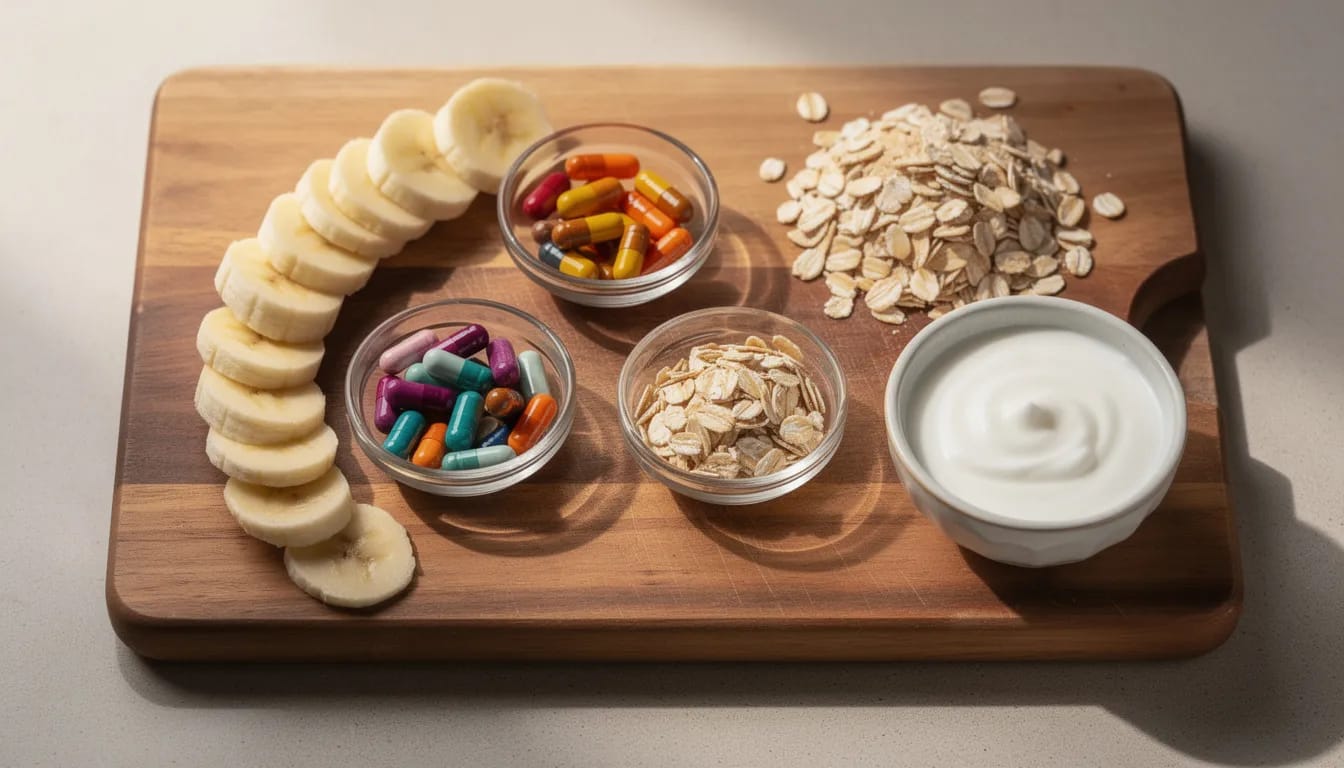
- Prebiotics: These are fibers found in foods like garlic, onions, bananas, oats, and certain supplements. They act as food for the good bacteria already living in your gut. They support microbiome health indirectly by feeding what’s already there.
- Fiber supplements: Psyllium husk, wheat dextrin, or methylcellulose powders and capsules that improve bowel movements, support regularity, and feed beneficial gut bacteria. They’re about keeping things moving and supporting the microbiome, not breaking down food.
A realistic 2024 example: Someone recovering from a course of antibiotics might take a daily probiotic capsule to help rebuild healthy bacteria populations, add prebiotic-rich foods or a fiber supplement for regularity, AND occasionally use digestive enzymes when eating heavy restaurant meals that stress their still-recovering system.
Different tools for different jobs. Your gut needs both proper breakdown of food AND a thriving bacterial community—but you need different products to support each goal.
Who might benefit most from digestive pills?
Before we dive in: any persistent or severe digestive problem deserves evaluation by a doctor or gastroenterologist before you start self-treating with supplements. Digestive pills can mask symptoms of conditions that need actual medical attention.
Groups that may reasonably discuss digestive enzyme supplements with a healthcare provider:
- Adults who get occasional bloating, gas, or heaviness after large, high-fat, or restaurant meals—but are otherwise healthy with no red-flag symptoms
- People with mild lactose intolerance who want to enjoy milk, ice cream, or pizza without cramping and diarrhea (lactase tablets are the most evidence-backed option here)
- Older adults (particularly over 60) whose natural digestive capacity may be declining—the body does produce fewer enzymes as we age
- Individuals with temporary digestive stress after a stomach bug or antibiotic course, once serious causes have been ruled out by a professional
- People who notice that certain foods consistently cause discomfort but aren’t dealing with a diagnosable condition
- Those eating outside their normal diet (travel, holidays, special occasions) and anticipating digestive challenges
Important distinctions:
- People with diagnosed conditions like cystic fibrosis, chronic pancreatitis, celiac disease, or inflammatory bowel disease typically need prescription pancreatic enzyme replacement therapy—OTC products may not be sufficient or appropriate
- If symptoms persist despite OTC supplements, that’s a sign something else is going on
Practical tip: Keep a symptom diary for at least 1-2 weeks before AND after starting any digestive supplement. Record dates, foods eaten, and specific symptoms. This helps you (and your registered dietitian or doctor) actually evaluate whether the pills are providing real benefit or if you’re just experiencing a placebo effect.
Safety, side effects and when not to use digestive pills
Real talk about how these products are regulated: OTC digestive pills sold in the U.S. are regulated as dietary supplements, NOT as FDA-approved drugs. The FDA does not evaluate them for treating, curing, or preventing disease. Manufacturers are responsible for their own quality control, and potency claims match actual content only about 60% of the time according to independent testing.
Common mild side effects reported:
- Temporary stomach discomfort or nausea, especially when starting a new product
- Loose stools or diarrhea if the dose is too high (particularly with high-lipase formulas)
- Constipation in some users, especially with overuse
- Gas or bloating that may initially worsen before improving as your body adjusts
Allergic reaction warnings:
- Animal-derived enzymes (porcine or bovine sources) can trigger reactions in people with pig or cow allergies—read labels carefully
- Fungal-sourced enzymes (from Aspergillus molds) may affect those with mold sensitivities
- Allergic reactions occur in roughly 1-2% of users—stop use immediately if you experience hives, swelling, or difficulty breathing
Groups that should ALWAYS consult a healthcare professional before use:
- Pregnant or breastfeeding women
- People taking blood-thinning medications, diabetes medications, or immune-suppressing drugs
- Anyone with a history of pancreatitis, pancreatic surgery, or unexplained weight loss, fever, or bleeding
- People currently taking other medications—some enzymes may affect how your body absorbs certain drugs
Critical safety statement: Digestive enzyme supplements are not intended to diagnose, treat, cure, or prevent any disease. Any severe or worsening symptoms—including persistent abdominal pain, blood in stool, unexplained weight loss, fever, or difficulty swallowing—require prompt medical attention, not more supplements.
How to choose a quality digestive pill in 2024
Shopping for digestive supplements can feel like navigating a minefield of marketing claims. Here’s how to cut through the noise and find a product worth your money:
- Look for transparent labeling: The best products list exact enzyme types AND their potency in standardized units (DU for amylase, HUT for protease, FIP for lipase, ALU for lactase). Avoid vague “proprietary blends” that hide what you’re actually getting.
- Check for third-party testing: Look for certifications like NSF, USP, or statements about independent laboratory testing. cGMP (current Good Manufacturing Practice) compliance is a minimum standard—skip products that don’t confirm this.
- Match capsule type to your needs: Vegetarian cellulose capsules (HPMC) work for most people. Animal-derived gelatin capsules are less common now but still exist. Choose based on your dietary preferences and any sensitivities.
- Consider enzyme sources: Microbial/fungal enzymes (from Aspergillus) often work across broader pH ranges. Animal-derived (porcine) enzymes are traditional but may have potency and allergen concerns. Plant-based options (like bromelain and papain) are available but less common in full-spectrum formulas.
- Start small: Buy a 30-60 capsule bottle first to test how your body responds before committing to bulk sizes. Test with one meal per day for a week before increasing use.
- Prioritize quality over quantity: Formulated products from reputable brands with verifiable testing are worth the extra cost. A $15 product that doesn’t work is more expensive than a $30 one that does.
- Don’t forget the fundamentals: No supplement replaces eating quality whole foods, chewing thoroughly, managing stress (which literally freezes your digestive system), and eating whole grains, vegetables, and fiber-rich foods. Digestive pills support good habits—they don’t replace them.

How to take digestive pills correctly
Timing and dosing matter more than most people realize. Taking enzymes incorrectly is one of the main reasons people think they “don’t work.”
Step-by-step usage guidance:
- Timing is everything: Most enzyme capsules should be taken with the first few bites of your meal—not 30 minutes before, not after you’ve finished eating. The enzymes need to mix with food in your stomach to work properly.
- Lactase tablets are slightly different: Take these immediately before eating dairy (within 5-10 minutes of your first bite of pizza, ice cream, or cheese) for best results.
- Alpha-galactosidase for beans and veggies: Take right before the first bite of high-fiber meals containing legumes, broccoli, cabbage, or cauliflower.
- Start with the minimum dose: Begin with the lowest suggested serving size on the label (often 1-2 capsules per meal) and only increase if needed and tolerated. More is not automatically better—overdosing risks constipation or, in extreme cases, colonic strictures.
- Match the supplement to the meal: You don’t need full-spectrum enzymes for a simple piece of fruit or a small snack. Save them for mixed meals with significant amounts of fats, proteins, and starches.
- Consistency matters for evaluation: Use the product consistently for at least 1-2 weeks with similar meals before deciding if it’s working. One-off use makes it hard to assess real benefit.
- Watch for medication interactions: If you take multiple medications, separate enzymes from critical medicines by at least 1-2 hours. Confirm with a pharmacist or doctor that there’s no potential for adverse side effects or reduced medication absorption.
- Store properly: Keep capsules in a cool, dry place. Enzyme potency can degrade with heat, humidity, and age.
When it’s time to see a doctor instead of just adding pills
Supplements can support comfort and help you eat with less discomfort—but they should never delay diagnosis of serious disease. Your body might be trying to tell you something important, and masking symptoms with pills could let a treatable condition progress.
Red-flag symptoms that require medical attention, not more supplements:
- Unintentional weight loss over several weeks
- Black, tarry, or bloody stools
- Persistent vomiting or severe nausea
- Severe abdominal pain, especially if sudden or worsening
- Difficulty swallowing or feeling like food is getting stuck
- Symptoms that wake you from sleep
- Fever combined with digestive symptoms
- Any symptoms that are new, worsening, or not improving despite supplements
When ongoing enzyme use signals a bigger issue: If you find yourself needing digestive pills for most meals, every day, for more than 2-4 weeks, it’s time to book an appointment with your primary care provider or gastroenterologist. That level of dependence suggests something beyond “occasional support” is going on.
Build a foundation with food first: Before reaching for pills, emphasize food-based strategies for gut health. Fermented foods like yogurt, kimchi, and sauerkraut contain live cultures that support healthy bacteria. High-fiber fruits, vegetables, and bone broth support overall digestive function. Adequate hydration keeps things moving. Even stress management makes a difference—stress can affect your digestion more than you might realize.
Digestive pills work best as occasional support for challenging meals—not as a daily crutch that lets you avoid addressing underlying issues or making sustainable diet changes. Your digestive system is remarkably capable when you give it what it needs. Sometimes that means enzyme support. Sometimes it means talking to a professional. Knowing the difference is what keeps you healthy for the long haul.