
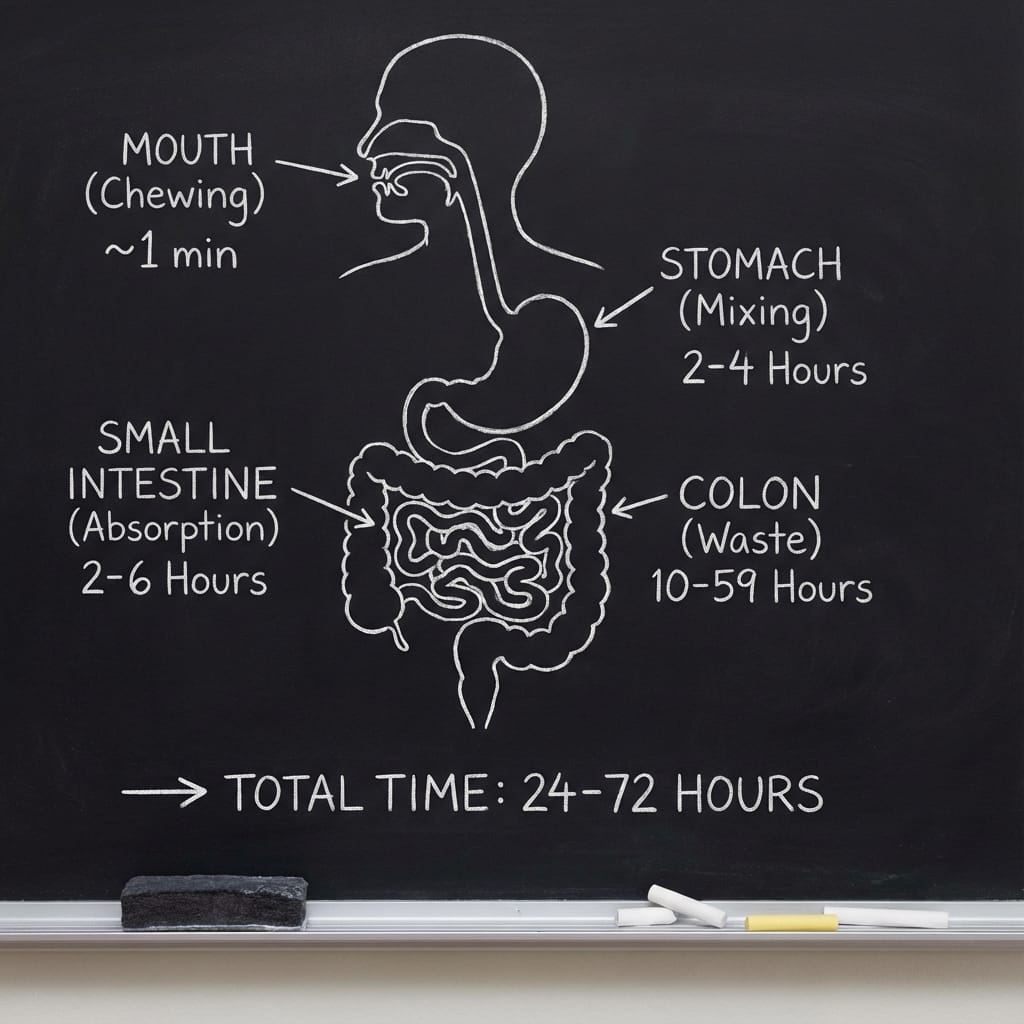
Here’s the straight answer: it usually takes about 24 to 72 hours for food to travel from your mouth to your toilet, with most people averaging around 30 to 40 hours for the entire digestive process. But that doesn’t mean you’re walking around with yesterday’s dinner sloshing in your stomach all day—the core digestion phase where your body actually breaks down food and absorbs nutrients happens within about 6 hours.
The timeline breaks down roughly like this:
- Stomach: 1 to 4 hours (sometimes longer for heavy meals)
- Small intestine: 4 to 6 hours (where most nutrient absorption happens)
- Large intestine (colon): 10 to 59 hours (water absorption and stool formation)
Why does digestion time matter? Because it directly affects how you feel. When food moves through your digestive system efficiently, you experience steady energy levels, less bloating, and regular bowel movements. When digestion slows down or speeds up too much, you might deal with constipation, diarrhoea, uncomfortable fullness, or that sluggish feeling that follows you around all day.
Digestion time varies depending on several factors including your age, sex, physical activity level, stress, and medical conditions. The time it takes to digest food varies depending on genetics, age, health conditions, medications, the type of food consumed, meal size, and hydration levels. Women generally experience slower digestion than men, and this process can slow with age. For example, people with IBS or diabetes-related gastroparesis often digest food much more slowly, sometimes taking 6+ hours just to empty the stomach.
Staying hydrated (aiming for 8 to 10 cups of water per day) and choosing whole, healthy foods like fruits, vegetables, lean proteins, and whole grains can support easier digestion compared to processed foods.

What Is Digestion and How Does It Work?
Digestion is the complex process of breaking food into nutrients your body can use—and moving waste out the other end. It starts the moment food enters your mouth and doesn’t officially end until waste exits through your anus. The whole journey involves a remarkable coordination of mechanical grinding, chemical breakdown, and absorption.
Your digestive tract is essentially one continuous tube with specialized sections:
- Mouth: Chewing mechanically breaks food down while enzymes in saliva start digesting starches
- Oesophagus: A muscular tube that pushes food to your stomach in about 5-8 seconds
- Stomach: Mixes food with gastric juices (hydrochloric acid and enzymes) to create a semifluid called chyme
- Small intestine: Where most nutrient absorption happens thanks to millions of tiny finger-like projections called villi
- Colon (large intestine): The colon absorbs water and remaining water, forming solid stool
- Rectum and anus: Storage and exit for waste
Supporting organs like your liver, pancreas, and gallbladder produce digestive fluids that get secreted into your small intestine to help break down fats, proteins, and carbohydrates. The pancreas alone produces more digestive fluids containing enzymes that tackle all three major macronutrients.
Here’s something most people don’t realize: digestion doesn’t stop at the stomach. Your stomach mainly prepares food—the small intestine absorbs nutrients, which is where the real nutritional magic happens. The stomach gradually empties chyme into the small intestine in controlled portions, about every 20 seconds through a valve called the pyloric sphincter.
The Role of the Small Intestine in Digestion
The small intestine is basically the absolute legend of your digestive system – like that friend who always gets stuff done while everyone else is still figuring out what’s happening. After your stomach has spent way too much time churning your lunch into this soupy mess called chyme (which sounds gross because it IS gross), this goopy mixture finally gets the green light to stumble into the small intestine. And that’s where things get absolutely wild.
The moment that chyme waddles into the small intestine, it’s like walking into the world’s most chaotic chemistry lab. BAM! – digestive juices and enzymes from your pancreas, liver, and gallbladder come flooding in like an overeager cleanup crew. These digestive fluids are basically having the time of their lives, tag-teaming to demolish carbohydrates, proteins, and fats until they’re nothing but tiny, digestible pieces. Meanwhile, the small intestine is lined with millions of these ridiculously tiny finger-like things called villi that are basically doing the digestive equivalent of jazz hands – dramatically increasing surface area so your body can suck up every last vitamin, mineral, and bit of energy from whatever questionable food choices you made earlier.
Here’s where it gets really nuts: this whole digestive circus in your small intestine is perfectly choreographed chaos. Enzymes are breaking down complex molecules like they’re in some molecular demolition derby, while the intestine walls are doing this rhythmic squeezing dance to keep the chyme moving along for maximum villi contact time. This is where the real nutrient-absorbing magic happens – and without this beautifully orchestrated intestinal mayhem, your body would basically be like “thanks for nothing” every time you ate. So yeah, the small intestine is where your food finally transforms from “stuff you chewed” into “fuel that keeps you alive,” making it the unsung hero of your entire digestive adventure.
Digestion Timeline: From Bite to Bowel Movement
Let’s walk through the journey step by step with typical time frames for a healthy adult. This is where things get interesting—and where you can finally understand what’s happening inside you after each meal.
- Mouth and throat: Seconds to a couple of minutes per mouthful (30-60 seconds of chewing per bite)
- Oesophagus: About 5-10 seconds for each swallow as food moves through via wave-like muscle contractions
- Stomach: Roughly 40 minutes to 2-4 hours depending on meal type and size
- Small intestine: About 2-6 hours for most nutrient absorption (the small intestine breaks down food further using pancreatic enzymes)
- Colon (large intestine): Roughly 10-59 hours for water absorption and stool formation
- Total transit time: Usually 24-72 hours, with an average time of about 30-40 hours
Here’s a contrast that makes this real: a light snack like a banana and toast often passes through the stomach in under 2 hours. A heavy, high-fat meal (think burger and fries) may stay 3-4 hours or longer. Research suggests that fatty foods require significantly more stomach acid and digestive juices to break down.
One crucial distinction: “stomach emptying time” (about 4-6 hours for a mixed meal) is much shorter than full digestive transit. Your stomach might be empty, but food to move through your entire system takes up to 2-3 days. So when you feel hungry again after a few hours, remember—that breakfast might still be making its way through your colon.
How Long Does Food Stay in the Stomach?
Food generally stays in the stomach from about 40 minutes to 2 hours, but can extend up to 4 hours or more depending on what and how much food you eat. The stomach’s job isn’t to absorb nutrients—it’s to break down your meal into that thick, milky semifluid called chyme that can be efficiently processed downstream.
Typical stomach times by food type:
- Simple carbohydrates (white bread, rice, ripe fruit): Often 30-60 minutes
- Mixed meals (chicken, vegetables, brown rice): Typically 2-3 hours
- High-fat or very large meals (pizza, fried foods, fast food burgers): 3-4 hours or longer
- Liquids and blended foods (soups, smoothies): Faster than solid foods
The stomach break down process involves powerful muscular contractions that mix food with hydrochloric acid and enzymes. Proteins get particular attention here, with pepsin working to break them into smaller peptide chains.
Medical conditions such as gastroparesis (often seen in long-standing diabetes) can delay stomach emptying beyond 4-6 hours. This causes symptoms like early fullness after just a few bites, nausea, bloating, and sometimes vomiting. If you regularly feel uncomfortable hours after eating, it’s worth discussing with a qualified healthcare provider.
Is 30 Minutes Enough to Digest Food?
Thirty minutes is usually too short for full digestion—but some light snacks and simple carbs can leave the stomach in about 30-60 minutes. Think plain crackers, a piece of fruit, or a small handful of pretzels.
At the 30-minute mark, most of a typical meal is still in the stomach being mixed with acid and enzymes. The digestive process has barely begun its most important phase.
- Feeling less full after 30 minutes doesn’t mean everything is digested
- Most absorption still occurs over several hours in the small intestine
- Your body hasn’t even started extracting most nutrients yet
Is 2 Hours Enough to Digest Food?
Within about 2 hours, part or most of a light to moderate meal may have left the stomach—but full digestion and elimination still take much longer (often 24-48 hours).
Two hours can be a reasonable gap before exercise or sleep for many people, especially after smaller, low-fat meals. This is why the general advice is to wait about 2 hours after eating before intense physical activity.
- A small bowl of oatmeal and fruit may mostly exit the stomach in 1.5-2 hours
- A steak dinner can still be in the stomach beyond that timeframe
- Your small intestine is still actively absorbing nutrients for hours after your stomach empties
How Long Does It Take to Digest Different Types of Foods?
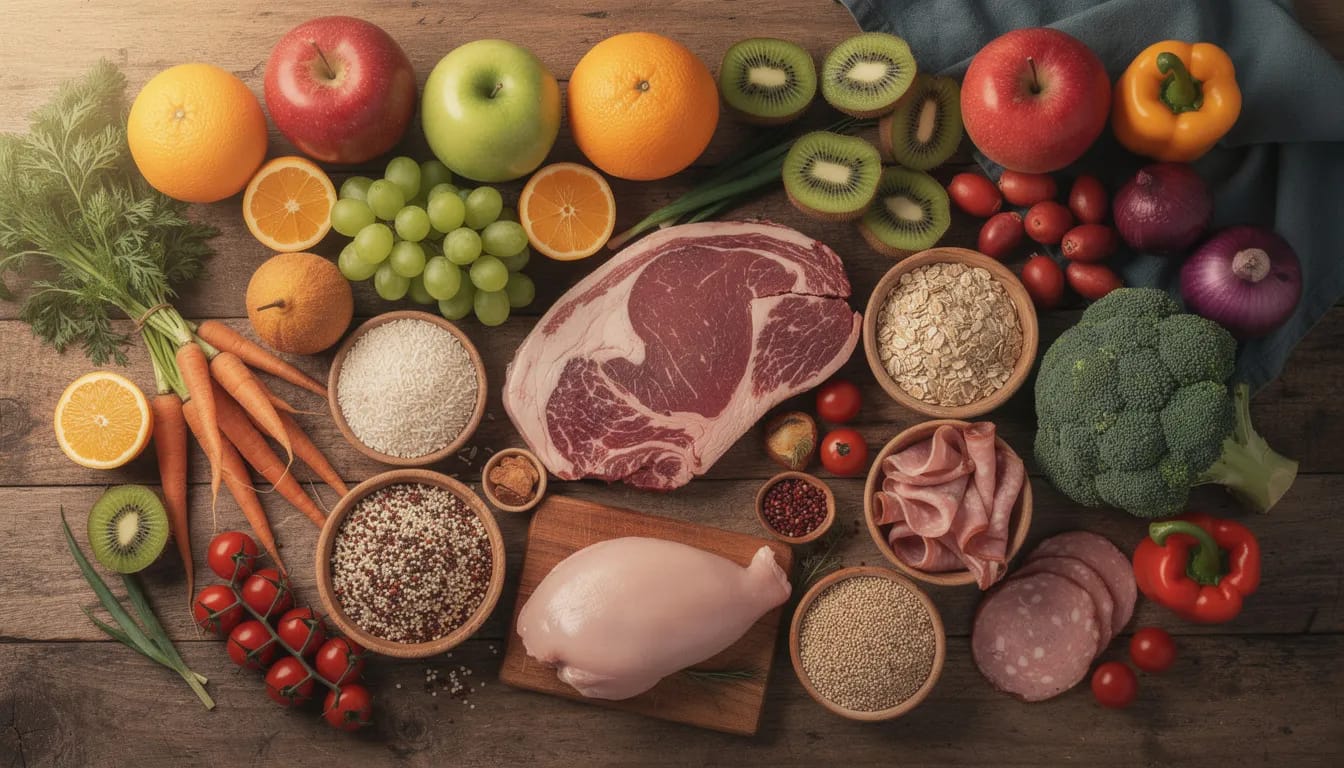
Macronutrient composition—carbs, more protein, fat—and fibre content strongly influence how long does it take to digest food. Your body handles a slice of white bread very differently than it handles a fatty steak.
Approximate stomach + small intestine times:
- Simple carbohydrates (white bread, sugary drinks, sweets): 1-3 hours
- Complex carbs and whole grains (oats, beans, brown rice): 3-5 hours, often longer due to fibre
- Lean proteins (eggs, chicken breast, white fish): 3-4 hours
- Fatty foods (fried foods, fatty meats, cheese-heavy dishes, dairy products): 4-6+ hours
Foods high in fibre (beans, lentils, vegetables, wholemeal bread, brown rice) may move more slowly through the small intestine but actually help regulate bowel movements once in the colon. Aim for about 25-30 grams of fibre daily for optimal digestive health.
Highly processed, low-fibre foods (chips, sweets, white pasta) may pass quickly through the upper gut but can contribute to constipation because they lack the bulk your colon needs to form proper stool.
Average Digestion Time for Common Meals
Here are relatable examples of typical meals and their approximate transit times:
- Light breakfast (yoghurt with fruit and honey): Stomach 1-2 hours, full transit about 24-36 hours
- Balanced lunch (grilled chicken, quinoa, salad with olive oil): Stomach 2-3 hours, full transit about 24-48 hours
- Heavy fast-food dinner (burger, fries, milkshake): Stomach 3-4+ hours, full transit up to 48-72 hours
- High-fibre vegetarian meal (brown rice, lentil curry, vegetables): Stomach 2-3 hours, may spend longer in colon but often produces regular, soft stools
These are averages for healthy adults. Individual experiences can vary by several hours depending on your body type, metabolism, and overall health conditions.
How Long Does It Take to Digest Water and Other Drinks?
Liquids generally leave the stomach much faster than solid foods. This is why you can drink a glass of water and not feel any fullness, while a solid meal of the same volume keeps you satisfied for hours.
Specific approximate timings:
- Plain water on an empty stomach: May pass through the stomach in about 5-20 minutes
- Clear fluids (herbal tea, black coffee without cream): Often within 20-40 minutes
- Calorie-containing drinks (juice, milk, smoothies): 30-60+ minutes depending on sugar, protein, and fat content
While water moves quickly through the stomach, it still takes time to be absorbed and distributed through the body. Staying hydrated throughout the day helps soften stool and supports efficient movement through the colon—one of the simplest ways to prevent constipation.
How Long Does It Take for Your Stomach to Feel Empty?
“Feeling empty” is influenced by hormones and nerve signals, not just whether food is physically gone. Your gut-brain connection plays a major role in hunger and satiety cues.
- Most people start feeling noticeably less full about 2-3 hours after a standard meal
- Medications (some appetite stimulants or GLP-1 drugs), sleep, stress, and blood sugar changes can alter hunger signals
- Feeling hungry again doesn’t mean your stomach is literally empty—much of the meal may still be in the small intestine and colon
- Eating smaller, more frequent meals can help maintain steady energy without overwhelming your digestive system
Factors That Affect How Long Food Takes to Digest
Digestion time varies from person to person and can even differ day to day. Here’s what influences your personal timeline:
- Type of food: Fat, protein, fibre, and level of processing all matter
- Portion size and meal timing: Very large or late-night meals often digest more slowly
- Hydration level: Low fluid intake can slow movement through the colon
- Physical activity: Regular walking or exercise tends to speed transit time slightly
- Age and sex: Older adults often have slower transit; women sometimes report slower digestion around certain hormonal phases
- Stress and sleep: Chronic stress and poor sleep can slow or disrupt gut motility
- Medications: Opioid painkillers, some antidepressants, and iron supplements can slow digestion; certain diabetes drugs may slow stomach emptying
- Health conditions: IBS, coeliac disease, inflammatory bowel disease, hypothyroidism, and gastroparesis can all change transit times
- How much food you eat: Larger meals simply require more time and digestive effort
What Happens When Digestion Is Too Fast or Too Slow?
Both very rapid and very slow digestion can cause symptoms and may signal an underlying issue. Your body has a preferred rhythm, and significant deviations often come with noticeable discomfort.
Too fast digestion looks like:
- Diarrhoea or very loose stools
- Food seeming to “run right through” you
- Needing the toilet within an hour or two of eating
- Possible causes: food poisoning, viral infections, anxiety, IBS, certain medications
Too slow digestion looks like:
- Bloating and abdominal discomfort
- Constipation (going fewer than 3 times per week)
- Very hard stools or straining
- Feeling full after small meals
- Possible causes: low fibre intake, dehydration, sedentary lifestyle, opioid use, hypothyroidism, gastroparesis
Persistent changes lasting more than 2-4 weeks or red-flag signs (blood in stool, severe pain, unintentional weight loss, vomiting) should prompt medical evaluation.
Digestion and Diarrhoea
Diarrhoea means very fast transit through the intestines, giving less time for water and nutrients to be absorbed. The colon simply can’t do its job properly when everything’s rushing through.
Common triggers include:
- Infections (viral, bacterial, parasitic)
- Food allergies or intolerances (e.g., lactose intolerance)
- IBS with diarrhoea predominance
- Medications (antibiotics, some heartburn drugs)
- Stress and anxiety
With diarrhoea, stools may appear soon after eating, but this is usually earlier material being pushed out by increased motility—not the meal you just ate. The digestive process creates a sort of “traffic jam” effect.
Persistent diarrhoea, dehydration signs, or blood in the stool need urgent medical advice.
Constipation and Slow Transit
Constipation simply means infrequent bowel movements (less than 3 per week), hard stools, or straining. It’s one of the most common digestive complaints, and often one of the most fixable.
Typical contributors:
- Low-fibre diet lacking whole grains and vegetables
- Inadequate fluid intake
- Lack of exercise or sedentary lifestyle
- Delaying going to the toilet when you feel the urge
- Some medications (especially opioids and some antidepressants)
- Underlying conditions like IBS-C or hypothyroidism
In slow transit, food can remain in the colon for longer than 72 hours, leading to drier, harder stools as the remaining water continues to be absorbed. The waste dries out and becomes increasingly difficult to pass.
Chronic constipation should be discussed with a GP, particularly if it represents a clear change from your usual pattern.

How to Support Healthy Digestion
Here are practical steps to keep digestion running smoothly and transit time within a healthy range. None of these require expensive supplements or dramatic lifestyle overhauls—just consistent, sensible habits.
- Eat regular, balanced meals with a mix of complex carbs, lean protein, healthy fats, and vegetables
- Aim for about 25-30 grams of fibre daily from foods like oats, beans, lentils, fruit, vegetables, and whole grains
- Drink enough fluids (rough guide: around 1.5-2 litres of water per day, adjusted for climate and physical activity)
- Move your body daily—even a 10-20 minute walk after a meal can help stimulate the digestive tract
- Limit heavily processed, very fatty or very sugary foods that can cause discomfort
- Manage stress with techniques such as deep breathing, stretching, or mindfulness
- Avoid lying completely flat straight after a large meal to reduce reflux and help gravity assist digestion
One important note: sudden, extreme changes (like doubling your fibre intake overnight) can cause gas and bloating. Increase gradually over several days with plenty of water. Your gut bacteria need time to adjust.
When to See a Doctor About Digestion Time
Occasional variation in digestion is completely normal—your gut isn’t a precision machine. But some patterns warrant professional advice from a qualified healthcare provider.
Seek medical help if you experience:
- New, persistent constipation or diarrhoea lasting more than 2-4 weeks
- Blood in your stool or black, tarry stools
- Unintentional weight loss, fever, or night sweats with bowel changes
- Severe or worsening abdominal pain, especially if waking you at night
- Vomiting, especially if you cannot keep fluids down
- Feeling full after only a few bites for days or weeks (explains Dr. concerns about gastroparesis)
- Frequent vomiting several hours after meals
A GP or gastroenterologist can investigate causes with stool tests, blood work, or scans and recommend appropriate treatment. Most digestive issues are highly treatable once properly diagnosed.
The Importance of Understanding Digestion Time
Look, knowing how long it takes your body to process that burrito isn’t just some random trivia you bring up at dinner parties—it’s actually the secret to not feeling like a bloated balloon half the time. Your digestion time is basically your gut’s personal schedule, and it changes depending on what you throw down there. Fatty foods and protein? They’re like that friend who takes forever to get ready—your stomach’s gonna be working overtime. Simple carbs? They zip through like they’re late for a meeting. And if you’re loading up on whole grains, veggies, and fiber? Well, that’s like giving your digestive tract a personal trainer to keep everything moving along smoothly.
Here’s the thing nobody tells you: eating like a normal human being (smaller, more frequent meals instead of three giant food comas) actually helps your gut do its job without having a meltdown. And water? Yeah, you need to drink the stuff. Your colon literally depends on it to keep things from turning into concrete down there. Got gastroparesis or some other digestive curveball? Your system’s probably moving slower than rush hour traffic, so you might need to switch up your eating game plan accordingly.
Here’s where it gets interesting: once you figure out your body’s digestive rhythm, you can actually make smart choices about what to shove in your face and when. It’s like having insider information about your own gut. Plus, if things start getting weird—like you’re either backed up for days or everything’s moving through you like you’re a human slip-n-slide—that’s your cue to chat with someone who actually went to medical school. The bottom line? Pay attention to how your body handles food, throw in more fiber, eat your vegetables like your mom always nagged you to, stay active, and your digestive system will actually work with you instead of against you. It’s not rocket science, but it sure feels like magic when everything’s running smoothly.
Key Takeaways on How Long Food Takes to Digest
- Stomach: About 40 minutes to 2-4 hours depending on meal type and size
- Small intestine: About 2-6 hours for most nutrient absorption (about six hours for the complete stomach + small intestine phase)
- Colon: Typically 10-59 hours to form and move stool
- Whole journey from eating to excretion: Around 24-72 hours for most healthy adults
- What affects timing: Diet, physical activity, hydration, stress, metabolism, and overall health conditions all shift these numbers
What you eat, how much you move, how hydrated you are, and your general health can all influence your personal digestion timeline. Paying attention to your bowel habits, choosing varied whole foods, and seeking advice when something feels off are the best ways to support long-term digestive health.
Your gut is working hard for you every single day—the least you can do is give it the fibre, water, and movement it needs to do its job well.