
You know that feeling. You ate dinner three hours ago, but your stomach still feels like it’s holding onto that meal like a grudge from 2019. The bloating. The nausea. That weird fullness that makes you wonder if your digestive system just… stopped working.
Here’s the thing: your stomach is supposed to empty in about 4-5 hours. When it doesn’t, you feel it. And millions of people are walking around right now with sluggish gastric motility, wondering why they feel like a human storage container.
The good news? There’s a lot you can do about it. From simple diet tweaks to lifestyle habits to knowing when you need medical backup, this guide covers everything you need to get your gut moving again.
Quick answers: fastest ways to improve gastric motility
Gastric motility is simply how well your stomach muscles contract and push food through your digestive system. When motility slows down, food sits in your stomach too long, causing nausea, bloating, reflux, and even constipation because the whole GI tract backs up like rush hour traffic.
Here are the fastest ways to get things moving:
- Walk for 10-15 minutes after meals – gravity and gentle movement trigger your gastrocolic reflex
- Eat smaller meals every 3-4 hours instead of 2-3 large ones
- Drink warm fluids (herbal tea, warm water with lemon) before or between meals
- Avoid lying down for 2-3 hours after eating – sitting upright helps your stomach empties more efficiently
- Stay hydrated – aim for clear or light yellow urine as your benchmark
- Reduce high-fat foods – fat is the biggest dietary brake on gastric emptying
These home strategies work well for mild sluggishness. But you need medical evaluation if you’re experiencing red-flag symptoms like persistent vomiting, unintentional weight loss, blood in stool, severe pain, or difficulty swallowing.
Important warning: Some causes of slow motility—like gastroparesis, intestinal obstruction, or nerve damage—require professional care. If you have diabetes, always speak with your healthcare provider before making significant changes to your diet or medications, since blood sugar control and gastric function are closely linked.

What is gastric motility and why it slows down
Your stomach and intestines aren’t just passive tubes waiting for food to slide through. They’re muscular organs that use coordinated muscle contractions called peristalsis to push food along like a wave. Picture squeezing a tube of toothpaste from the bottom up—that’s essentially what your gut does, about 3 times per minute in a healthy stomach.
Reduced motility can affect any segment of your GI tract:
- Stomach (gastroparesis) – food sits too long before moving to the small intestine. Damage to the nerves that activate your stomach muscles is the main cause of gastroparesis. Factors like nerve damage, certain medications, and hypothyroidism can contribute to abnormal gastric emptying by disrupting normal muscle function.
- Small intestine (enteric dysmotility) – nutrients don’t move through for proper digestion
- Large intestine/colon (slow-transit constipation) – bowel movements become infrequent and difficult
- In diabetes, nerve damage can contribute to gastroparesis, and around one-third of people with diabetes develop this condition.
Common contributors to slow motility
Based on what clinicians see regularly, here are the usual suspects:
- Diabetes-related nerve damage – high blood sugar over time damages the vagus nerve that controls stomach contractions
- Medications – opioids, GLP-1 agonists (like semaglutide/Ozempic), anticholinergics, certain antidepressants
- Hypothyroidism – low thyroid function slows everything down, including your gut
- Post-viral changes – some people develop motility issues after stomach bugs or viral infections
- Stress and anxiety – your sympathetic nervous system literally puts digestion on pause
- Low physical activity – sedentary lifestyle reduces the natural stimulation your gut needs
- Aging – muscle contractions naturally weaken over time
There’s an important distinction between “functional” slow motility (where tests don’t show visible damage, but the system just isn’t working right) and structural problems (strictures, tumors, hernias) that show up on imaging and often need surgical intervention.
Understanding what’s causing your slow motility is the first step toward fixing it—and that’s exactly what we’ll cover in the sections ahead.
Diet changes to naturally increase gastric motility
Food volume, texture, and fat content are among the strongest day-to-day regulators of how fast your stomach empties. This means dietary changes can be incredibly powerful—sometimes more effective than medications for mild to moderate symptoms.
Smaller, more frequent meals
Instead of eating 2-3 large meals that stretch your stomach and overwhelm its processing capacity, aim for 4-6 mini-meals of 250-400 calories each. Less volume means less stretch, which means your stomach can actually keep up with the workload.
Think of it like this: your stomach can handle a steady stream of manageable portions much better than occasional massive dumps of food.
Moderate the fat
Fat is the single biggest dietary factor that can delay gastric emptying. When fat hits your small intestine, it triggers hormones (like peptide YY) that deliberately slow down stomach emptying so your body has time to absorb those calorie-dense nutrients.
Foods to limit:
- Fried foods (french fries, fried chicken, doughnuts)
- Heavy cream sauces
- Large cheeseburgers and pizza
- Full-fat ice cream eaten in large portions
Better alternatives:
- Grilled or baked chicken and fish
- Low-fat dairy (Greek yogurt, skim milk)
- Olive oil in small amounts rather than butter
The fiber nuance
Here’s where it gets tricky. You’ve probably heard “eat more fiber” your whole life. But for people with slow motility, the wrong type of fiber can actually make things worse.
Potentially problematic (especially in large amounts):
- Raw salads with cruciferous vegetables
- Large portions of bran cereal
- Popcorn
- Whole nuts with skins
- Unpeeled apples and pears
Usually better tolerated:
- Oatmeal (soluble fiber)
- Peeled, cooked fruits
- Well-cooked vegetables
- Smooth nut butters instead of whole nuts
Cooking methods that help
The way you prepare food matters as much as what you eat:
- Slow-cooking and pressure-cooking break down tough fibers
- Mashing and blending reduce the mechanical work your stomach has to do
- Peeling and de-seeding fruits and vegetables removes the hardest-to-digest parts
- Pureeing soups delivers nutrition without the bulk
Hydration and warm liquids
Aim for clear or light-yellow urine—usually about 1.5-2 liters of fluids daily for most adults (adjust if you have heart or kidney conditions). Warm liquids like herbal teas or warm water with lemon may help trigger the gastrocolic reflex that promotes gastric emptying and gets your whole digestive system moving.
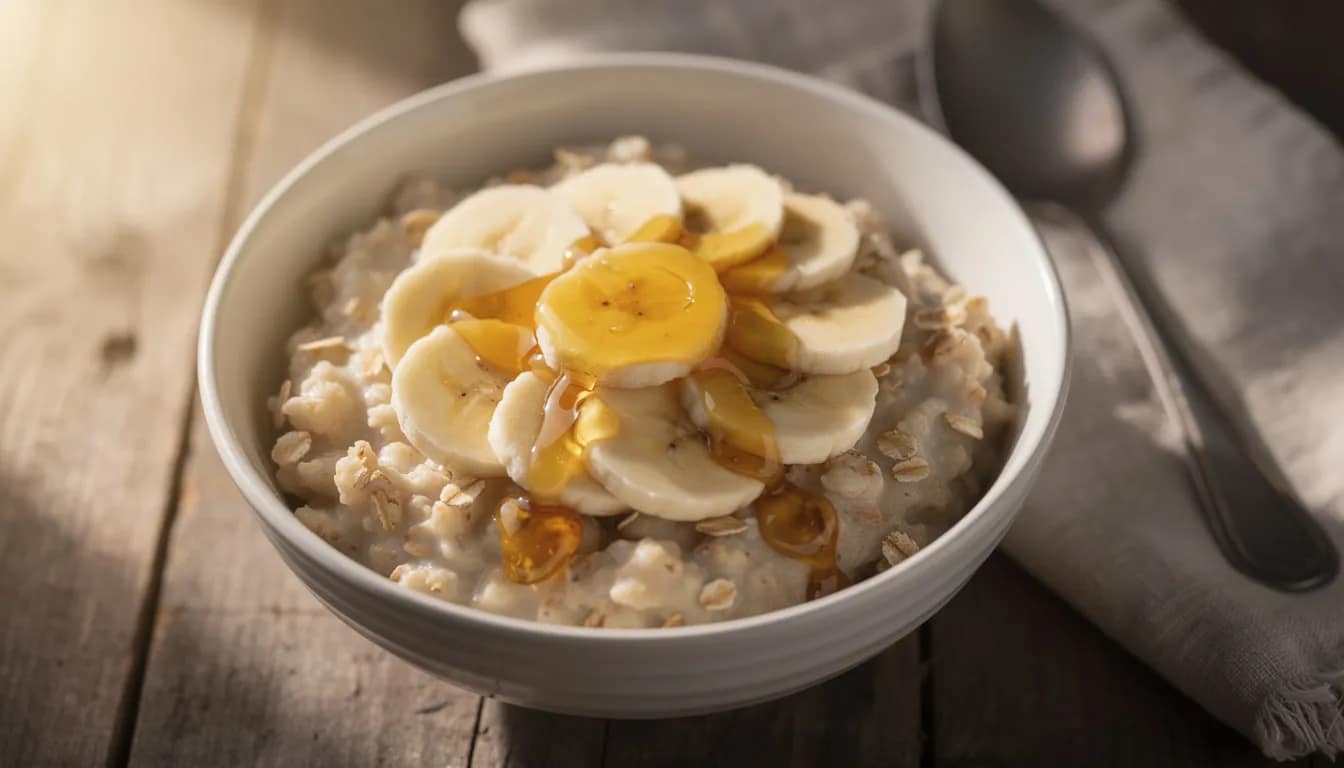
Sample day of motility-friendly meals
Here’s what a realistic day of eating for better motility looks like:
7:30 a.m. – Breakfast Start with ½ cup of well-cooked oatmeal topped with half a mashed banana and a drizzle of honey. This delivers soluble fiber in an easy-to-digest form, with enough carbohydrates to fuel your morning without overwhelming your stomach.
10:30 a.m. – Mid-morning snack A small smoothie made with ½ cup plain Greek yogurt, ½ cup peeled peaches (canned in juice is fine), and a splash of almond milk. Liquid food moves through faster than solid food, and the protein from yogurt keeps you satisfied.
12:30 p.m. – Lunch One cup of pureed carrot-ginger soup with 3 ounces of baked cod on the side. The soup provides vegetables in their most digestible form, while the lean fish adds protein without the fat that would slow emptying.
3:30 p.m. – Afternoon snack Another smoothie or ½ cup of applesauce with a small handful of pretzels. Easy to digest, provides energy, keeps portions small.
6:30 p.m. – Dinner Three ounces of roasted turkey breast, ½ cup of mashed potatoes (made with low-fat milk), and ½ cup of peeled, well-cooked green beans. Everything is soft, low in fat, and moderate in fiber.
8:30 p.m. – Evening snack (optional) Small cup of chamomile tea with a few saltine crackers if needed. Keep it light this close to bedtime.
Each meal supports motility by being low in fat, easy to chew, not excessively fibrous, and accompanied by adequate fluids. Notice how nothing is huge—your stomach can actually process these portions efficiently.
Foods and drinks that may worsen slow gastric motility
Some foods slow emptying or trigger symptoms even when they’re considered “healthy” by normal standards. Your stomach doesn’t care about the food’s Instagram appeal—it cares about whether it can process it efficiently.
High-fat items to limit
- Deep-fried foods – french fries, onion rings, fried fish, doughnuts
- Fast-food meals – typically loaded with fat even when they don’t seem greasy
- Heavy cream sauces – alfredo, creamy soups, rich gravies
- Large cheese portions – more than 1-2 ounces at a time
- Processed meats – sausages, salami, pepperoni, bacon in large amounts
High-fiber or hard-to-break-down foods to limit when symptomatic
- Large raw salads – especially with cruciferous vegetables like broccoli, cauliflower, cabbage
- Unpeeled apples and pears – the skin is tough to break down
- Large servings of beans and lentils – notorious for causing bloating
- Whole nuts and seeds – especially with skins intact
- Bran cereals and whole grains in large amounts – can form a slow-moving mass
- Popcorn – those hulls don’t digest well
Drinks to watch
- Large volumes of carbonated beverages – the gas adds to bloating
- High-fat coffee drinks – lattes with whole milk, whipped cream, added cream
- Very sugary drinks – can cause bloating and paradoxically slow emptying
Remember: People differ significantly. Some tolerate small amounts of these foods just fine. A registered dietitian can help personalize your limits rather than eliminating whole food groups forever.
Making foods easier to tolerate
You don’t have to give up fruits and vegetables entirely—you just need to prepare them smarter.
The key is reducing the mechanical work your stomach has to do. When food arrives pre-processed (cooked, mashed, blended), your stomach can focus on chemical digestion and moving things along rather than grinding everything down.
Try these swaps:
- Applesauce instead of raw apples
- Smooth nut butters instead of whole nuts
- Hummus instead of whole chickpeas
- Vegetable juices or blended soups instead of large raw salads
- Well-cooked, peeled carrots instead of raw carrot sticks
- Canned peaches in juice instead of fresh peaches with skin
Experiment with portion sizes and textures before completely cutting out foods you enjoy. Sometimes the difference between tolerating something and not is simply how much you eat at once and how it’s prepared.
Lifestyle habits and physical activity to boost motility
Your nervous system and gravity play massive roles in how well your stomach empties and your intestines move food along. This means lifestyle changes can be just as powerful as diet changes—sometimes more so.
Post-meal movement
Light walking after meals is one of the most underrated digestive aids. Even 10-20 minutes of slow walking after breakfast, lunch, and dinner supports your body’s natural gastrocolic reflex—the signal that tells your GI tract “food is coming through, let’s get moving.”
You don’t need to power walk. A gentle stroll is enough. The combination of upright posture and gentle movement helps gravity do its job.
Stay upright after eating
Avoid lying down or going to bed within 2-3 hours of a main meal. When you’re horizontal, gravity can’t help move food downward, and you increase your risk of reflux as stomach contents push up toward your esophagus.
If you need to rest after eating, try a reclined sitting position rather than lying flat.
Stress management
Here’s something most people don’t realize: stress literally freezes your digestive system. When your sympathetic nervous system (the “fight or flight” response) activates, your body redirects blood away from digestion toward muscles and brain. Your gut gets the message: “Digestion can wait. We might need to run from a predator.”
The problem? Modern stress is chronic, not acute. Your gut stays in slow mode for days, weeks, or months.
Effective approaches:
- 10-minute breathing exercises – slow, deep breathing activates your parasympathetic “rest and digest” system
- Yoga or gentle stretching – combines movement with stress reduction
- Mindfulness apps – even 5-10 minutes daily can shift your nervous system
Sleep consistency
Circadian disruption can alter gut motility. Aim for 7-9 hours per night with consistent sleep and wake times. Your gut has its own internal clock, and irregular sleep confuses the signals.
Other habits to address
- Quit smoking and vaping – both irritate the digestive tract and affect motility
- Reduce heavy alcohol use – alcohol can disrupt normal muscle contractions
- Moderate caffeine – especially large, high-fat coffee drinks that combine stimulation with delayed emptying
Daily habit summary:
- Walk 10-20 minutes after at least one meal daily
- Stay upright for 2-3 hours after eating
- Practice stress reduction for 10+ minutes daily
- Maintain consistent sleep schedule
- Limit alcohol, quit smoking, moderate caffeine
Simple movement plan for one week
Here’s a concrete 7-day plan to build the walking habit:
Day 1: After dinner, take a 10-minute walk around your neighborhood or even inside your home. Just get moving. Note how you feel before and after.
Day 2: Repeat the post-dinner walk. If you felt good yesterday, try adding 5 more minutes.
Day 3: Add a second walk—after lunch or breakfast, whichever fits your schedule better. Keep it to 10 minutes.
Day 4: Maintain both walks. Start noticing if your afternoon bloating or post-meal discomfort is any different.
Day 5: Try extending one of your walks to 15 minutes. The other can stay at 10.
Day 6: Aim for walks after two meals, 10-15 minutes each. Log your symptoms—any changes in nausea, fullness, or bloating?
Day 7: If you’re feeling ambitious, add a third walk after your remaining meal. By now, post-meal movement should feel like a normal part of your routine.
For those with mobility limitations: Seated marching, light stretching while sitting, stationary cycling, or even 5-minute standing breaks every hour can provide similar benefits. The goal is gentle movement, not athletic performance.
Keep a simple log of your symptoms (bloating, nausea, fullness, constipation) before starting and at the end of the week. Most people notice at least some improvement.

Breathing techniques to support digestion and motility
Breathing isn’t just for not dying—it can actually kick your sluggish stomach into high gear and get your digestive system moving like it’s supposed to, especially if you’re stuck dealing with gastroparesis (aka when your stomach decides to go on permanent vacation). When you practice specific breathing techniques, you’re basically giving your stomach muscles a pep talk, encouraging those lazy contractions to get their act together, and telling your gastric emptying to stop being such a slacker. This can make a real difference in managing those delightful symptoms like nausea, pain, and that “I swallowed a bowling ball” feeling of fullness.
One of the most effective methods is diaphragmatic breathing, sometimes called “belly breathing”—and no, that’s not just what you do after Thanksgiving dinner. Unlike that shallow chest breathing you’ve been doing like some kind of stressed-out hamster, diaphragmatic breathing engages the diaphragm—a massive muscle fortress at the base of your lungs—which gives your stomach and digestive organs a gentle massage as you breathe. Think of it as a free internal spa treatment that actually helps improve gastric emptying and gets food moving through your GI tract instead of just camping out there like an unwanted houseguest.
Here’s how to try diaphragmatic breathing:
- Sit comfortably with your back straight, or lie down if that’s easier (we’re not judging your life choices here).
- Place one hand on your stomach and the other on your chest—you’re basically becoming your own breathing detective.
- Inhale slowly through your nose, focusing on expanding your stomach outward as your diaphragm moves down. The hand on your stomach should rise like it’s saying “hello,” while the hand on your chest stays mostly still like it’s trying to be professional.
- Exhale gently through your mouth, letting your stomach fall as your diaphragm rises—think of it as your internal organs doing a little dance.
- Repeat for 5–10 breaths, aiming for a slow, steady rhythm (no hyperventilating allowed).
Practicing this technique for just a few minutes each day can help relax your digestive system, tell nausea to take a hike, and support the natural motility of your stomach muscles like they’re finally remembering what their job is supposed to be. Many people with gastroparesis find that incorporating deep breathing into their daily routine helps control nausea and even reduces episodes of vomiting or abdominal pain—because apparently your stomach just needed some breathing lessons this whole time.
Yoga and meditation practices that include deep breathing can also be total game-changers, as they combine gentle movement with stress reduction—both of which are absolutely crucial for healthy digestion and motility, because stress literally tells your digestive system to shut down like it’s going into witness protection.
Before starting any new breathing exercises, especially if you’re taking certain medications that might trigger gastroparesis or have other medical conditions, check in with your healthcare provider (yes, we know, another doctor’s appointment). They can help you determine the safest and most effective way to add breathing techniques to your overall gastroparesis treatment plan without accidentally messing anything else up.
By making diaphragmatic breathing a regular part of your routine, you’re giving your body another tool to improve gastric emptying, manage symptoms, and support your digestive health—one breath at a time, because apparently that’s all it takes to convince your stomach to start doing its job again.
Medical treatments that increase gastric motility
When diet and lifestyle changes aren’t enough—especially if you’re experiencing persistent vomiting, significant weight loss, or can’t eat enough nutrition to maintain your health—it’s time for medical evaluation. A gastroenterologist can help diagnose gastroparesis or other motility disorders and develop a treatment plan, which may include medicine to improve gastric motility and manage symptoms.
Medicine options for gastroparesis include metoclopramide, which is the only medication approved by the FDA for the treatment of gastroparesis. Other medications, such as erythromycin, may also be prescribed, but they can have side effects like diarrhea. Domperidone and emerging drugs like relamorelin are also being studied for their effectiveness.
If symptoms are severe or if medicine and dietary changes are not effective, other treatments may be considered. These include more invasive options such as parenteral nutrition and the use of a feeding tube. Parenteral nutrition delivers liquid nutrients directly into the bloodstream for patients whose gastroparesis is severe and who cannot maintain nutrition by mouth. A feeding tube, such as a jejunostomy tube, can be placed to provide nutrition directly into the small intestine or stomach when oral intake is not possible or insufficient.
Botulinum toxin may be injected into the stomach muscle to prevent muscle contraction and can help improve spasms in the stomach muscles. Gastric electrical stimulation uses a small, battery-powered device to send mild electrical pulses to the nerves and muscles in the lower stomach, which can help improve gastric motility in some patients.
Getting an accurate diagnosis
Before labeling something a “motility disorder,” doctors need to rule out structural problems. Common diagnostic tests include:
- Gastric emptying scintigraphy – you eat a meal containing a small amount of radioactive material, then imaging tracks how fast your stomach empties over 4 hours. This is the gold standard test.
- Breath tests – measure gases produced as food moves through your system
- Upper endoscopy – a camera goes through your mouth and esophagus to examine your stomach directly and rule out obstruction
- CT or MRI imaging – to check for structural problems like strictures or tumors
Prokinetic medications
Prokinetics are drugs that stimulate stomach and intestinal muscle contractions. They’re the primary pharmacological approach to treat gastroparesis, and medicine is often used to manage symptoms and improve gastric motility.
Metoclopramide (Reglan) The most commonly prescribed prokinetic in the U.S. Available as oral tablets or a nasal spray (approved in 2019, often used for diabetic gastroparesis). It works by blocking dopamine receptors and enhancing acetylcholine release, which stimulates those stomach muscles. Metoclopramide is the only medication approved by the FDA for the treatment of gastroparesis.
Key caution: Long-term use carries risk of tardive dyskinesia—involuntary muscle movements that can be permanent. The FDA recommends limiting use to 12 weeks when possible.
Erythromycin Yes, the antibiotic. At low doses, it mimics the hormone motilin and triggers gastric contractions. Often used short-term because the body develops tolerance (tachyphylaxis) after a few weeks. A potential side effect of erythromycin is diarrhea.
Domperidone Available in many countries but not FDA-approved in the U.S. Some patients access it through a special FDA compassionate use program. It’s similar to metoclopramide but doesn’t cross the blood-brain barrier as readily, potentially reducing some side effects. However, it can cause heart rhythm effects (QT prolongation) and requires monitoring.
Investigational agents Newer drugs like relamorelin (a ghrelin agonist) are still under clinical investigation and not yet broadly available. These represent promising future options.
All prokinetic dosing and duration must be supervised by a clinician, typically with review every few months to assess ongoing need and side effects.
Other prescription options
Antiemetics for symptom control Medications like ondansetron (Zofran) and promethazine can relieve nausea and control nausea and vomiting but don’t actually speed up gastric emptying. They’re often used alongside prokinetics to manage gastroparesis symptoms while addressing the underlying motility problem.
Addressing contributing factors
- Diabetes management – optimizing blood sugar control can improve nerve function over time
- Thyroid treatment – if hypothyroidism is contributing, treating it often improves motility
- Medication review – reducing or substituting constipating drugs (opioids, certain medications like anticholinergics) when medically appropriate
GLP-1 agonist considerations Widely used weight-loss and diabetes drugs like semaglutide (Ozempic, Wegovy) and tirzepatide (Mounjaro) can significantly delay gastric emptying—that’s actually part of how they work for weight loss. If you’re on these medications and experiencing severe symptoms, your doctor may need to adjust the dose or consider alternative therapies.
Procedures and devices for severe motility problems
When medications fail and symptoms are severe, several interventional options exist:
Feeding tubes For people who can’t maintain enough nutrition by mouth, a feeding tube such as a jejunostomy tube delivers liquid food directly into the small intestine, bypassing the poorly functioning stomach entirely. A nasojejunal tube (through the nose) can be used temporarily, while a jejunostomy tube (surgically placed through the skin into the intestines) is for longer-term use. Feeding tubes are considered when other treatments are insufficient to maintain adequate nutrition.
Parenteral nutrition For patients with severe gastroparesis who cannot tolerate enteral feeding, parenteral nutrition delivers liquid nutrients directly into the bloodstream, providing essential nutrition when the digestive tract cannot be used.
Gastric venting tubes A gastrostomy tube can decompress the stomach in cases of significant bloating, pain, or vomiting from retained contents. This relieves pressure without requiring the stomach to empty normally.
Gastric electrical stimulation An implanted device uses a small, battery-powered device to send mild electrical pulses to the nerves and muscles in the lower stomach. It’s mainly used in refractory diabetic or idiopathic gastroparesis, particularly when nausea and vomiting are the predominant symptoms. The evidence is mixed, and it’s available only at specialized centers. It doesn’t dramatically improve gastric emptying rates but can significantly reduce nausea for some patients.
Botulinum toxin injection Botulinum toxin is injected into the stomach muscle to prevent muscle contraction and can help improve spasms in the stomach muscles. This treatment may be considered when other treatments have not provided sufficient relief.
Gastric peroral endoscopic myotomy (G-POEM) This minimally invasive procedure, developed in the 2010s and increasingly used in 2025, involves cutting the pylorus muscle endoscopically to improve gastric emptying. It’s performed through the mouth with no external incisions. Selected patients with gastroparesis treatment-resistant to medications have shown significant improvement with G POEM.
These approaches are reserved for severe, refractory cases after conservative measures and other treatments fail. If you’re at this point, you should be working with a tertiary-care gastroenterology team at a specialized center.
When to see a doctor and how to prepare
Don’t wait too long to get help. Some warning signs require prompt medical attention:
- Unintentional weight loss of more than 5% of your body weight in 3-6 months
- Persistent vomiting that doesn’t respond to dietary changes
- Black or bloody stools (could indicate bleeding)
- Difficulty swallowing or food getting stuck in your esophagus
- New, severe abdominal pain
- Blood sugars spiking despite your usual diabetes control
Preparing for your appointment
Track symptoms for 1-2 weeks before your visit:
- Keep a food and symptom diary (what you ate, when, how you felt)
- Note timing—symptoms right after eating vs. hours later
- Record weight changes
Gather your information:
- Complete medication list including over-the-counter products (especially newer drugs like GLP-1 injectables or recent heartburn medications)
- Supplement list
- Recent lab results and imaging (request records via patient portals like MyChart)
Prepare questions: Write down your key questions about diagnosis, diet recommendations, exercise guidance, medication options, and long-term prognosis. Consider bringing a support person who can help remember the plan discussed.
Good news: Many people improve significantly when diet, lifestyle, and medical therapy are coordinated. But ignoring persistent symptoms can lead to malnutrition, dehydration, and seriously reduced quality of life. Getting proper evaluation is worth the effort.

Summary: building a personal plan to improve gastric motility
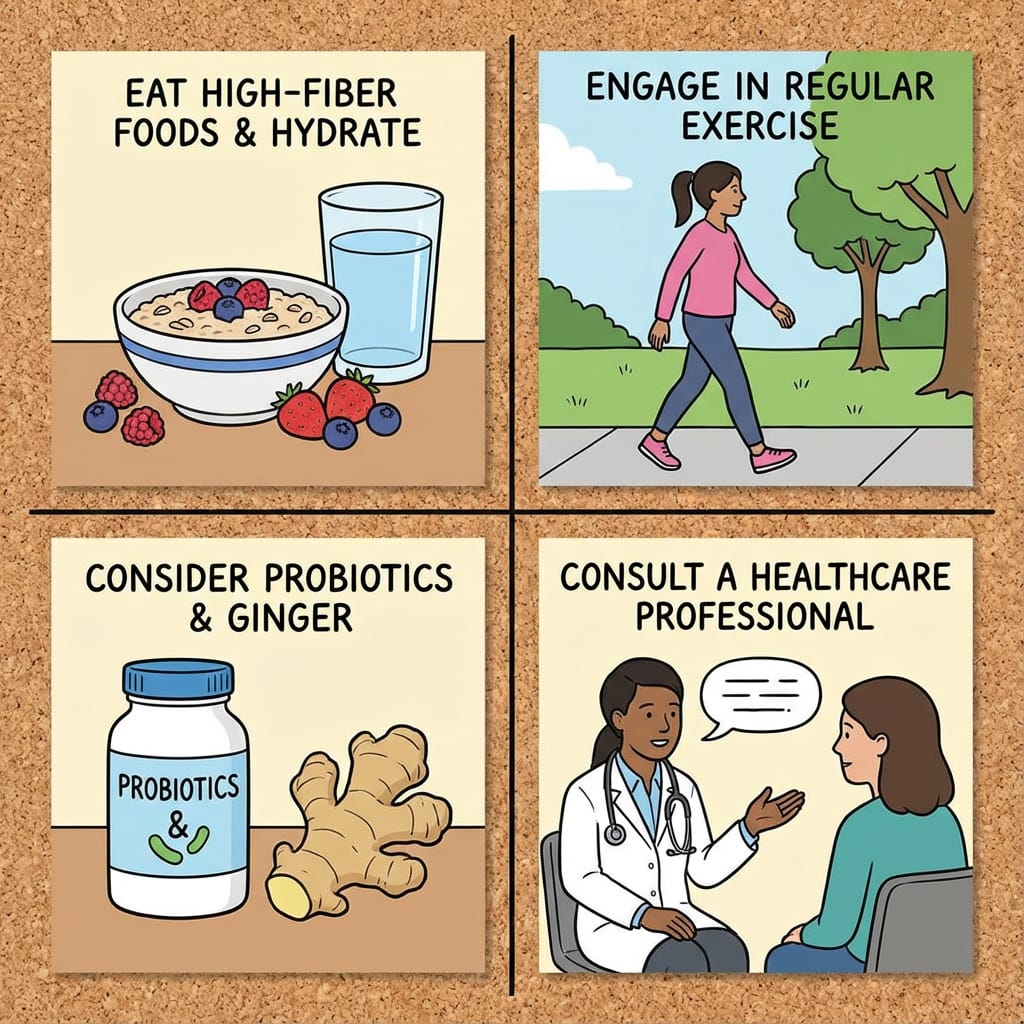
Getting your gut moving again comes down to four core pillars: targeted diet changes (smaller meals, less fat, smarter fiber choices), regular light activity (post-meal walks, staying upright), stress and sleep management, and appropriate medical evaluation when symptoms are severe or persistent.
Your action plan:
- This week: Adjust meal sizes—try 4-5 smaller meals instead of 2-3 large ones
- Starting today: Add one 10-minute walk after a meal, building to 2-3 walks by next week
- Within the month: Review your medication list with your healthcare provider to identify anything that might trigger gastroparesis or slow motility
- Ongoing: Keep a symptom log for at least one month to track what helps
Don’t try to overhaul everything at once. Pick one or two changes to start, give them a couple weeks, then add more. Sustainable progress beats perfect plans that fall apart after three days.
Your stomach has been waiting for you to show up with a strategy. Now you have one. Time to get things moving.