
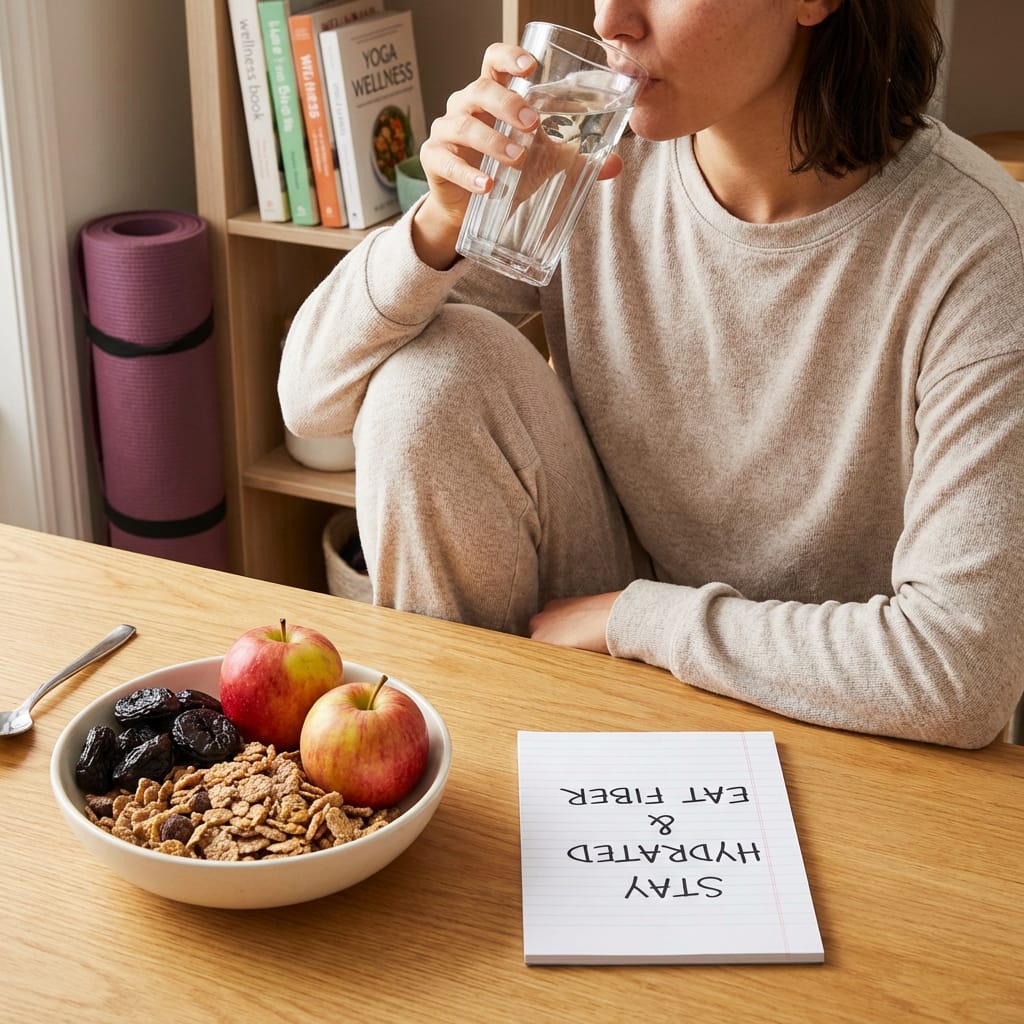
Let’s be honest—when you need to go and nothing’s happening, you don’t want a lecture about long-term fiber goals. You want results. Now. The good news? Your body has built-in mechanisms that respond to specific triggers, and knowing how to activate them can mean the difference between a frustrating 45-minute bathroom standoff and a quick, satisfying visit.
This guide covers proven natural remedies to relieve constipation fast, plus the dietary changes and lifestyle habits that keep your digestive system running smoothly for the long haul.
Quick Overview: Natural Ways to Relieve Constipation Fast
If you’re looking for fast constipation relief without a trip to the pharmacy, these methods work with your body’s natural processes to encourage bowel movements:
- Hot coffee or tea — The warmth plus caffeine triggers your gastrocolic reflex within 15-30 minutes
- A glass of warm lemon water — Hydrates and gently stimulates your digestive tract first thing in the morning
- Prune juice (4-8 oz) — Contains sorbitol, a natural osmotic laxative that can work in 30-60 minutes
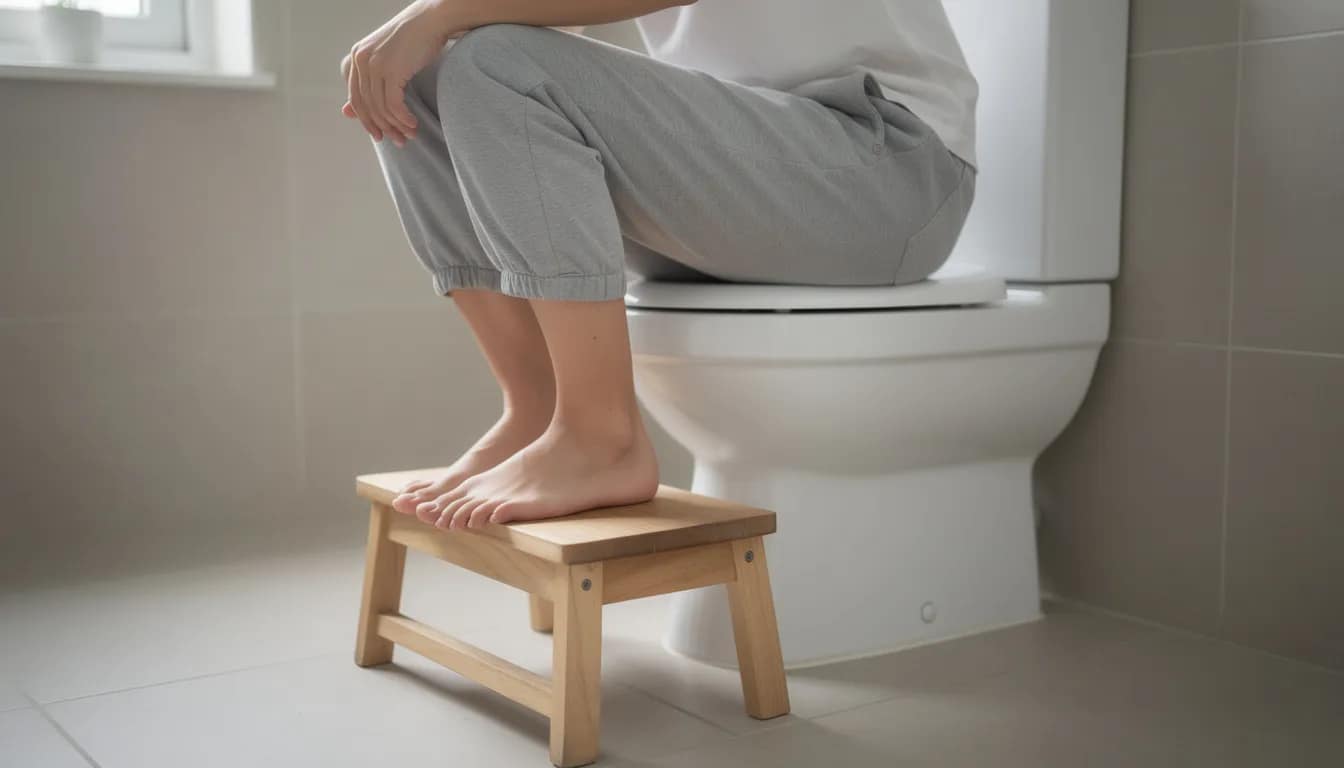
- Squatting position with a toilet stool — Straightens your rectoanal angle, making stool easier to pass
- 10-15 minute brisk walk — Physical movement increases intestinal contractions by 20-30%
- Clockwise abdominal massage — Manually helps move contents along your lower intestines
- Deep breathing on the toilet — Relaxes your pelvic floor so you’re not fighting against tense muscles
Results vary depending on how long you’ve been constipated and your individual physiology. For mild, occasional constipation, many of these methods can stimulate bowel movements within 15-60 minutes.
Safety note: If you haven’t had a bowel movement in 5-7 days, or you’re experiencing severe abdominal pain, blood in your stool, vomiting, or inability to pass gas, skip the home remedies and contact a doctor or urgent care immediately.
What “Immediate” Relief Really Means
When we say “immediate,” we’re being realistic—not magical. Here’s what different timeframes actually look like for constipation relief:
- 15-60 minutes: Possible with osmotic triggers like prune juice, warm drinks, or physical stimulation
- 1-4 hours: Typical for fiber-based methods combined with adequate hydration
- 12-24 hours: More realistic for adding bulk through high fiber foods
Normal bowel movements range from three times daily to three times weekly—both are completely fine if you’re comfortable and consistent. Constipation typically means fewer than three bowel movements per week, hard stool that’s difficult to pass, or significant straining.
Common short-term triggers that throw off your rhythm include:
- Travel and schedule disruption
- Dehydration (especially in hot weather or after exercise)
- Low fiber intake over a few days
- Starting certain medications like opioids, iron supplements, or some antidepressants
- Ignoring the urge to go repeatedly
This article focuses on natural remedies and home remedies you can try today—not prescription medications or medical procedures.
Fast Natural Triggers You Can Try Today
These methods are most likely to help with constipation within the same day, sometimes within an hour.
Here’s the key insight: combining 2-3 methods works significantly better than relying on just one. Think warm drink plus a short walk plus the squatting position—you’re hitting multiple pathways simultaneously.
- Warm or hot beverages to trigger gastrocolic reflex
- Caffeine to stimulate intestinal contractions
- Prune juice or sorbitol-rich fruits as a natural osmotic laxative
- Warm lemon water for gentle morning stimulation
- Clockwise abdominal massage to physically move contents along
- Proper toilet positioning to straighten your anatomy
- Short walk or light movement to boost blood flow to your GI tract
- Deep breathing and relaxation to release pelvic floor tension
- Chewing fennel seeds can help stools move through the colon by increasing gastric enzymes in the digestive system
Details on each method are expanded in the sections below. If you have heart, kidney, or existing bowel disease, clear any new routines with your clinician first.

Use Warm Drinks and Caffeine
Warm liquids work by stimulating your gastrocolic reflex—that wave of intestinal activity triggered when your stomach expands. This reflex is strongest in the morning, which is why many people have their most reliable bowel movements after breakfast.
- Drink 1 mug (about 8 fl oz) of black coffee, green tea, herbal tea, or plain hot water
- Sip it within 10-15 minutes rather than nursing it over an hour
- Caffeinated coffee tends to be more effective than decaf for most people, but warmth alone still helps
- Follow this simple routine: drink your hot beverage, wait 10-20 minutes, then sit on the toilet even if the urge is mild
- Ginger tea offers additional antispasmodic benefits that can reduce intestinal cramping
- Senna tea works as a natural stimulant laxative but should be used sparingly (effects in 6-12 hours)
- Avoid multiple strong coffees if you have reflux, heart palpitations, or are pregnant—confirm caffeine limits with your clinician
Try Prune Juice or Other Sorbitol-Rich Fruits
Sorbitol is a natural sugar alcohol that your small intestine can’t fully absorb. The result? It pulls water into your colon through osmosis, softening hard stool and triggering the urge to go.
- Drink 4-8 fl oz (120-240 ml) of prune juice for fast action
- Alternatively, eat 4-6 dried prunes with a full glass of water
- A serving of prunes provides about 12 grams of sorbitol—enough to mimic mild pharmaceutical osmotics
- Other sorbitol-containing options include pear juice, apple juice, and whole plums (these act more gently)
- Wait 30-60 minutes after drinking prune juice before expecting results
- Don’t re-dose every hour hoping for faster results—this leads to diarrhea and cramping
- Clinical trials show prune extract outperforms psyllium fiber for improving stool consistency and frequency
Note for diabetics: Prune juice counts as concentrated carbohydrate. You may need to choose whole fruit instead and adjust portions accordingly.
Warm Lemon Water First Thing in the Morning
This simple ritual combines hydration, warmth, and mild acidity to wake up your digestive system:
- Shortly after waking, drink a glass (200-250 ml) of warm water mixed with juice from half a fresh lemon
- The combination stimulates your stomach and can encourage stool movement within 30-60 minutes
- This works best when followed by 10-15 relaxed minutes near a bathroom—don’t rush out the door immediately
- Use a straw and rinse your mouth with plain water afterward to protect tooth enamel from the citric acid
- People with severe acid reflux or ulcers should test small amounts first or discuss with their doctor
Adopt the Squat Position on the Toilet
Modern toilets put your body at a 90-degree angle—but that’s not how humans were designed to eliminate. The squat position straightens your rectoanal angle, reducing straining by approximately 30% according to biomechanical studies.
- Place a step stool, box, or stack of books under your feet so your knees sit slightly higher than your hips
- A toilet stool (sometimes called a squatty potty) is specifically designed for this purpose
- Lean forward with a straight back, resting your elbows on your knees
- Relax your pelvic floor and breathe slowly through your mouth
- Bear down gently rather than intensely straining—stop if you feel pain or dizziness
- Combine this positioning with warm drinks or prune juice for maximum effect
Gentle Abdominal Massage
Abdominal massage physically helps move gas and stool along your colon. The technique follows the natural direction of your intestines—clockwise when looking down at your abdomen.
- Lie on your back with knees bent for comfort
- Using flat fingers with light to moderate pressure, start at your lower right abdomen (near your hip bone)
- Move upward toward your right ribs (following your ascending colon)
- Travel across to under your left ribs (transverse colon)
- Move down to your lower left side (descending colon toward the sigmoid)
- Repeat this clockwise pattern for 5-10 minutes
- Stop immediately if you experience sharp pain, nausea, or dizziness
- A 2021 study showed this technique reduced colonic transit time by 20-30% in chronic constipation patients
- Pair massage with deep breathing and a warm water bottle placed over clothing
Avoid abdominal massage if you are: pregnant, recently post-surgery, have a known abdominal aneurysm, or have severe inflammatory bowel disease.
Move Your Body: Short, Light Exercise
Even gentle physical activity stimulates intestinal contractions and increases blood flow to your GI tract. You don’t need an intense workout—just movement.
- Take a 10-20 minute brisk walk around your neighborhood or office building
- Climb household stairs a few times
- Try a short yoga routine focusing on twists and knee-to-chest poses (wind-relieving pose is aptly named)
- Walk right after finishing a warm drink or prune juice for synergistic effect
- Studies show moderate exercise boosts peristalsis by 20-30%
- Keep your pace comfortable if you have heart or joint issues—stop for chest pain, shortness of breath, or dizziness
Natural Foods That Help You Poop
While some foods may help within hours, consistent fiber intake over days improves regularity and helps prevent constipation long-term. Your goal is a balanced approach combining:
- Soluble fiber — Dissolves in water, forms a gel, softens stool
- Insoluble fiber — Adds bulk, speeds transit time
- Water content — Keeps everything moving smoothly
- Natural enzymes and sugars — Aid digestion and draw water into the colon
Don’t rely on a single “magic” food. A varied plate works better than any one ingredient.
Kiwis
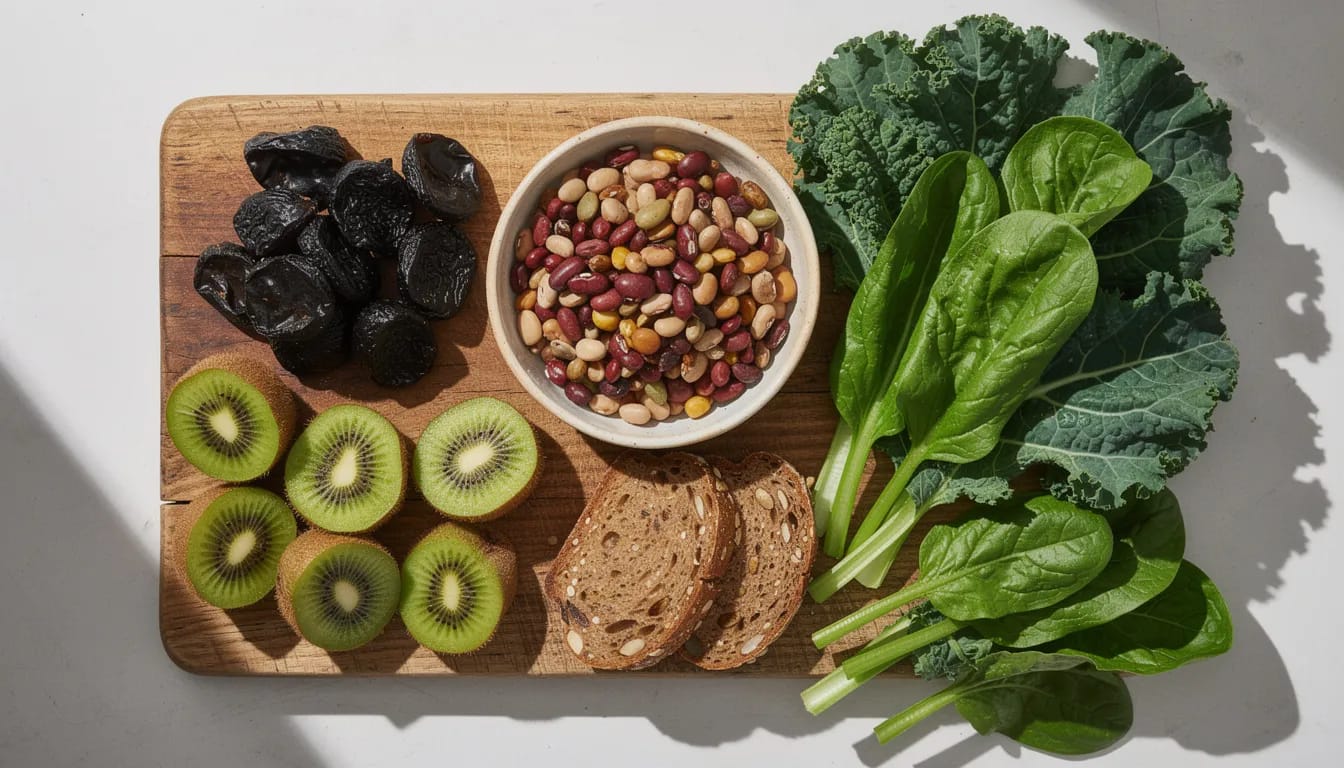
Green kiwifruit pack a double punch: fiber plus actinidin, an enzyme that enhances protein digestion and boosts colonic motility independently of fiber alone.
- Aim for 1-2 kiwis per day
- Eating the skin (well-washed) adds extra fiber, but peel if you find it irritating
- A 2018 study in the American Journal of Gastroenterology found daily kiwifruit increased bowel movements by 2-3 times weekly in constipated individuals
- Try them sliced over yogurt, blended into a smoothie, or eaten whole as a snack
- Some people experience mouth irritation—if this happens, simply peel the fruit
Apples and Pears
Both fruits combine soluble and insoluble fiber with high water content and natural sorbitol.
- Eat 1 medium apple or pear daily with skin on (washed) for maximum fiber
- Raw fruit provides more fiber than juice—avoid foods that are heavily processed
- Pair with a glass of water to help fiber swell and work effectively
- Try them sliced with nut butter, chopped into oatmeal, or added to salads
- People with IBS may need to monitor FODMAP sensitivity and adjust portions under dietitian guidance
- Pears contain up to 2% sorbitol by fresh weight, plus 84% water content
Beans, Lentils, and Other Pulses
Pulses are fiber powerhouses that significantly increase stool mass and frequency when eaten regularly. One cup of cooked lentils delivers 16 grams of fiber—nearly 60% of the daily recommendation.
- Start with ½ cup cooked lentils, chickpeas, black beans, or peas once daily
- Gradually increase over 1-2 weeks to minimize gas and bloating
- Rinse canned beans well under running water to reduce sodium and some gas-forming compounds
- Meal ideas: lentil soup, bean chili, hummus on whole grain bread, chickpeas in salads
- People with severe digestive issues or recent bowel surgery should increase slowly with personalized dietitian advice
Whole Grains and Bran
Whole grains add bulk to stool and speed passage through the intestinal walls. The fiber in oatmeal, specifically beta-glucan, absorbs up to 30 times its weight in water.
- Swap white bread, white rice, and low-fiber cereal for whole wheat bread, oatmeal, bran flakes, or brown rice
- Choose whole wheat, wheat bread, or whole grain bread over refined options
- Aim for at least 3 servings of whole grains daily
- Increase gradually to prevent bloating, and drink extra water as your fiber intake rises
- Gluten-free high-fiber options include buckwheat, quinoa, and certified gluten-free oats
- Even fibrous vegetables like brussels sprouts add valuable bulk
Hydrating Fruits, Vegetables, and Clear Soups
Water-rich produce like grapes, berries, oranges, cucumbers, zucchini, and leafy greens gently support stool softness. Staying hydrated through food is just as important as increasing fluid intake through drinks.
- Aim for at least 5 servings of fruits and vegetables daily
- Include a bowl of vegetable or broth-based soup at lunch or dinner
- Clear vegetable or chicken broths add both fluid and some sodium
- Raspberries pack 8 grams of fiber per cup plus 86% water content
- Very salty canned soups should be used cautiously if you have high blood pressure or kidney disease
Fermented Foods and Probiotic-Rich Options
Yogurt with live cultures, kefir, sauerkraut, and kimchi provide beneficial bacteria that may improve stool consistency over weeks of consistent intake.
- Start with 1 small serving daily (½-1 cup yogurt or kefir, or a few forkfuls of sauerkraut)
- Choose plain yogurt or kefir without added sugar
- Check labels for “live and active cultures”
- Results aren’t instant—improvements typically appear after 2-4 weeks of regular consumption
- People with compromised immune systems should discuss high-dose probiotics with their clinician
Healthy Oils and Omega-3 Fats
Small amounts of healthy oils can help lubricate the intestines, making stool easier to pass.
- Try 1 teaspoon to 1 tablespoon of extra-virgin olive oil on an empty stomach or drizzled over vegetables
- For omega-3s: aim for 2 servings weekly of salmon, sardines, or mackerel
- Alternatively, add 1-2 tablespoons ground flaxseed to oatmeal or yogurt
- Flax seeds are mucilaginous—they absorb 10-12 times their weight in water when soaked
- Avoid foods fried in unhealthy oils; skip fried food and fast food when possible
- Large quantities of oils can cause diarrhea and excess calories—moderation matters
- People on blood thinners should confirm high-dose omega-3 supplements with their doctor
Hydration: How Much Water Helps You Poop?
Water plays a critical role in softening stool and helping fiber work properly. Without adequate water intake, fiber can actually make constipation worse by adding bulk without lubrication.
- Aim for approximately 1.8-2.5 liters (7-10 cups) of fluid daily for most adults
- Adjust upward for hot weather, physical activity, or pregnancy
- Build a simple habit: drink a full glass of water with each meal, one between meals, and one when you wake
- Drink plenty of plain water, but tea, coffee, broth, and water-rich foods contribute to your total
- Hot beverages and warm water may be more effective at encouraging stool movement than cold drinks
- People with heart failure, kidney disease, or on fluid restrictions should follow their doctor’s individualized plan
Making dietary changes to include more fiber without increasing fluid intake is a common mistake that worsens symptoms.
Body Position, Breathing, and Relaxation on the Toilet
How you sit and how relaxed you are can dramatically affect your ability to pass stool quickly and comfortably. Many people unknowingly work against their own anatomy.
Key tactics covered below:
- Squat-like position using a stool
- Timing bathroom visits after meals
- Diaphragmatic breathing instead of straining
- Avoiding phone distractions that prolong sitting
Treat bathroom time as a brief, calm ritual rather than a rushed or stressful moment. Your gut responds to relaxation.
Timing Your Bathroom Visit
The gastrocolic reflex—a natural increase in bowel activity—kicks in 15-45 minutes after eating, especially after breakfast.
- Sit on the toilet at a regular time each day, preferably after a meal and warm drink
- Go even if the urge is only mild—consistency trains your body
- Allow 10-15 uninterrupted minutes without rushing
- Don’t repeatedly ignore the urge to go throughout the day—this leads to harder stools and slower bowels
- Regular bowel movements become easier when your body learns to expect bathroom time
Diaphragmatic Breathing Instead of Straining
Deep belly breathing relaxes pelvic floor muscles and may trigger the vagus nerve, which aids bowel movement. Intense straining does the opposite—it tightens the muscles you’re trying to relax.
- Sit in the squat-like position described earlier
- Close your eyes and inhale through your nose for 4 seconds, letting your belly rise
- Exhale gently through your mouth for 6 seconds
- Repeat 8-10 breaths while sitting on the toilet
- Focus on relaxing your pelvic floor rather than pushing hard
- Stop if you feel lightheaded; resume normal breathing before trying again more gently
- People with severe lung or heart conditions should practice breathing techniques cautiously
Managing Stress for Better Bowel Movements
Stress isn’t just a mental burden—it can have a real impact on your digestive system and bowel movements. When you’re stressed, your body’s “fight or flight” response kicks in, diverting blood flow away from your digestive tract. This can slow down your gut, making it harder to pass stool and leading to constipation or other digestive issues.
To encourage regular bowel movements and find constipation relief, it’s important to manage stress as part of your daily routine. Simple stress-reducing activities like meditation, deep breathing exercises, or gentle yoga can help calm your mind and body. These practices relax your digestive system, making it easier to stimulate bowel movements and prevent constipation.
Dietary changes also play a key role in managing both stress and constipation. Increasing your fiber intake with high fiber foods—such as whole grains, fibrous vegetables, and fruits—adds bulk to your stool, making it easier to pass. Don’t forget to drink plenty of water throughout the day; staying hydrated helps soften stool and supports your digestive system. Aim for at least 8-10 glasses of water daily to keep things moving smoothly.
Physical activity is another powerful tool for both stress relief and digestive health. Regular movement, whether it’s a brisk walk, cycling, or even light stretching, increases blood flow to your digestive system and helps stimulate bowel movements. Try to make physical activity a consistent part of your routine to prevent constipation and support overall well-being.
It’s also wise to avoid foods that can make constipation worse, such as fried food, fast food, and large amounts of dairy products. Instead, focus on eating foods that support your digestive health and make stool easier to pass.
For those dealing with chronic constipation, natural remedies like prune juice or senna tea can sometimes provide fast constipation relief. However, if you have ongoing digestive issues or other symptoms, it’s important to consult a healthcare professional before trying new remedies.
By combining stress management techniques, making dietary changes, and staying active, you can help prevent constipation and encourage regular bowel movements. Taking care of your mental and digestive health together is one of the most effective ways to achieve lasting constipation relief. If constipation persists or you notice other symptoms, don’t hesitate to reach out to your healthcare provider for personalized advice and effective treatment options.
Lifestyle Habits to Prevent Needing “Emergency” Fixes
If you’re constantly reaching for emergency constipation remedies, your everyday habits need adjustment. The goal is making regular bowel movements the norm, not the exception.
Long-term strategies that work:
- Consistent enough fiber from varied sources (25-38 grams daily)
- Adequate hydration throughout the day
- Daily movement and physical activity
- Bowel training with regular bathroom timing
- Limiting constipating foods (more on this below)
- Managing stress, which can literally freeze your digestive system
Most people see improved regularity within 1-4 weeks of lifestyle changes, even when immediate results vary.
Consider keeping a simple “stool diary” noting days and times of bowel movements, stool texture, foods eaten, and water intake. Patterns often become obvious within a week.
Move Every Day
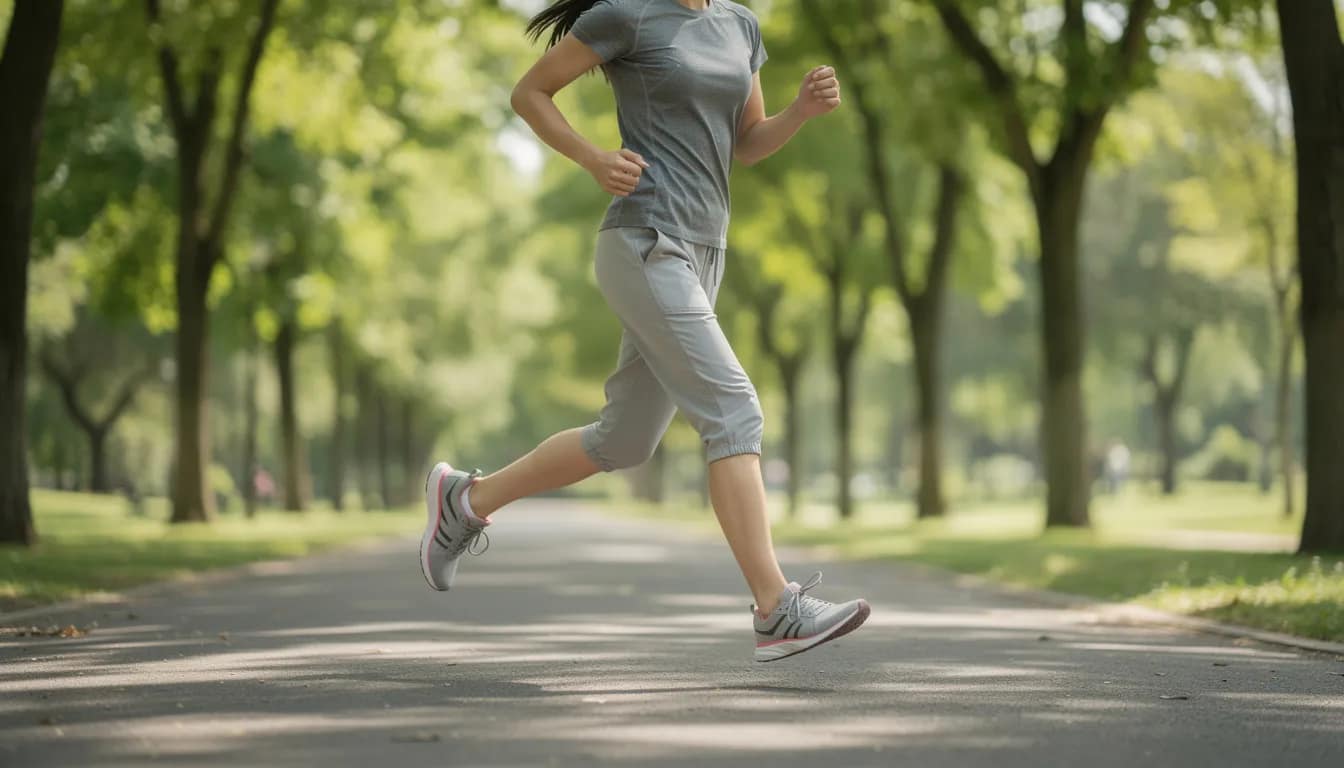
Adults should aim for at least 150 minutes weekly of moderate activity like brisk walking, cycling, or swimming.
- Carve out 20-30 minutes most days, or break it into 10-minute walks after meals
- Post-meal walks specifically harness your gastrocolic reflex for maximum effect
- People with mobility challenges can try seated exercises, light stretching, or physiotherapist-guided routines
- Gradually increase duration and intensity rather than jumping from sedentary to intense workouts
- Consistent movement helps not only constipation but also mood, sleep, and metabolic health
- Studies show physical activity increases peristalsis significantly
Limit Foods That Make Constipation Worse
Certain foods are common culprits for slowing things down. You don’t need to avoid foods entirely, but awareness helps with effective treatment of recurring symptoms.
Foods That May Worsen Constipation | Better Alternatives |
|---|---|
Large amounts of cheese and full-fat dairy products | Yogurt or kefir with live cultures |
Fried foods and fast food | Baked or grilled options |
Heavily processed snacks | Whole fruit, nuts, vegetables |
Refined white bread and pastries | Whole wheat bread or brown rice |
Very low-carb diets without fiber | Add fibrous vegetables and seeds |
- Some people find large quantities of red meat constipating, especially without fiber-rich sides
- Make changes gradually so they feel sustainable rather than restrictive
- Balance matters more than perfection—no single food needs to be “forbidden”
When Natural Methods Aren’t Enough
If home remedies and dietary changes fail after consistent effort, short-term use of over-the-counter options may be reasonable under pharmacist or doctor guidance.
Options include:
- Fiber supplements like psyllium (calcium polycarbophil is another option)
- Stool softeners that add moisture to stool
- Osmotic laxative products like polyethylene glycol that draw water into the colon
- Stimulant laxative options for short-term use only (not for long term constipation management)
OTC laxatives and other treatments can provide relief, but this article focuses on natural methods. If you’ve tried lifestyle changes for 2-4 weeks without improvement, don’t suffer in silence.
Chronic constipation may indicate underlying causes like:
- Hypothyroidism
- Diabetes
- Pelvic floor dysfunction
- IBS or other digestive issues
- Medication side effects (opioids slow motility by 40%)
Track your symptoms, medications, and diet in a simple log to share with your healthcare provider. Seeking help isn’t a failure—it’s smart self-advocacy.
Red-Flag Symptoms: See a Doctor Urgently
These warning signs require immediate medical attention, not home remedies:
- No bowel movement for 7+ days despite attempts
- Severe or worsening abdominal pain
- Vomiting, especially with abdominal distension
- Inability to pass gas
- Black, tarry, or bloody stools
- Unexplained weight loss
- Fever accompanying constipation
- Other symptoms that feel wrong or alarming
Emergency situations: Sudden, intense pain with a distended abdomen and inability to pass gas may signal bowel obstruction. This requires emergency room care immediately.
Older adults (over about 65), pregnant people, and those with serious heart, kidney, or underlying health condition affecting the bowel should seek medical advice earlier than the general population.
If your long-term pattern of constipation changes abruptly (from daily to once weekly without obvious cause), contact your clinician promptly.
And please—don’t be embarrassed discussing bowel habits with your healthcare team. They’ve heard it all, and your comfort matters more than awkwardness. Prescription medications and specialized testing exist for good reason.
Your digestive system wants to work properly—sometimes it just needs the right signals. Start with one method today: maybe it’s a warm drink followed by a short walk, or finally getting that toilet stool you’ve been meaning to buy. Small changes compound quickly when it comes to regular bowel movements.
The bathroom doesn’t have to be a battleground. With the right habits, you’ll spend less time struggling and more time actually living your life.