
You’re reading this because something isn’t moving. And you’d really like it to. Welcome to the club nobody wanted to join but somehow has millions of members.
Here’s the good news: your body already knows how to poop. Sometimes it just needs a little physical encouragement to remember. The right movements can wake up your digestive system, relax your pelvic floor muscles, and get things flowing again—no harsh laxatives required. Let’s get you moving so you can get moving, if you catch my drift.
Quick-start: the fastest movements to try when you can’t poop
If you’re reading this while actively stuck on the toilet or feeling backed up right now, this section is for you. Skip the theory—here’s what to do immediately.
Do-right-now movements:
- Brisk 5–10 minute walk – Get up and move. Walk around your house, up and down the hallway, or outside. Movement stimulates your intestines.
- Gentle marching in place – Lift those knees high, alternating legs for 2–3 minutes. This massages your abdomen from the inside.
- Knee-to-chest on the bed – Lie flat, pull your right knee toward your chest, hold 30 seconds, then switch sides. Repeat with both knees together.
- Deep squat hold – Hold onto a counter or sturdy chair, lower into a deep squat (feet wider than hips), and hold for 20–30 seconds. This straightens your digestive tract.
- Gentle belly massage – Using your palm, massage your abdomen in clockwise circles for 1–2 minutes.
These movements are safe for most adults. However, if you have severe pain, recent surgery, or heart problems, check with a clinician first.
Stop and seek urgent medical care if you experience:
- Severe abdominal pain
- Vomiting
- Blood in your stool
- Fever with constipation
These could signal something more serious than garden-variety constipation.
How movement helps you poop
Constipation—defined as fewer than three bowel movements a week, hard stool, or feeling like you can’t fully empty—affects nearly everyone at some point. And while it’s tempting to just sit there and wait, physical activity is one of the most effective ways to relieve constipation naturally.
Here’s what happens when you move your body:
What You Do | What Happens Inside |
|---|---|
Raise your heart rate (walking, cycling) | Stimulates peristalsis—the wave-like contractions that push stool through your intestines |
Move your core and hips | Gently massages your abdominal organs, helping gas and stool travel through the colon |
Stretch and breathe deeply | Relaxes your pelvic floor, allowing the anal canal to open properly during bowel movements |
Exercise after meals | Takes advantage of the gastrocolic reflex—your body’s natural urge to poop after eating |
Your pelvic floor muscles act like a hammock at the bottom of your pelvis. When they’re too tight (which happens to a lot of us, especially when we’re stressed or straining), they can actually block stool from exiting. Movement and stretching can help these muscles learn to relax.
Even 10–20 minutes of light physical activity after lunch or dinner can noticeably encourage regular bowel movements within days to weeks. Your digestive system responds to consistency.
Best daily exercises to relieve constipation
You don’t need a gym membership or fancy equipment. These various exercises can be done at home, take about 20–30 minutes, and target the exact muscles and movements that support healthy digestion.
A simple daily routine:
- 10-minute brisk walk – Around the block, through your house, or on a treadmill
- 5 minutes of gentle stair climbing or marching – Alternating high knee lifts work great
- 5–10 minutes of light stretching – Focus on hips, lower back, and abdomen
Optimal frequency: Aim for at least 5 days per week. Most people notice improvement within 1–2 weeks of consistent practice.
Best timing: Do this routine at roughly the same time each day—ideally after breakfast. This trains your bowels to expect movement and helps establish regular bowel movements.
For people with mobility challenges:
- Seated marching (lifting knees while sitting)
- Seated trunk rotations
- Ankle pumps and circles
- Gentle arm movements to engage the core
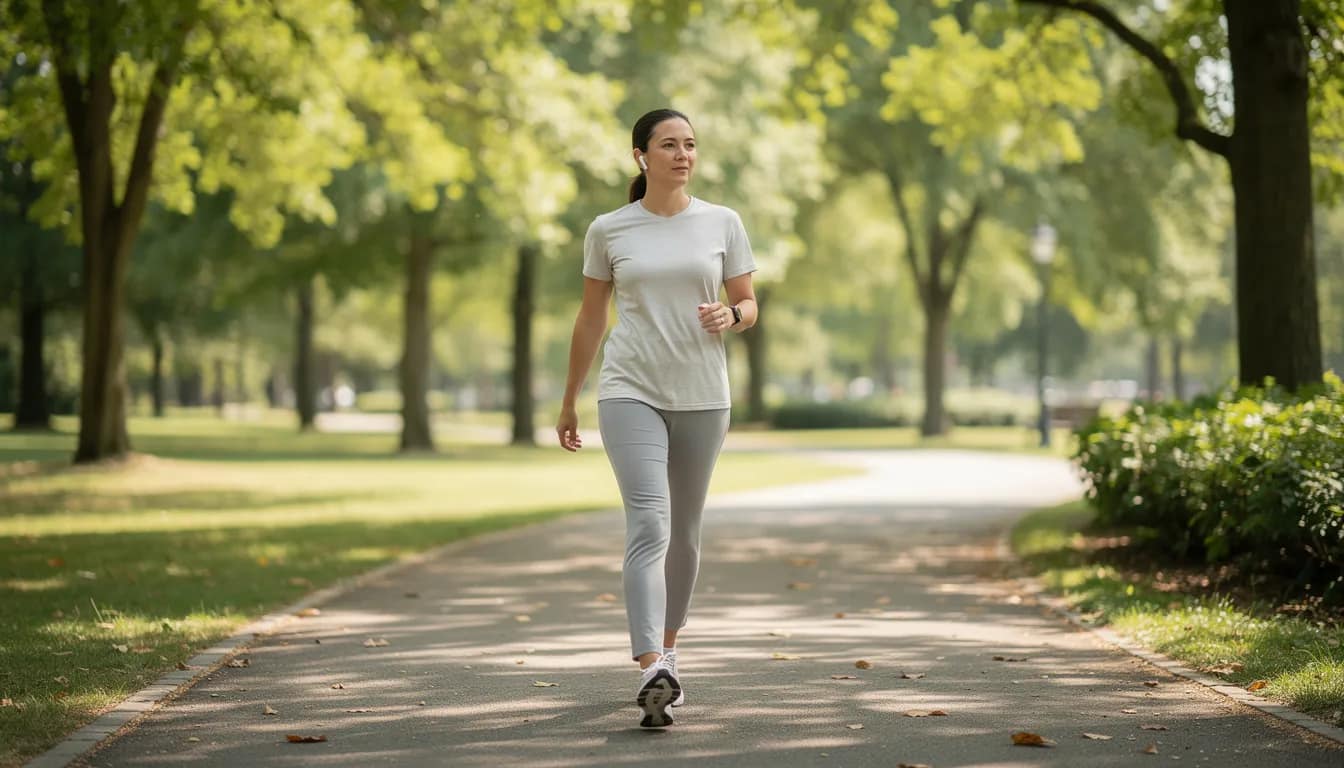
Walking for better bowel movements
Walking is the simplest, most accessible exercise for constipation relief. Twenty to thirty minutes of brisk walking, 3–4 times per week, increases blood flow to your intestines and speeds up colonic transit time (how fast stool moves through you).
What “brisk” means: Walk fast enough to feel slightly short of breath, but you can still talk in full sentences. You’re not racing—you’re encouraging your digestive organs to wake up.
Practical ways to fit walking in:
- 10-minute walk after lunch, 10-minute walk after dinner
- Park at the far end of the parking lot
- Take stairs instead of elevators
- Walk while talking on the phone
- Set hourly reminders to take a quick lap
Research over the last decade consistently links regular walking with fewer constipation symptoms in adults and older adults. It’s not glamorous, but it works.
Pro tip: Keep a simple notebook or phone note logging your walks and bowel movements. Patterns emerge quickly, and you’ll see what timing works best for your body.
Cycling and low-impact cardio
Can’t do high-impact exercise? No problem. Cycling, swimming, or using an elliptical machine provide relief without jarring your joints.
Recommended: 20–30 minutes of moderate cycling on most days, whether outdoors or on a stationary bike. Focus on a pace that slightly raises your heart rate without leaving you gasping.
The rhythmic leg movement engages your core, hip muscles, and especially your abdominal muscles, gently jostling your abdominal organs and promoting motility. Cycling engages your abdominal muscles, which can help stimulate intestinal activity. Strengthening the abdominal muscles can support bowel movements and improve digestive health. Think of it as an internal massage you’re giving yourself.
For beginners:
- Start with 5–10 minutes
- Add 2–3 minutes every few days
- Listen to your body
- Consistency beats intensity
Important note: If you experience significant pelvic pain or prolapse symptoms, talk with a pelvic floor therapist before starting more intense cycling. The seat pressure can sometimes aggravate these conditions.
Yoga-inspired movements to help you poop
Certain yoga poses are particularly effective for digestive issues because they compress, stretch, or twist the abdomen—directly influencing your digestive organs. These stretches can help ease constipation, release trapped gas, and reduce stress (which, by the way, literally freezes your digestive system).
You don’t need to be flexible or experienced. These movements can be done slowly, focusing on a comfortable range of motion and relaxed breathing. This isn’t a performance—it’s a poop prescription.
Key poses to practice:
- Wind-Relieving Pose (Knee-to-Chest)
- Child’s Pose
- Gentle Supine Twist
- Supported Deep Squat
Hold times: 30–60 seconds per pose, repeated 2–3 times. Daily practice brings the best results.
Caution: Skip or modify any pose that causes sharp pain, dizziness, or worsens existing back or hip conditions. Find relief, not injury.
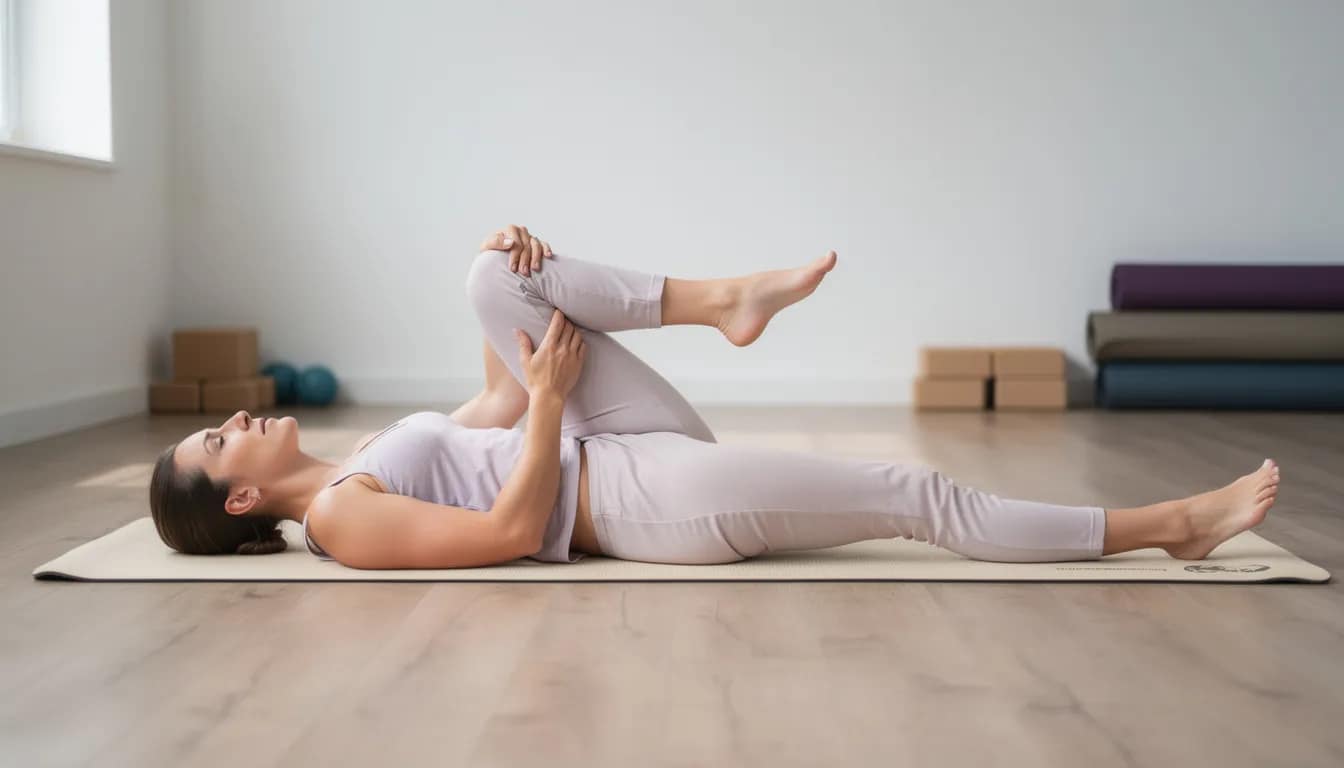
Wind-Relieving Pose (Knee-to-Chest)
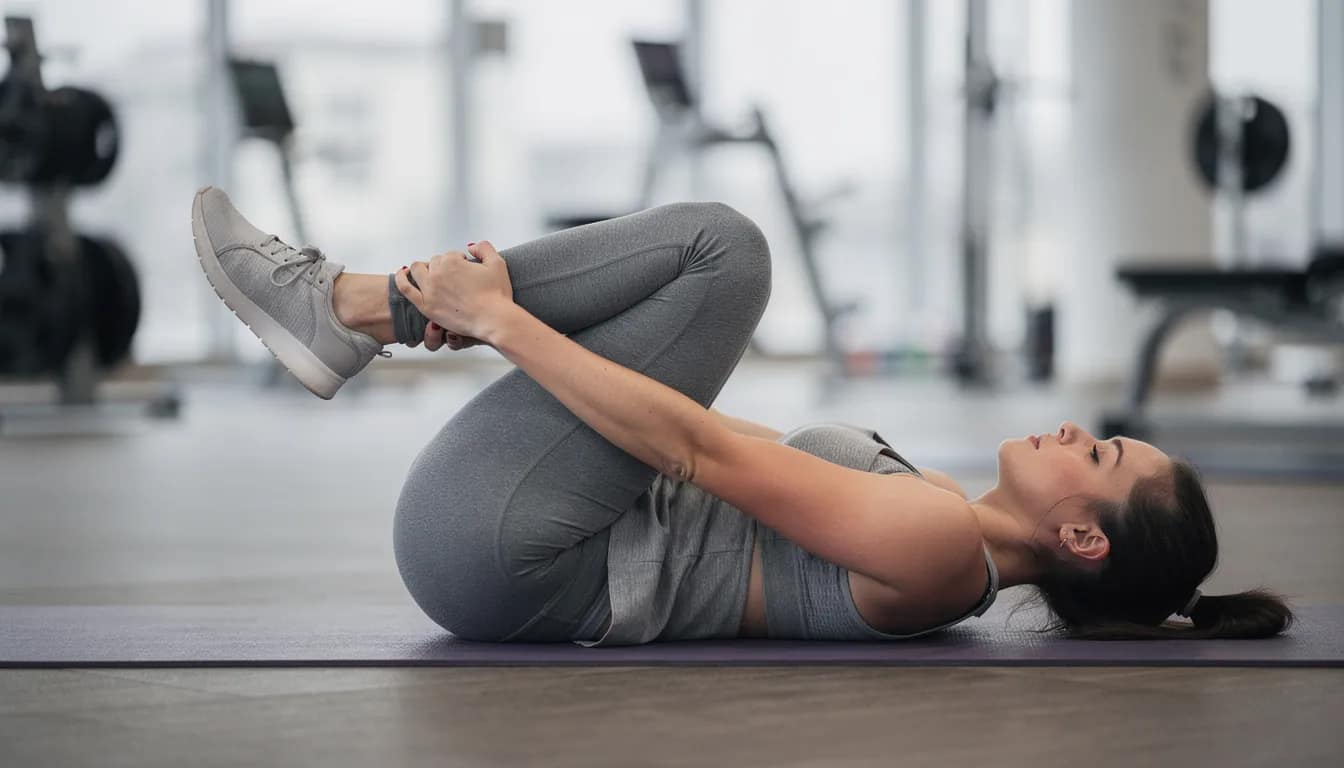
The wind relieving pose is exactly what it sounds like—it relieves gas and helps move things along. Done lying on your back, you draw one or both knees toward your chest to massage the lower abdomen and colon.
Step-by-step:
- Lie flat on your back on a yoga mat or comfortable surface
- Keep your shoulders flat against the floor
- Pull your right knee toward your chest, holding behind your thigh or shin
- Hold for 30–60 seconds while breathing deeply
- Release and repeat with your left leg
- Finally, draw both knees together toward your chest
Gentle rocking side-to-side while holding both knees can help shift gas pockets and ease bloating. This pose is perfect for the morning before getting out of bed or in the evening before sleep.
Note: If you’ve had a recent hip replacement or have severe back pain, get clearance from your healthcare provider before trying this position.
Child’s Pose for gas and tension
Child’s Pose is a relaxing yoga stretch that helps reduce bloating and gas. It provides gentle abdominal compression, relaxing the digestive organs and aiding digestion. This mild pressure on the abdomen encourages gas and stool movement through the lower colon. It’s also incredibly calming for your nervous system, which helps reduce stress—a major constipation culprit.
How to do it:
- Kneel on the floor
- Sit back toward your heels
- Fold your torso over your thighs
- Extend your arms forward or rest them alongside your body
- Rest your forehead on the floor (or a pillow)
- Breathe slowly and deeply into your lower belly
Hold for 1–2 minutes. Let gravity and your breath do the work.
Modifications:
- Widen your knees to make room for your belly
- Place a cushion under your chest or head if your hips or knees are tight
- Use a bolster or stacked pillows for extra support
Avoid or modify this pose if you have severe knee problems or recent knee surgery.
Gentle spinal twists
Twisting movements “wring out” the abdomen like a wet towel, increasing circulation to digestive organs and stimulating peristalsis. Think of it as helping your intestines remember which direction food should flow.
Supine twist (lying down):
- Lie on your back with arms extended to the sides
- Bend both knees, feet flat on the floor
- Drop both knees to your right side while keeping your left shoulder on the floor
- Turn your head to look over your left shoulder
- Hold for 30–60 seconds, breathing slowly
- Switch sides and repeat
- Do 2–3 repetitions on each side
Seated twist (for those who can’t get on the floor):
- Sit in a sturdy chair with feet flat
- Place your right hand on your left knee
- Gently turn to look over your left shoulder
- Hold the back of the chair with your left hand for support
- Hold for 30 seconds, then repeat on the opposite side
Pair these movements with slow exhalations to deepen the stretch and encourage your body to relax.
Avoid deep twists if you’ve had recent spinal surgery or have an acute back injury. Stay within a comfortable, pain-free range.
Supported deep squat (“pooping posture” practice)
Here’s a secret most Western toilets don’t want you to know: a deep squat straightens your rectum and relaxes pelvic floor muscles, mimicking the natural defecation posture humans used for thousands of years before we invented thrones to sit on.
Practicing this position regularly prepares your body for easier, more complete bowel movements.
How to do a supported squat:
- Stand facing a counter, sturdy table, or chair back
- Hold on with both hands for balance
- Place feet wider than hip-width apart, toes slightly turned out
- Lower your hips down as far as comfortable, aiming to get them below your knees
- Keep your heels down if possible (if not, place a rolled towel under them)
- Hold for 20–30 seconds while breathing steadily
- Stand back up to rest
- Repeat 3–5 times
This movement doesn’t just help you poop—it improves hip mobility, strengthens your legs, and keeps your pelvic floor healthy.
Safety note: If you have knee or hip arthritis, use extra support, don’t force range of motion, and stop if you feel pain. Some discomfort in tight muscles is normal; sharp joint pain is not.
Pelvic floor–focused movements to help poop
Here’s something nobody tells you: many people unknowingly tighten their pelvic floor when trying to poop. It’s like stepping on the brake and gas pedal at the same time. No wonder nothing moves.
This section focuses on relaxing, not strengthening, the pelvic floor to allow easier, less strained bowel movements.
Signs you might have pelvic floor dysfunction:
- Persistent constipation despite diet changes
- Pelvic pain or tailbone pain
- Feeling of incomplete emptying
- Needing to press on your perineum to poop
- Other symptoms like urinary issues
Key techniques:
- Diaphragmatic breathing
- “Brace and bulge” technique (sometimes called “moo to poo”)
- Hip and pelvic stretches
- Learning the difference between tightening and relaxing
If you have chronic issues, ask your doctor for a referral to a pelvic floor physical therapist. These specialists can provide individualized guidance that makes a real difference.
Diaphragmatic breathing for bowel and pelvic floor relaxation
Breathing deeply using your diaphragm (belly breathing) does something magical: as your diaphragm moves downward, it gently increases abdominal pressure while encouraging your pelvic floor to drop and relax. This is exactly what you want when trying to poop.
Simple instructions:
- Lie on your back or sit in a supported position
- Place one hand on your chest and one on your belly
- Inhale slowly through your nose, letting your belly rise (chest stays relatively still)
- Exhale slowly through your mouth, feeling your belly fall
- Notice your pelvic floor softening with each exhale
Practice: 5–10 slow breaths, 2–3 times per day, and especially just before or while sitting on the toilet.
This technique reduces straining and makes stool passage smoother when combined with good toilet posture. Your body learns that pooping doesn’t require a Herculean effort.
If you experience dizziness or have respiratory conditions, start slowly and stop if breathing feels uncomfortable.
“Brace and bulge” technique (“moo to poo”)
The goal here is to relax your pelvic floor while gently expanding your abdomen to help move stool—without bearing down like you’re trying to lift a car.
How to do it:
- Sit on the toilet with good posture (feet elevated, lean forward slightly)
- Take a breath in, gently expanding your belly
- As you exhale, allow your abdomen to widen outward (not suck in)
- Let your pelvic floor soften and drop, as if making a soft “moo” sound
- There should be no hard pushing in your throat, face, or buttocks
- Think gentle outward bulge, not straining grunt
This method reduces stress on your pelvic organs and can lower your risk of hemorrhoids, prolapse, and pelvic pain over time.
Pro tip: Practice this technique once or twice per day even when you don’t urgently need to poop. That way, it feels natural when constipation hits.
Simple hip and pelvic stretches
Tight muscles around the hips and pelvis make it harder for your pelvic floor to relax during bowel movements. Stretching these areas can help relieve the underlying tension contributing to constipation.
Three accessible stretches:
Stretch | How to Do It | Hold Time |
|---|---|---|
Figure-four stretch | Lie on back, place right ankle over left knee, gently pull left thigh toward chest | 20–30 seconds each side |
Seated forward bend | Sit with legs extended, reach toward toes (bend knees if needed) | 20–30 seconds |
Hip flexor lunge | Step one leg forward into a lunge, keep back knee down, lean forward at hips | 20–30 seconds each side |
Do 2–3 repetitions per side, 3–5 days per week.
Stretching should feel like mild tension, never sharp pain. Keep your breath slow and relaxed throughout.
Best timing: Evening or after a warm shower, when muscles are less stiff.
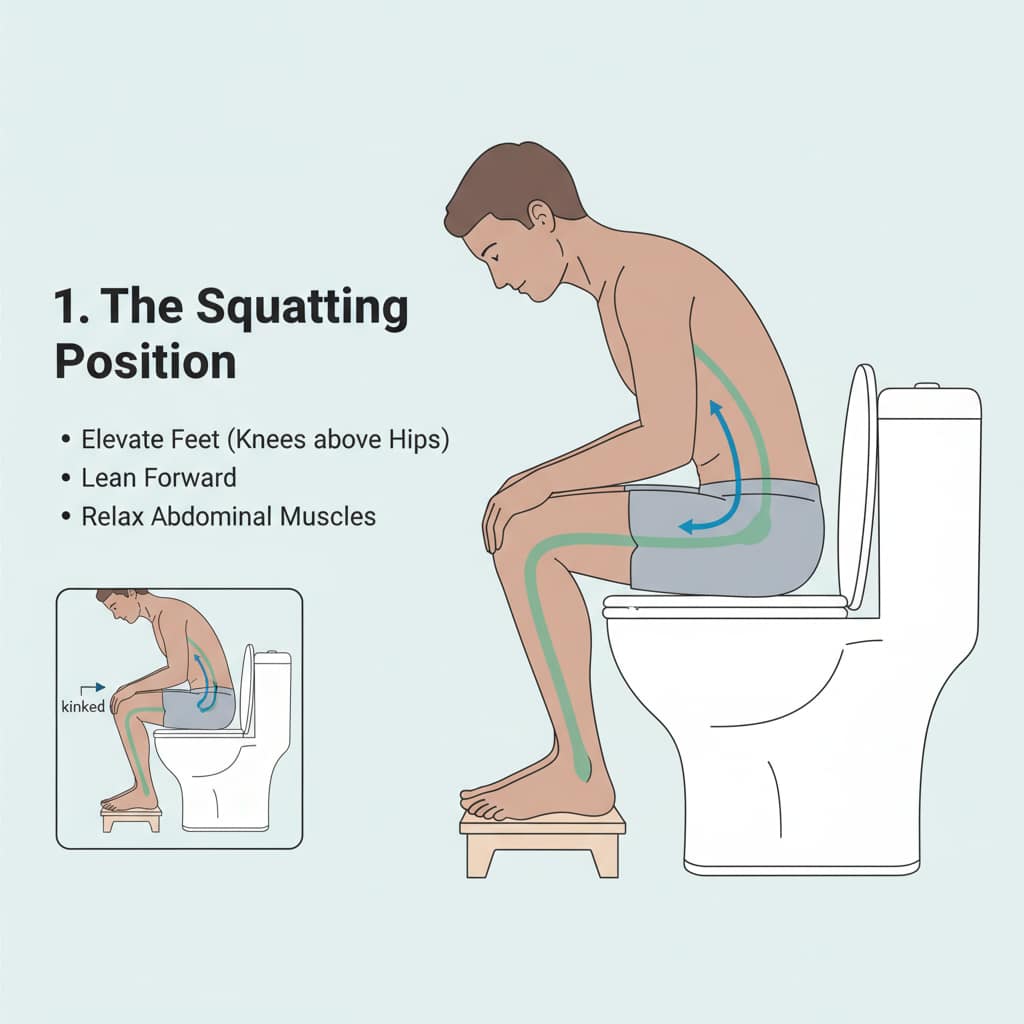
Correct toilet posture and “on-the-toilet” movements
How you sit on the toilet can be just as important as all the exercise you do. Your modern toilet might look elegant, but it puts your body in a terrible position for pooping. Time to fix that.
The goal posture:
- Lean forward slightly from your hips
- Rest elbows on your thighs
- Keep your back straight but relaxed
- Let your belly stay soft (no sucking in)
- Feet elevated on a stool
The footstool trick: Use a small footstool or stack of books to raise your feet 15–20 cm (about 6–8 inches). This imitates a squat-like angle for your hips, straightening your rectum and making evacuation much easier.
Subtle on-toilet movements:
- Gently rock your pelvis forward and back
- Sway slightly side to side
- Combine with diaphragmatic breathing
- Try gentle circular belly self-massage (clockwise direction)
What to avoid:
- Holding your breath
- Phone scrolling for 20+ minutes
- Heavy straining and bearing down
- Sitting longer than 10 minutes
Your toilet time shouldn’t feel like a hostage situation.
Step-by-step “poop-friendly” setup
Here’s your complete sequence for optimal bowel movements:
- Set up your space: Place a footstool under your feet before sitting down
- Sit centered on the seat—don’t perch on the edge
- Lean forward from your hips (not your waist), keeping your back relatively straight
- Rest your forearms on your thighs
- Relax your shoulders and unclench your jaw
- Take 3–5 slow belly breaths before attempting anything, focusing on softening your belly and pelvic floor
- Alternate short “brace and bulge” efforts with resting periods—no continuous straining
- Try gentle clockwise belly massage if helpful
- If nothing happens after a few relaxed attempts, get up and try again later
When to see a professional: If no urge arises after several relaxed attempts on multiple days, or if you notice a sudden change in bowel habits, consult a healthcare provider.
Tailbone pain and constipation: movements for dual relief
If you’re dealing with both tailbone pain and constipation, you know how much these issues can disrupt your daily life. The good news? The right movements can help relieve constipation and ease tailbone pain at the same time, supporting your digestive health and overall comfort.
When to see a doctor about constipation
Movement and posture changes help many people alleviate constipation, but some cases need medical evaluation. Don’t suffer in silence when there might be an underlying issue.
Red-flag symptoms requiring prompt medical attention:
- Blood in or on your stool
- Unintentional weight loss
- Persistent vomiting
- Severe or worsening abdominal pain
- Fever accompanying constipation
- Pencil-thin stools
- Constipation alternating with diarrhea
When to make an appointment: Constipation lasting more than 3 weeks despite lifestyle changes (movement, hydration, increasing fibre intake) warrants a visit to your doctor.
Higher-risk groups for chronic constipation:
- Older adults
- People with diabetes or thyroid disease
- Those taking opioids, iron supplements, or certain antidepressants
- People with neurological conditions
When you see your clinician, share details like how often you poop, stool consistency, your usual diet, fluid intake, and any symptoms like pelvic pain or a feeling of blockage. The more information, the better they can help you find relief.
Putting it all together: a daily “movement to poop” plan
Let’s bring everything together. Gentle daily exercise, targeted stretches, pelvic floor relaxation, and correct toilet posture work best as a package—not isolated interventions.
Sample daily plan:
Time | Activity |
|---|---|
Morning | 10–20 minute walk after breakfast |
Mid-day | 5-minute stretching or yoga session (wind relieving pose, twists) |
Evening | Brief child’s pose plus knee-to-chest before bed |
Bathroom time | Footstool setup, diaphragmatic breathing, “brace and bulge” technique |
Key reminders:
- Eat meals at consistent times to train your gastrocolic reflex
- Drink adequate water throughout the day
- Don’t skip meals—your digestive system needs regular input
- Keep fiber intake consistent (sudden increases can cause bloating)
The sustainable approach: Make small changes instead of trying everything at once. Track what seems most effective for your body over 2–4 weeks. Maybe walking is your magic bullet. Maybe it’s the deep squat practice. Everyone’s digestion is different.
Improving bowel habits is often gradual—not an overnight transformation. Combining movement with adequate fluids, fiber, and medical guidance when needed yields the best long-term constipation relief.
Your bathroom visits don’t have to feel like a standoff. With the right movements, positions, and a little consistency, you can help relieve the discomfort and get back to the things that actually matter in life. Your colon will thank you.
Now get moving—so everything else can too.