
Let’s be honest—your gut has opinions. Strong ones. And sometimes it communicates those opinions in ways that are, shall we say, inconvenient. That rumbling after lunch. The bloating that makes your pants feel two sizes smaller by dinner. The 3 AM regret after that late-night snack.
The foods landing on your plate have everything to do with how your digestive system treats you. Some foods slide through like a well-oiled machine. Others? They set off a chain reaction of gas, cramping, and bathroom emergencies that can derail your entire day.
This guide breaks down the best and worst foods for digestive health—backed by actual science, not just internet folklore—and shows you what to eat instead. Because you deserve to eat without your gut staging a protest.
Quick Answer: The Top 10 Worst Foods for Digestion
Before we dive into the details, here’s the rapid-fire list of foods that may disrupt digestion. If you’re in a hurry (or currently hiding in the bathroom), this is your cheat sheet.
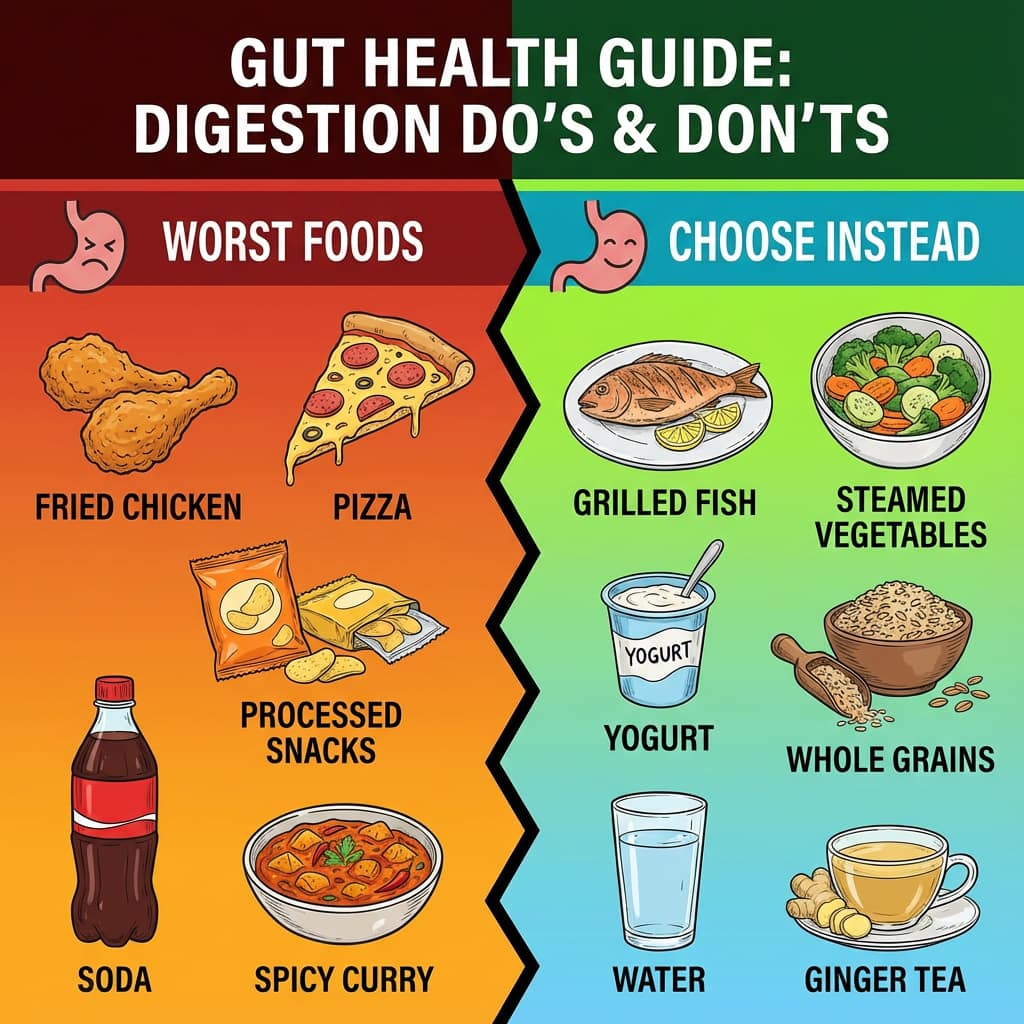
- Fried foods (French fries, fried chicken, onion rings): High fat content slows stomach emptying and triggers acid reflux
- Ultra-processed snacks (chips, packaged cookies, instant noodles): Loaded with harmful ingredients like preservatives and additives, and stripped of fiber your gut needs
- Artificial sweeteners (aspartame, sucralose, saccharin): Can alter gut bacteria and cause gas or loose stools
- Sugar alcohols (sorbitol, xylitol, maltitol): Found in sugar-free products; notorious for their laxative effect
- Alcohol (beer, wine, spirits): Inflames stomach lining, relaxes the valve that prevents reflux, and disrupts gut flora
- Caffeine-heavy drinks (coffee, energy drinks): Speeds gut motility and increases stomach acid
- Spicy foods (especially chili peppers and hot sauces): Capsaicin irritates the digestive tract and can cause burning and cramping
- Greasy red and processed meats (bacon, sausages, fatty burgers): Combine high fat with additives that stress the GI tract
- Fast food meals (loaded burgers, fried combo meals): The trifecta of fat, refined carbs, and salt
- Carbonated sugary sodas: Pump your stomach full of gas and fructose that bacteria love to ferment
These foods commonly trigger bloating, gas, constipation, diarrhea, and acid reflux. They’re frequent offenders in irritable bowel syndrome, GERD, and general digestive discomfort.
That said, sensitivity varies by person. Your coworker might demolish hot wings without a second thought while you’re reaching for antacids after two bites. The foods above are simply the most frequent troublemakers across the board.
How Digestion Works (and Why Some Foods Cause Trouble)
Understanding your digestive system helps explain why certain foods wreak havoc while others pass through peacefully. Think of it as knowing the rules of the road before you start driving.
Your gastrointestinal system is essentially a long processing tube that runs from your mouth to your, well, exit point. Food travels through in stages: your mouth breaks it down mechanically, your stomach churns it with acid and enzymes, your small intestine absorbs nutrients, and your large intestine handles water absorption and waste formation—with a whole lot of gut bacteria doing critical work along the way.
Foods can cause digestive issues when they:
- Slow stomach emptying: High-fat meals, which are often difficult to digest, sit in your stomach longer, creating that “brick in the stomach” sensation and increasing reflux risk
- Irritate the gut lining: Alcohol, certain additives, and even some spices can directly inflame your stomach lining and intestinal walls
- Overfeed gas-producing bacteria: Fermentable carbohydrates, which can also be difficult to digest, reach your colon where bacteria feast on them, producing hydrogen, methane, and carbon dioxide
- Draw excess water into the intestines: Poorly absorbed sugars and sugar alcohols create an osmotic effect, pulling water in and causing diarrhea
- Relax the lower esophageal sphincter (LES): This valve is supposed to keep stomach contents from splashing back up; fat, alcohol, and caffeine can weaken it
Your gut microbiome—the trillions of bacteria living in your intestines—plays a massive role in how you digest food. These microbes help break down fiber, produce beneficial compounds, and maintain the gut barrier. Ultra-processed foods, excess sugar, and certain additives can alter this bacterial balance, favoring harmful gut bacteria over healthy gut bacteria.
When your gut flora gets thrown off, digestive symptoms follow. That’s why the foods that affect digestion aren’t just about immediate discomfort—they’re also about what you’re doing to your internal ecosystem over time.
High-Fat and Fried Foods
There’s a reason you feel like you swallowed a bowling ball after a bucket of fried chicken. High-fat and fried foods are among the worst foods for your digestive tract, largely because they are loaded with unhealthy fats that slow digestion and contribute to gastrointestinal discomfort.
When you eat a fatty meal, your stomach slows way down. It takes longer to empty, leaving you feeling stuffed, nauseous, and prone to heartburn. That greasy late-night pizza? It’s practically designed to ruin your sleep with acid reflux.
Here’s why fatty foods cause so much trouble:
- Delayed gastric emptying: Large amounts of fat signal your stomach to hold onto food longer, increasing fullness, nausea, and that heavy, uncomfortable feeling
- LES relaxation: High-fat meals are associated with more episodes of the valve between your stomach and esophagus loosening up, letting acid splash back up
- Bile and gallbladder stress: Fat triggers bile release; if you have gallbladder issues or bile acid problems, high-fat meals can cause pain and urgent diarrhea
- IBS flare trigger: For people with irritable bowel syndrome, fatty meals frequently cause abdominal pain, urgency, and loose stools
Common offenders in this category:
- Deep-fried takeout (fried chicken, fish and chips, chicken nuggets)
- French fries and hash browns from fast food joints
- Fast food burgers loaded with cheese and special sauce
- Late-night pizza dripping with grease
- Cream-based pasta dishes and heavily buttered meals
Cooking method matters too. Frying in industrial oils at high temperatures creates oxidized fats and compounds that may further stress your gut. Baking, grilling, or air-frying with minimal oil are gentler on your digestive system—and can still taste great.
Ultra-Processed Foods and Refined Carbohydrates
If the ingredient list on your food reads like a chemistry experiment, your gut probably isn’t thrilled about it. Ultra-processed foods have become dietary staples, but they’re doing your digestion no favors.
Ultra-processed foods are industrial formulations containing ingredients you’d never find in a home kitchen—emulsifiers, stabilizers, artificial colors, preservatives, and high-fructose corn syrup. Think packaged snacks, frozen meals, instant noodles, sugary cereals, and most fast food.
Refined carbohydrates—white bread, pastries, many crackers, white rice in excess—share a key problem: they’ve been stripped of fiber. And fiber is what keeps your digestive system running smoothly. Unlike the natural sugars found in whole fruits and vegetables, which are accompanied by fiber and antioxidants that support digestion, the added sugars in processed foods can disrupt gut health and contribute to digestive discomfort.
Why these foods are problematic:
- Fiber displacement: Without fiber, your gut bacteria essentially starve. This reduces production of beneficial short-chain fatty acids that protect your gut lining and fight inflammation
- Constipation and irregularity: Low-fiber foods can leave stools hard and difficult to pass, or move through too quickly without proper bulk
- Additive effects: Food manufacturers use emulsifiers (like polysorbate 80 and carboxymethylcellulose) that may disrupt the gut’s protective mucus layer and promote inflammation
- Microbiome disruption: Diets high in ultra-processed foods are consistently linked to lower microbial diversity and overgrowth of less-friendly bacteria
- Blood sugar rollercoaster: Rapid absorption of refined carbs causes glucose spikes that, over time, contribute to metabolic issues affecting the liver and gallbladder
Real-world examples that frequently cause digestive problems:
- Bags of chips and flavored crackers (high salt, refined oils, additives)
- Packaged cookies and snack cakes (refined flour, sugar, emulsifiers)
- Frozen dinners and microwave meals (long shelf life = lots of preservatives)
- Instant noodles and boxed mac and cheese
- Sugary breakfast cereals with artificial colors
- Soft drinks and sweetened beverages
Frequent consumption—most days of the week over months or years—is most strongly linked to digestive conditions including inflammatory bowel disease, IBS symptoms, and chronic abdominal discomfort. The occasional packaged snack won’t destroy your gut, but making these foods dietary staples can shift your microbiome in unfavorable directions.
Sweeteners That Upset the Gut: Added Sugar, Artificial Sweeteners, and Sugar Alcohols
Not all sugars are created equal when it comes to digestion. And here’s the kicker: many “diet” and “keto-friendly” products can be just as rough on your gut as regular candy.
Added Sugar
The average American consumes far more added sugar than their gut can handle gracefully. Sodas, energy drinks, candy, bakery items, and those fancy sweetened coffee drinks all deliver sugar loads that can throw your digestive system into chaos.
- High sugar intake promotes inflammation throughout the digestive tract
- Excess fructose (especially from high-fructose corn syrup) can overwhelm your absorptive capacity, leaving unabsorbed sugar for bacteria to ferment
- Sugar feeds opportunistic bacteria while starving beneficial species
- The result: bloating, gas, and swings between diarrhea and constipation
Artificial Sweeteners
Switching to diet soda to spare your gut? Not so fast. Artificial sweeteners like aspartame, sucralose, and saccharin come with their own digestive baggage.
- Research suggests these sweeteners can alter gut bacteria composition
- Some people experience gas, bloating, and loose stools after consuming diet products
- The effects vary widely between individuals, but they’re common enough that many GI specialists ask patients about artificial sweetener intake
Sugar Alcohols
Sugar alcohols (sorbitol, mannitol, xylitol, erythritol, maltitol) are the sneakiest gut disruptors. They’re everywhere: sugar-free gum, mints, protein bars, “keto” ice cream, and diabetic-friendly candies.
- Only partially absorbed in the small intestine, so much of what you eat reaches the colon
- Once there, they draw water in osmotically (hello, diarrhea) and get fermented by bacteria (hello, gas and bloating)
- Doses above 10-20 grams can cause laxative effects in most people
- They’re classified as FODMAPs, making them particularly troublesome for anyone with IBS
If you’re lactose intolerant, have IBS, or generally have a sensitive gut, both artificial sweeteners and sugar alcohols can trigger symptoms even at modest doses. Always check food labels on “sugar-free” and “low-carb” products—they’re often loaded with these compounds.
Spicy Foods, Caffeine, and Alcohol: Irritants that Speed or Disrupt Digestion
These three are the usual suspects when gastroenterologists ask, “What were you eating and drinking before your symptoms started?” They’re popular, they’re everywhere, and they can absolutely wreck a sensitive digestive tract.
Spicy Foods
Capsaicin, the compound that makes chili peppers hot, activates pain receptors in your gut just like it does on your tongue. For people with existing digestive issues—GERD, gastritis, IBS—this is bad news.
- Capsaicin can irritate the stomach lining and intestinal walls
- Symptoms include burning sensations, cramping, and diarrhea
- Eating spicy foods late at night or on an empty stomach intensifies the effects
- Some regular spicy-food eaters develop tolerance; others never do
That plate of wings seemed like a good idea until you’re up at 2 AM with your stomach on fire.
Caffeine
Your morning coffee might be waking up more than just your brain. Caffeine stimulates gut motility—which is why many people find it sends them straight to the bathroom.
- Coffee increases stomach acid production, aggravating acid reflux and gastritis
- The stimulant effect speeds intestinal muscle contractions, potentially causing urgency, loose stools, and cramping
- Energy drinks combine caffeine with sugar or artificial sweeteners, doubling down on digestive stress
- People with IBS-D (diarrhea-predominant) are especially sensitive to caffeine’s effects on bowel movements
That triple espresso on an empty stomach? Your gut is bracing for impact.
Alcohol
Beer, wine, and spirits all come with digestive consequences, especially in larger quantities.
- Alcohol directly inflames the stomach lining, contributing to gastritis and ulcer risk
- It relaxes the LES, making acid reflux significantly worse
- Chronic drinking increases intestinal permeability (sometimes called “leaky gut”), allowing bacterial toxins to cross into the bloodstream
- Too much alcohol alters gut bacteria composition, reducing beneficial species
- The dehydrating effect can worsen constipation, while the irritation often causes diarrhea—sometimes both in the same week
Those weekend cocktails or the beer-and-wings combo? Your gut is taking notes—and it’s not happy.
Hard-to-Digest Fiber: When “Healthy” Foods Cause Gas and Bloating
Plot twist: some of the healthiest foods on the planet can make you feel absolutely miserable. Fiber is essential for long-term gut health, but certain types and amounts can cause significant discomfort.
Cruciferous Vegetables and Legumes
Brussels sprouts, broccoli, cauliflower, cabbage, beans, lentils, and chickpeas are nutritional powerhouses with many health benefits—but they’re also famous for producing gas and can be difficult to digest for some people.
- These foods contain raffinose and other fermentable fibers that humans can’t fully digest
- Gut bacteria ferment these fibers enthusiastically, producing gas that expands your intestines
- The result: bloating, distension, cramping, and flatulence
- Baked beans at a barbecue? Your gut knows what’s coming
Corn can also be difficult to digest due to its high cellulose content, which can lead to gas and bloating.
Raw Vegetables
That giant dinner salad of raw veggies might seem virtuous, but for many people it causes significant bloating and gas—especially those with IBS or a sensitive gut. Raw vegetables offer important health benefits, providing essential nutrients and fiber, but they can also be difficult to digest. Raw vegetables can cause bloating and gas due to their high insoluble fiber content.
- Raw vegetables require more mechanical breakdown and are harder to digest than cooked versions
- Large volumes of fiber hit the colon at once, feeding bacteria and producing gas
- Cooking breaks down some of the tougher plant structures, making vegetables gentler on digestion
Gluten-Containing Grains
Wheat, rye, and barley contain gluten—and while gluten is perfectly fine for most people, it’s genuinely dangerous for some.
- Celiac disease is an autoimmune condition where gluten damages the small intestine; even trace amounts cause harm
- Non-celiac gluten sensitivity causes IBS-like symptoms in people without celiac disease
- Many people who think they react to gluten actually react to FODMAPs (specifically fructans) in wheat
The Sudden Fiber Increase Problem
Decided to get healthy and immediately tripled your fiber intake? Your gut didn’t get the memo.
- Going from 10 grams of fiber per day to 30 grams within a week is a recipe for gas, bloating, and cramping
- Fiber-rich fruits, vegetables, and whole grains need to be introduced gradually
- Increasing water intake alongside fiber helps everything move through properly
The key insight: “worst for digestion” doesn’t always mean “unhealthy.” Context, portion size, and preparation (well-cooked vs. raw veggies) make an enormous difference in how these foods affect you.
When “Everyday” Foods Turn into Digestive Triggers
Some of the most common staples in kitchens around the world can be major digestive triggers for certain people—even if they’re tolerated perfectly well by others.
Dairy Products
Lactose intolerance is incredibly common. Globally, 65-70% of adults have reduced ability to digest lactose after childhood, with rates exceeding 90% in some East Asian and African populations.
- Undigested lactose reaches the colon where bacteria ferment it, producing gas
- The lactose also draws water into the intestines osmotically, causing diarrhea
- Symptoms after consuming milk, ice cream, or soft cheeses include bloating, cramping, gas, and urgent bathroom trips
- Some people react to milk proteins (casein, whey) even when using lactose-free dairy products
That ice cream cone at the beach? Could be why you spent the rest of the afternoon in discomfort.
Corn
Whole corn kernels contain cellulose that humans simply cannot break down.
- Corn on the cob, popcorn, and corn in salads often show up intact in stool (yes, everyone notices this)
- For people with sensitive guts, corn can trigger gas, cramping, and irregular bowel habits
- Movie theater popcorn combines the corn issue with lots of butter and salt—a triple threat
High-Fructose Fruits and Juices
Certain fruits contain more fructose than glucose, which can overwhelm absorption capacity.
- Apples, pears, watermelon, and mangoes are common culprits
- Large glasses of fruit juice concentrate the fructose without the fiber that slows absorption
- Unabsorbed fructose gets fermented by bacteria, causing gas and loose stools
- People with IBS often find significant relief by limiting high-fructose fruits
That “healthy” apple juice or smoothie bar creation might be behind your afternoon bloating.
Finding Your Personal Triggers
The frustrating truth is that digestive triggers are highly individual. Two people can eat the identical meal and have completely different reactions. If you suspect certain foods are causing your symptoms, an elimination-and-reintroduction approach is often the only way to know for sure.
Dairy Products and Digestive Issues
Dairy products are a classic double-edged sword for digestion. For many people, a glass of milk or a scoop of ice cream is a ticket to bloating, gas, and urgent trips to the bathroom. The main culprit? Lactose intolerance. If you’re lactose intolerant, your body doesn’t produce enough lactase—the enzyme needed to break down lactose, the natural sugar in milk. When lactose isn’t properly digested, it travels to the colon, where gut bacteria have a field day fermenting it, leading to classic digestive issues like cramping, diarrhea, and uncomfortable bloating.
But lactose isn’t the only problem. Some people react to proteins in dairy, such as casein or whey, which can also cause digestive symptoms—even if the product is labeled “lactose-free.” The good news is that not all dairy products are equally tough on your digestive system. Fermented options like yogurt with live cultures and hard cheeses (think cheddar or Swiss) are often easier to tolerate, since the bacteria in these foods help break down lactose for you. If dairy consistently causes trouble, consider switching to lactose-free milk or exploring non-dairy alternatives like almond, oat, or soy milk. Listening to your gut (literally) and choosing the right dairy products—or skipping them altogether—can make a world of difference for your digestive comfort.
Foods that Trigger Acid Reflux
If you’ve ever felt that burning sensation creeping up your chest after a meal, you know the misery of acid reflux. Certain foods are notorious for relaxing the lower esophageal sphincter—the muscle that keeps stomach acid where it belongs—making it easier for acid to splash back up into your esophagus. Fried foods and fatty meals are among the worst offenders, but they’re not alone. Spicy foods, citrus fruits, tomatoes, chocolate, and even some beverages can all trigger acid reflux in sensitive individuals.
It’s not just what you eat, but how and when you eat it. Large meals, eating too close to bedtime, or lying down right after eating can all make symptoms worse. To keep acid reflux in check, try eating smaller, more frequent meals, steering clear of your personal trigger foods, and giving yourself a few hours to digest before hitting the pillow. Propping up the head of your bed by 6-8 inches can also help gravity keep stomach acid where it belongs. By paying attention to these details, you can enjoy your meals without the post-dinner heartburn drama.
Timing, Portions, and Eating Habits that Strain Digestion
It’s not just what you eat—it’s when and how you eat it. Your habits around meals can make even moderately problematic foods much worse.
Late-Night Heavy Meals
Eating a large, heavy dinner within 2-3 hours of bedtime is practically an invitation for reflux and nighttime discomfort.
- Lying down with a full stomach makes it easier for acid to splash into the esophagus
- Digestion naturally slows in the evening, so that big meal sits there longer
- Poor sleep quality and morning bloating often follow
Meal Skipping and Overeating
Skipping breakfast and then demolishing a massive late lunch shocks your digestive system.
- An empty stomach followed by sudden large volume can trigger pain, cramping, and urgency
- Your gut works best with regular, predictable input
- The feast-or-famine pattern is especially hard on people with IBS or functional GI disorders
Eating Too Fast
Scarfing down lunch in five minutes flat has consequences.
- Inadequate chewing means bigger food particles hit your stomach, requiring more work to break down
- Eating quickly causes you to swallow more air, leading to bloating and gas
- Your satiety signals don’t have time to kick in, so you often overeat
Eating While Stressed
Your gut and brain are in constant communication. Eating during high stress—while working, arguing, or rushing—impairs digestion.
- Stress activates your “fight or flight” system, which diverts resources away from digestion
- Motility changes, enzyme secretion decreases, and food moves through unpredictably
- The same meal that causes no problems when eaten calmly can trigger symptoms when eaten stressed
Better habits that support gut health:
- Eat smaller, more regular meals rather than one or two giant ones
- Stop eating 2-3 hours before bed
- Chew thoroughly and put your fork down between bites
- Eat in a calm environment when possible
- Listen to fullness signals and stop before you’re stuffed
What to Eat Instead: Gentler Choices for Better Digestion
This isn’t about living on bland food forever. It’s about swapping common trigger foods for gentler alternatives that let you eat well without the digestive drama.
Easy-to-Digest Proteins
- Baked or grilled fish (salmon, cod, tilapia)
- Skinless poultry (chicken breast, turkey)
- Eggs (scrambled, poached, or soft-boiled are gentler than fried)
- Tofu and tempeh
- Well-cooked lentils in modest portions
Consider reducing red meat intake and replacing it with these healthier protein options to support gut health.
Low-Gas, Lower-FODMAP Produce
- Zucchini, carrots, spinach, cucumbers, green beans
- Peeled and well-cooked potatoes and sweet potatoes
- Ripe bananas, blueberries, strawberries, cantaloupe
- Cooked vegetables generally cause less gas than raw veggies
Fruits such as apples and berries are rich in antioxidants and soluble fiber, which support digestion. Leafy greens like spinach and kale are also beneficial for digestion and overall gut health.
Gentler Grains
- White rice (especially well-cooked; easier to digest than brown rice for sensitive guts)
- Oats (particularly well-cooked oatmeal)
- Quinoa
- Gluten-free options like millet and buckwheat if you react to wheat
Whole grains like oats, brown rice, and whole wheat bread are beneficial for gut health due to their high fiber content, which helps to prevent constipation.
Fermented Foods (Introduced Slowly)
- Yogurt with live cultures (start with small portions)
- Kefir
- Small amounts of sauerkraut or kimchi
- These can support gut health for many people, though some need to introduce them gradually
Yogurt contains probiotics that help balance gut bacteria and support digestion. Incorporating fermented foods into your diet can support gut health by providing beneficial bacteria.
Healthy Fats in Moderation
- Olive oil (drizzled, not deep-fried)
- Avocado (unless you’re FODMAP-sensitive)
- Nuts and nut butters in reasonable portions
Practical Swaps:
Instead of… | Try… |
|---|---|
French fries | Baked potato wedges with olive oil |
Fried chicken | Grilled or baked chicken breast |
Ice cream | Lactose-free yogurt with berries |
White bread | Sourdough (often better tolerated) or oats |
Soda | Sparkling water with lemon |
Candy | Fresh fruit or a small piece of dark chocolate |
Processed deli meat | Sliced roasted turkey or chicken |
The goal isn’t perfection—it’s improvement. Prioritizing natural foods, minimally processed foods, and cooking at home more often gives your gut a fighting chance.
How to Test Your Personal Trigger Foods Safely
Lists of “worst foods” are a starting point, but your gut is unique. Individualized testing is the only way to know exactly what affects your digestion.
Step 1: Choose Your Suspects
Based on your symptoms, pick 1-2 food categories to eliminate first. Common starting points:
- Dairy (if you suspect lactose intolerance)
- Fried and high-fat foods (if reflux or nausea is the issue)
- Wheat/gluten (if bloating and irregular bowel movements dominate)
- Artificial sweeteners or sugar alcohols (if gas and diarrhea are prominent)
Step 2: Eliminate for 2-4 Weeks
- Remove the suspected foods completely from your diet
- Keep a symptom journal noting digestive symptoms, bowel movements, and overall gut comfort
- Be patient—some improvements take 2-3 weeks to become apparent
Step 3: Reintroduce One at a Time
- After the elimination period, add back one food in a small-to-moderate portion
- Wait 2-3 days while monitoring for symptom return
- Document what you ate, how much, and any reactions
- If no symptoms return, that food is likely safe for you
Step 4: Repeat with Other Suspects
- Work through your list systematically
- Keep careful notes so you have a clear record of your personal trigger foods
When to Get Professional Help
Work with a gastroenterologist or registered dietitian if you:
- Have long-standing digestive symptoms that significantly impact quality of life
- Have been diagnosed with IBS, inflammatory bowel disease, or celiac disease
- Are experiencing unexplained weight loss
- Need guidance on a structured elimination diet like low-FODMAP
Warning Signs That Need Medical Evaluation—Not Just Diet Changes:
- Blood in stool or black, tarry stool
- Severe, unexplained weight loss
- Difficulty swallowing
- Sudden, intense abdominal pain
- Persistent vomiting
These symptoms warrant a doctor’s visit, not just cutting out French fries.
Gradually Reducing Harmful Foods
Overhauling your diet overnight is a recipe for frustration—and probably more digestive symptoms. The smarter approach? Gradually cut back on the foods that are hardest on your digestive system. Processed foods, fried foods, and those loaded with artificial sweeteners or added sugars can disrupt your gut bacteria, leading to bloating, irregular bowel habits, and other digestive issues. Instead of going cold turkey, start by identifying the worst offenders in your daily routine. Maybe it’s that afternoon bag of chips, the fast food lunch, or the sugar-laden energy drink.
Swap out processed snacks for fiber-rich fruits or veggies, and try cooking more meals at home using whole, minimally processed ingredients. Get in the habit of reading food labels—watch for hidden sources of artificial sweeteners, preservatives, and added sugars that can sneak into even “healthy” foods. Each small change supports the growth of healthy gut bacteria and helps build a more resilient, healthy gut over time. Remember, it’s not about perfection; it’s about making steady, sustainable improvements that your digestive system will thank you for.
Key Takeaways: Building a Digestion-Friendly Eating Pattern
Let’s bring it home. Here’s what actually matters for improving your digestion:
- The usual suspects are fried and fatty foods, ultra-processed foods, heavily sweetened items (including artificial sweeteners and sugar alcohols), very spicy dishes, excessive alcohol and caffeine, and large irregular meals. These are the ten worst foods—or rather, categories—that consistently cause digestive problems across populations.
- Not every listed food is a problem for every person. Context, dose, and overall pattern matter far more than single bites. Your coworker’s nightmare food might be perfectly fine for you.
- Prioritize whole, minimally processed foods. Cooking at home more often, choosing fiber-rich foods, and introducing higher-fiber vegetables gradually (with adequate hydration) supports a healthy gut and stable bowel habits.
- Pay attention to how you eat, not just what you eat. Smaller meals, slower eating, minimal late-night eating, and reducing mealtime stress can improve digestion as much as eliminating trigger foods.
- Small, realistic shifts add up. Cutting down on weekday fast food, swapping carbonated beverages for water, and moderating alcohol and caffeine can noticeably improve digestion within weeks. You don’t need a complete dietary overhaul—just a few consistent changes.
Your gut isn’t asking for perfection. It’s asking for a little less chaos on the plate and a little more respect for how it actually works.
Start with one swap. Keep a food journal for a week. Notice what makes you feel better. That’s the path to a balanced diet your digestive system can actually live with—and thrive on.